April 21, 2012

Student graduation


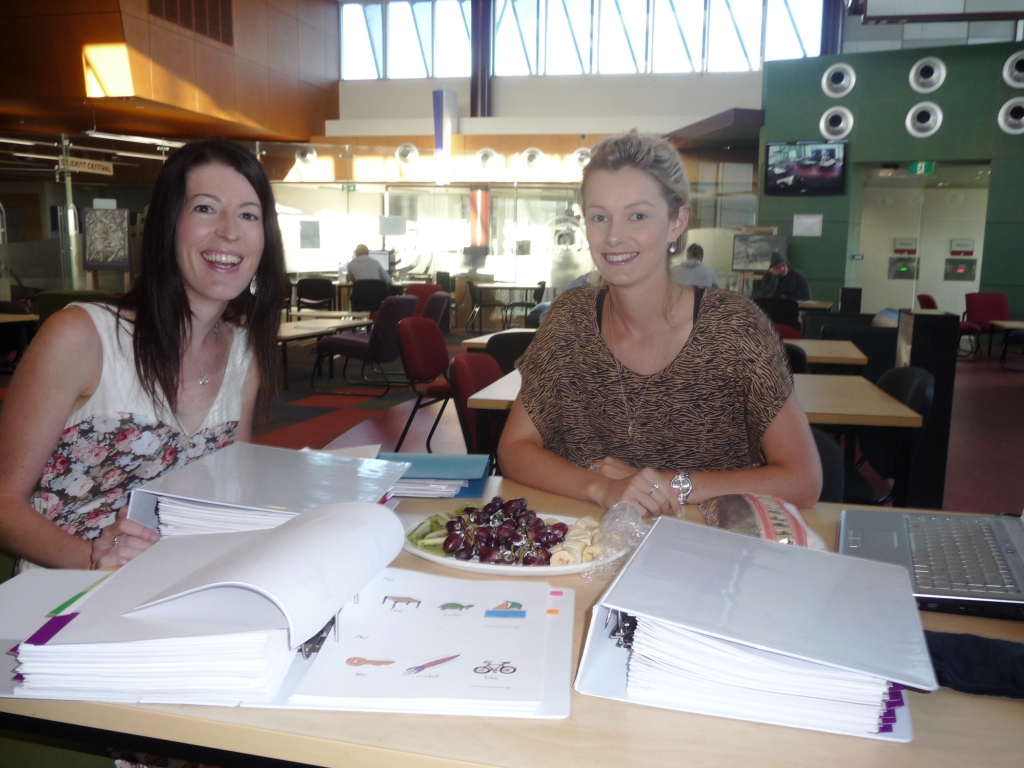
Rebekah Lockart graduated on 20th April with a Master of Speech and Language Pathology from the Faculty of Human Sciences, Department of Linguistics, Macquarie University in Sydney. Congratulations Rebekah! Her thesis was titled: “Factors that enhance Australian speech-language pathologists’ assessment of the speech of Cantonese-speaking children” and it was a privilege to supervise her work (we had an official arrangement between the two universities). 

During June Rebekah will be presenting aspects of her thesis at the Speech Pathology Australia National Conference in Hobart, Australia and I will be presenting a different paper based on this work at the International Clinical Phonetics and Linguistics Conference in Cork, Ireland. We have also just received positive reviews from an international journal about a paper based on her thesis – so soon the world will also know about the important work that Rebekah has undertaken.
Rebekah and David Lockart
 

April 11, 2012

Supervision of distance and part-time higher degree research students

Today I coordinated a supervisory workshop for the CSU Research Office titled "Supervision of distance, remote and part-time higher degree research students" The workshop was attended by academics from four universities (Australian National University, University of Canberra, Charles Sturt University, and University of New South Wales).
The other presenters were
Rob Doubleday, Manager, Research Policy and Coordinator | CSU Research Office
Dr Rod Pope, Head, Research Professional Development Programs | CSU Research Office
Kate Crowe, PhD student, Faculty of Education, CSU.

As part of my presentation I discussed practices of effective supervisors (based on James and Baldwin, 1999) that required special consideration when working with part-time distance students (see asterisked points):
"FOUNDATIONS
1.Ensure partnership is right for project
2.*Get to know students and carefully assess their needs
3.*Establish reasonable, agreed expectations
4.Work with students to establish a strong conceptual structure and research plan
MOMENTUM
5. Encourage students to write early and often
6. *Initiate regular contact and provide high quality feedback
7. *Get students into the life of the department
8. Inspire and motivate
9. *Help if academic and personal crises crop up
FINAL STAGES
10. Take an active interest in students’ future careers
11. Carefully monitor the final production and presentation of the research"

James, R., & Baldwin, G. (1999). Eleven practices of effective postgraduate supervisors. Parkville VIC: University of Melbourne.

April 9, 2012

Children's books in languages other than English

As part of my Future Fellowship research I have collected many children's books written in languages other than English. I have been considering the vocabulary, illustrations, and conventions used by authors, illustrators and publishers in different cultures. This weekend I found a wonderful bookshop in Sydney that specializes in Japanese and Chinese books (including extensive children's book sections). It is called Kinokuniya, and think I will be visiting it again.

Japanese books are traditionally opened from right to left and written from top to bottom. However, many contemporary Japanese children's books are opened from left to right, and are written horizontally to mirror English conventions.

April 7, 2012

Dr Yvonne Wren's visit

Over Easter Dr Yvonne Wren and her family visited Bathurst. I have worked with Yvonne in Bristol on a number of occasions, and we have worked in many other cities in the world on days before or after conferences. So, it was wonderful to have her visit my home this time. Yvonne and I have been working on a paper based on analysis of the ALSPAC longitudinal data set. We also discussed her development, computerisation and testing of Phoneme Factory Phonology Screener.
Sharynne and Yvonne exploring Bathurst
A kangaroo near the entrance of Charles Sturt University


April 6, 2012

Just published: Intelligibility in Context Scale


The following manuscript has just been published  
 McLeod, S., Harrison, L. J. & McCormack, J.  (2012). Intelligibility in Context Scale: Validity and reliability of a subjective rating measure. Journal of Speech, Language, and Hearing Research, 55, 648-656.

Purpose: To describe a new measure of functional intelligibility, the Intelligibility in Context Scale (ICS), and evaluates its validity, reliability, and sensitivity using clinical measures of severity of speech sound disorder: percentage of phonemes correct (PPC), percentage of consonants correct (PCC), and percentage of vowels correct (PVC).
Method: Speech skills of 120 preschool children (109 with parent-/teacher-identified concern about how they talked and made speech sounds, and 11 with no identified concern) were assessed via the Diagnostic Evaluation of Articulation and Phonology. Parents completed the 7-item ICS questionnaire which rates the degree to which children’s speech is understood by different communication partners (parents, immediate family, extended family, friends, acquaintances, teachers, and strangers) on a 5-point scale.
Results: Parents’ ratings showed that most children were “always” (5) or “usually” (4) understood by parents, immediate family and teachers, but only “sometimes” (3) by strangers. Factor analysis confirmed the internal consistency of the ICS items; therefore, ratings were averaged to form an overall intelligibility score. The ICS had high internal reliability (α=0.93), sensitivity, and construct validity. Criterion validity was established through significant correlations between the ICS and PPC (r=.54), PCC (r=.54), and PVC (r =.36).
Conclusion: The ICS is a promising new measure of functional intelligibility. These data provide initial support for the ICS as an easily administered, valid and reliable estimate of preschool children’s intelligibility when speaking with people of varying levels of familiarity and authority.

March 31, 2012

What’s new in child language research

On Friday I attended a seminar held at the Royal Children's Hospital in Melbourne titled: "What’s new in child language research: Implications for policy and practice". The very eminent speakers were:
  • Professor Bruce Tomblin, University of Iowa, USA
  • Professor James Law, University of Newcastle, UK
  • Professor Sheena Reilly, Murdoch Childrens Research Institute, Melbourne
  • Professor Cate Taylor, Telethon Institute for Child Health Research, Perth
  • Associate Professor Andrew Whitehouse, Telethon Institute for Child Health Research, Perth.
  • Professor Melissa Wake, Murdoch Childrens Research Institute, Melbourne
  • Dr Sharon Goldfeld from the Murdoch Childrens Research Institute, Melbourne
The day began with an inspiring lecture by Prof Tomblin reflecting on his last 40 years of research into children's language. Prof Law outlined his latest Cochrane Collaboration meta-analysis of interventions for children with speech and language impairment. Profs Reilly and Taylor described evidence of growth trajectories from longitudinal studies of children. A/Prof Whitehouse described some biological bases for language impairment. Prof Wake and Dr Goldfield outlined the results of population level intervention studies to support book reading and language stimulation in children from disadvantaged suburbs of Melbourne. Over 200 people attended this inspiring day.

Prof Bruce Tomblin
The new Royal Children's Hospital Melbourne - a space for children

International Journal of Speech-Language Pathology editorial board

I am the editor of the International Journal of Speech-Language Pathology (www.informahealthcare.com/ijslp). This week we had our annual editorial board meeting in Melbourne at the Speech Pathology Australia National Office. The executive board consists of:
  • Angela Morgan (Associate editor), Murdoch Childrens Research Institute, Australia
  • Chris Code - University of Exeter, UK 
  • Fiona E. Gibbon - University College Cork, Ireland 
  • James Law - University of Newcastle, UK 
  • Suze Leitão - Curtin University of Technology, Australia 
  • Malcolm R. McNeil - University of Pittsburgh, USA 
  • Bruce E. Murdoch - The University of Queensland, Australia 
  • Mark Onslow - The University of Sydney, Australia 
  • Sheena Reilly - Royal Children’s Hospital, The University of Melbourne and Murdoch Childrens Research Institute, Australia 
  • Edwin Yiu - University of Hong Kong, Hong Kong
With the acceptance of IJSLP into the Web of Science Journal Citation Index, we have seen an increase in the number of submissions to the journal. One of our topics of discussion was how to support authors and reviewers to ensure the publication of high quality research and writing. Later in the day we met with the publisher of all of informahealthcare society journals (via teleconference to Sweden). It was pleasing to hear from him that IJSLP has continued to grow in subscribers and the number of downloads. He said that this was not typical in the current economic climate.
Sharynne (Editor of IJSLP), Gail Mulcair (CEO of Speech Pathology Australia), and Dr Angela Morgan (Associate Editor of IJSLP)

March 21, 2012

The research support crew

Quality research does not occur without a quality research support crew. This morning I drove to the Wagga Wagga campus of Charles Sturt University to have meetings with:
  • Prof Ken Russell and Sharon Nielsen - Quantitative Consulting Unit
  • Gail Fuller - Spatial Analysis Network
about different research projects that are being undertaken as part of my Future Fellowship. One the way, I visited my PhD student's home, then arrived home to my family after 3 days away. By the time I had arrived home, I had received many emails from national and international colleagues. Colleagues, students, and family all make up the research support crew - and each contribute in their own important way.
The Rock: An important landmark between Albury and Wagga Wagga

March 20, 2012

Learning more about Australia's children via LSAC

Over the past two days I have worked with colleagues from Charles Sturt University, Queensland University of Technology, and Monash University. We all met in Albury as part of the Collaborative Research Network in Early Years Education to analyse data from the Longitudinal Study of Australian Children. LSAC has collected 4 waves of data from 10,000 Australian children, so contains a wealth of information to help us understand more about Australia's children. My focus over the two days was to work with Sarah Verdon, Sue Walker, Donna Berthelsen and Linda Harrison (primarily) to consider the extent and impact of speaking languages other than English. For example, we found that there was a significant difference between the number of children who spoke a language other than English at 2 to 3 years of age, compared with 4 to 5 years of age. We will continue to work on these data in the coming weeks and hopefully submit papers to be considered for publication. It was a very productive and collaborative two days.
Members of the Early Years Education Collaborative Research Network in Albury
Sue Walker, Donna Berthelsen and Sharynne
beside the Murray River - the border between NSW and Victoria

Mapping Australian children's access to services

Today Sarah Verdon (my PhD student) and I spoke with Simon McDonald from the Spatial Analysis Network at Charles Sturt University about mapping Australian children's cultural and linguistic diversity and their access to appropriate services. Sarah and Simon have worked together previously on Sarah's honours thesis, so we know that this collaboration is going to be very successful.
Simon McDonald (SPAN, CSU) and Sarah Verdon
Here is the abstract of a publication that arose from Sarah's honours thesis:
The World Health Organization's equity objective states that there should be equal access to healthcare for equal need, regardless of location. Disparities between health services and challenges to achieving the equity objective have been documented both in Australia and around the world. However, little is known about the extent to which this objective has been met in the field of speech-language pathology in Australia. This study used structured interviews with 74 speech-language pathologists working in rural areas of New South Wales and Victoria. The data obtained were used to develop maps to describe the availability of paediatric speech-language pathology services through consideration of location and frequency. The findings show that 98.60% of localities are unserviced at the ideal frequency of weekly or more often. It is important to note that these percentages include all localities in the represented rural areas of New South Wales and Victoria, some of which are minimally populated. The maps also depict travel and distance as barriers to the accessibility of services and have been used to suggest a critical maximum distance for paediatric outpatient speech-language pathology services in rural New South Wales and Victoria. From the data collected, 50 kilometres was suggested as the critical maximum distance past which consumers become unable or unwilling to travel to access weekly rural speech-language pathology services in rural New South Wales and Victoria. Thus, people living in almost one third of rural localities in rural New South Wales and Victoria lie beyond what is considered by rural speech-language pathologists to be a reasonable travel distance to weekly speech-language pathology services. These results highlight barriers to the achievement of equitable services in rural areas. The results also provide an essential foundation to inform policy development and assist health service planning to meet the needs of rural consumers.

Read More: http://informahealthcare.com/doi/abs/10.3109/17549507.2011.573865

March 19, 2012

The popularity of informal speech assessments: A taboo subject

The topic of the wide-spread use of unpublished/home-made/informal speech assessments is rarely discussed (or disclosed) within research literature. Most literature contains reports of the use of gold-standard assessment tools for diagnosis of children with speech difficulties and identification of appropriate intervention goals. However, recent reports using questionnaire data indicate that many speech pathologists are using unpublished/home-made/informal speech assessments. Nicole Limbrick is undertaking an analysis of the conceptualisation and operationalisation of informal speech assessments. It is interesting to see what they look like and to discover some very innovative design features in some of the assessments. Jane McCormack and I are very fortunate to be co-supervising Nicole's honours thesis. She will be presenting data from her thesis at the Speech Pathology Australia National Conference in Hobart in June.

Jane McCormack and Nicole Limbrick
considering informal speech assessments

March 9, 2012

Supporting children's speech and language development

Last night I spoke to 404 parents and teachers at 30 rural and remote schools throughout the state of New South Wales (NSW) as part of the Department of Education and Communities' NSW Country Areas Program's RDE RELATE:
"RDE RELATE  began in 2010 as a community education initiative aimed at supporting parents and community members in rural and remote areas of NSW. The aim is to support sustainability in rural and remote communities through providing access to high quality persons and topics of interest via video conferencing. Issues covered to date have canvassed a broad range of topical issues from internet safety, sexting,  to assisting your child with literacy." http://www.cap.nsw.edu.au/rde-relate

The title of my presentation was: "Supporting children's speech and language development" (not quite as controversial as some of the other topics above!). I covered how children acquire speech and language from birth into the school years. Then I talked about what parents and teachers can do to assist children's communication.

Thank you flowers!
To end my presentation I showed a video from the UK's 2011 Hello campaign: http://www.youtube.com/watch?v=EZ02NkT9GMY&feature=related


March 2, 2012

January-February 2012 summary

AUSTRALIAN RESEARCH COUNCIL FUTURE FELLOWSHIP UPDATE
‘Speaking my language: International speech acquisition in Australia’
Written by Kim Woodland, Research Institute for Professional Practice, Learning and Education for the February 2012 RIPPLE Update

Sharynne has spent time over the last few months continuing her Future Fellowship research, collaborating on other research and publication projects, and working with speech pathology students and the three doctoral students and two honours students she is supervising this year. She was recently interviewed by ABC Science online for her opinion on results from a new study that examined the ability of adults and toddlers (aged 2 and 4) to change their vowel productions based on how they perceived their own speech output. A range of media coverage has also resulted from the completion of the ‘Infants’ lives in childcare’ project, funded by the ARC, which a number of RIPPLE members were part of. Further information on the international interest this project has garnered appears in the ‘Awards and Success Stories’ section of this Update (p. 6). A project Sharynne is currently collecting data for is ‘Talking about talking: Children’s perspectives’, a project which explores typically developing young children’s perspectives about their talking and listening, with the aim of facilitating educational transition between early childhood and school settings. She also recently gave an online lecture—‘Cross-linguistic aspects of communication development’—which was appropriately broadcast across 3 continents, in 5 different time zones, and in 2 languages (it was translated into Portuguese at one of the sites). Finally, in the last RIPPLE Update, I wrote about a book that Sharynne was finalising with Brian Goldstein. The book, Multilingual aspects of speech sound disorders in children, has just been published by Multilingual Matters in the United Kingdom. For more information, please visit Sharynne’s blog: Speaking my languages.

February 29, 2012

2012 Research Higher Degree Students

I am very fortunate to work with wonderful, dedicated and enthusiastic research higher degree students. During 2012 I will be working with the following students:
Kate Crowe (PhD) 
Topic: Multilingual children with hearing loss: Communication choices and outcomes 
Sarah Verdon (PhD) 
Topic: Quality services for supporting young multilingual children with speech and language disorders
Jacqui Barr (PhD)
Topic: “I’m not like most other kids”: Sibling experiences of disability and implications for education 
Hannah Wilkin (BEd Honours) 
Topic: Talking about talking: Children's insights
Nicole Limbrick (BHlthSc Honours) 
Topic: Designs and decisions: The creation and use of informal criterion-referenced measures for assessing children’s speech 
PhD students: Jacqui Barr, Kate Crowe, Sarah Verdon with Sharynne


February 25, 2012

Just published: Multilingual Aspects of Speech Sound Disorders in Children

Multilingual Aspects of Speech Sound Disorders in Children has just been published by Multilingual Matters in the UK. Details about the book can be found here on my blog, and here on the publishers' website (including a preview of pages from the book). Once it arrived Brian and I took these photos of ourselves holding the book in the Northern Hemisphere winter and Southern Hemisphere summer to show what a global book it really is.
Brian in the northern hemisphere


Sharynne in the southern hemisphere

February 21, 2012

Listening to children talking about talking

One of our participants showing off his work
Over the past weeks Hannah Wilkin (primary education student), Elissa Shand (speech pathology student) and I have been visiting children in preschools. We have been talking to typically developing 4- to 5-year-old children about talking... and we are learning a lot. We will make comparisons between these current data, and data from the Sound Effects Study (where we talked to children who had speech impairment). Additionally, as part of establishing the children's speech and language skill level, we have been piloting the usefulness of the English version of the International Speech Assessment with another validated assessment tool. Thank you children for teaching us a lot about talking!
Sharynne, Elissa and Hannah with some of the children's drawings

February 19, 2012

Babycam enables us to consider infants' lives while at childcare

Baby's view (image from Press et al., 2011)
Observer's view (image from Press et al., 2011)
For the past few years, I have been fortunate to work with a group of colleagues in early childcare education and psychology on an Australian Research Council Linkage Grant to consider what is life like for babies in childcare. Over the course of the project we developed/used a number of innovative techniques to attempt to get a baby's eye-view on their world. One of these techniques was "babycam" where we placed a lipstick sized camera on a headband/hat worn by the babies. We spent a long time developing this technique (e.g., the smaller sized cameras were too hot).

We have just completed the project where we collected longitudinal and cross-sectional data with babies in long daycare centers and family day care homes. The media has spent the past weekend reporting stories that have come from the project about the competency of these infants in the ways that they relate to one another.
In addition, we have just learned that the story has been reported around the globe in the following venues:

ABS CBN News‎, ‎Adelaide Now‎, ‎AFP‎, ‎Bahrain News Agency‎, ‎Bangkok Post‎, ‎Calgary Herald‎, ‎Canada.com‎, ‎Channel News Asia‎, ‎China Post‎,  Daily Star Online‎, ‎DAWN.com‎, ‎Deccan Herald‎, ‎Expressindia.com‎, ‎Focus News‎, ‎FRANCE 24‎, ‎Geo Television Network‎, ‎Gulf Today‎, ‎Himalayan Times‎, ‎Hindustan Times‎, ‎Huffington Post UK‎, ‎Indian Express‎, ‎Indian Express‎, ‎Inquirer.net‎, ‎Jakarta Globe‎, ‎MSN Malaysia News‎, ‎MSN Philippines News‎, ‎Naharnet‎, ‎New Straits Times‎, ‎NEWS.com.au‎, ‎Newstrack India‎, ‎Ninemsn‎, ‎Outcome Magazine (blog)‎, ‎PhysOrg.com‎, ‎Radio Netherlands‎, ‎Sin Chew Jit Poh‎, ‎SKNVibes.com‎, ‎Straits Times‎, ‎Telegraph.co.uk‎, ‎The Nation, Pakistan‎, ‎The News International‎, ‎The West Australian‎, ‎TODAYonline‎, ‎TopNews Arab Emirates‎, ‎TopNews New Zealand‎, ‎TopNews United States, ‎TruthDive‎, ‎Vancouver Sun‎, ‎Yahoo!7 News
We have published book chapters and articles about our work (and there will be more publications in the future)
  •  Press, F., Bradley, B. S., Goodfellow, J., Harrison, L. J., McLeod, S., Sumsion, J., Elwick, S. Stratigos, T. (2011). Listening to infants about what life is like in childcare: A mosaic approach. In S. Roulstone & S. McLeod (Eds.), Listening to children and young people with speech, language and communication needs. (pp. 241-250). London: J&R Press.
  • Sumsion , J., Harrison, L. J., Press, F., McLeod, S., Goodfellow, J. & Bradley, B. S. (2011). Researching infants’ experiences of early childhood education and care. In D. Harcourt, B. Perry & T. Waller (Eds). Researching young children’s perspectives: Debating the ethics and dilemmas of educational research with children (pp. 113-127). London: Routledge.
  • Goodfellow, J., Elwick. S., Stratigos, T., Sumsion, J., Press, F., Harrison, L., McLeod, S., & Bradley, B. (2011). Infants’ lives in childcare: Crafting research evidence. The First Years Nga Tau Tuatahi Journal of Infant Toddler Education, 13(2), 43-48.  
  • Sumsion, J., Harrison, L., Press, F., McLeod, S., Goodfellow, J., Bradley, B., & Stonehouse, A., (2009). Infants’ experiences in long day care and family day care. Jigsaw, 53.

February 16, 2012

CSU: For the public good

February is the beginning of the academic year for Australian universities (unlike my northern hemisphere colleagues). So, at Charles Sturt University (CSU) a lot of new year events are occurring. This week I met our new Vice Chancellor, Andrew Vann, who spoke at the Senior Women's Forum about the importance of CSU making a difference to our students' lives, and the communities in which we live. CSU has a footprint across regional New South Wales, and has nearly 40,000 students.
This week I have also had the opportunity to drive through the magnificent countryside to CSU's Australian Centre for Christianity and Culture in Canberra. I have attended the professorial forum: a stimulating two days' of discussion about all aspects of university life. It is encouraging to be amongst such a diverse group of learned people who uphold the explorer Charles Sturt's (and CSU's) motto of "for the public good". This motto fits very well with the research work I am undertaking on my Future Fellowship.

February 14, 2012

Publications for 2011

Each year universities require their staff to report on their productivity during the year. Here is my list of publications for 2011. I have had wonderful colleagues to work with to generate this research and to produce these publications. I really enjoy emails from people around the world who comment on how some of our publications have changed the way they work with children. I believe that this is one of the most important reasons to publish.


BOOKS
1.       Roulstone, S. & McLeod, S. (Eds). (2011). Listening to children and young people with speech, language and communication needs. London: J&R Press. (294 pages) http://www.jr-press.co.uk/communication-needs.html
CHAPTERS IN BOOKS
1.       Daniel, G., & McLeod, S. (2011). ‘I can’t say words much’: Listening to school-aged children’s experiences of speech impairment. In S. Roulstone & S. McLeod (Eds.), Listening to children and young people with speech, language and communication needs. (pp. 195-202). London: J&R Press.
2.       McLeod, S. (2011). Listening to children and young people with speech, language and communication needs: Who, why and how? In S. Roulstone & S. McLeod (Eds.), Listening to children and young people with speech, language and communication needs. (pp. 23-40). London: J&R Press.
3.       McLeod, S., McCormack, J., McAllister, L., Harrison, L. J., & Holliday, E. L. (2011). Listening to 4- to 5-year-old children with speech impairment using drawings, interviews and questionnaires. In S. Roulstone & S. McLeod (Eds.), Listening to children and young people with speech, language and communication needs. (pp. 179-186). London: J&R Press.
4.       Press, F., Bradley, B. S., Goodfellow, J., Harrison, L. J., McLeod, S., Sumsion, J., Elwick, S., Stratigos, T. (2011). Listening to infants about what life is like in childcare: A mosaic approach. In S. Roulstone & S. McLeod (Eds.), Listening to children and young people with speech, language and communication needs. (pp. 241-250). London: J&R Press.
5.       Roulstone, S., & McLeod, S. (2011). Listening to improve services for children and young people with speech, language and communication needs. In S. Roulstone & S. McLeod (Eds.), Listening to children and young people with speech, language and communication needs. (pp. 283-294). London: J&R Press.
6.       Sumsion , J., Harrison, L. J., Press, F., McLeod, S., Goodfellow, J. & Bradley, B. S. (2011). Researching infants’ experiences of early childhood education and care. In D. Harcourt, B. Perry & T. Waller (Eds). Researching young children’s perspectives: Debating the ethics and dilemmas of educational research with children (pp. 113-127). London: Routledge.
JOURNAL ARTICLES
1.       McLeod, S. (2011). Cultural and linguistic diversity in Australian 4- to 5-year-old children and their parents. ACQuiring Knowledge in Speech, Language, and Hearing, 13(3), 112-119.
2.       McLeod, S. (2011). Speech-language pathologists’ knowledge of tongue/palate contact for consonant production. Clinical Linguistics and Phonetics, 25(11-12), 1004-1013.
3.       Goodfellow, J., Elwick. S., Stratigos, T., Sumsion, J., Press, F., Harrison, L., McLeod, S., & Bradley, B. (2011). Infants’ lives in childcare: Crafting research evidence. The First Years Nga Tau Tuatahi Journal of Infant Toddler Education, 13(2), 43-48.   
4.       McCormack, J., Harrison, L. J., McLeod, S. & McAllister, L. (2011). A nationally representative study of the association between communication impairment at 4-5 years and children's life activities at 7-9 years. Journal of Speech, Language, and Hearing Research, 54(5), 1328-1348.  doi:10.1044/1092-4388(2011/10-0155)
5.       McAllister, L., McCormack, J., McLeod, S., & Harrison, L. J. (2011). Expectations and experiences of accessing and participating in services for childhood speech impairment. International Journal of Speech-Language Pathology, 13(3), 251-267.
6.       Baker, E. & McLeod, S. (2011a). Evidence-based practice for children with speech sound disorders: Part 1 narrative review. Language, Speech, and Hearing Services in Schools, 14, 102-139. 
7.    Baker, E. & McLeod, S. (2011b). Evidence-based practice for children with speech sound disorders: Part 2 application to clinical practice. Language, Speech, and Hearing Services in Schools, 14, 140-151.

February 4, 2012

Recognition of Jamaican as a language

Dr Karla Washington
This week Dr Karla Washington and I have been preparing for our Jamaican speech acquisition project. We are having Skype calls with Prof. Hubert Devonish from the Jamaican Language Unit, and Kwesi, the only speech and language pathologist who works in the public sector in Jamaica (there are approx. 5 other SLPs who work in private practice).

Jamaican (also called Jamaican Creole, and Patois/Patwa) is spoken by all Jamaicans, yet has only been recognized as a legitimate language for about 10 years. The Jamaican Language Unit has advocated for and supported the recognition of the use of Jamaican in schools and society. Prof. Devonish was interviewed about this in 2010: http://www.jamaicans.com/speakja/patoisarticle/JamaicanPatoisLanguage-2.shtml

One exciting project that is almost complete is the publication of the "Jiisaz Buk": the New Testament written in Jamaican.It will be released on Jamaican Independence Day, 6th August. The BBC recently released a video story about the importance of this publication to the Jamaican people: http://www.bbc.co.uk/news/magazine-16289048
Yet, here is an audio news story outlining the controversy about the Jamaican Bible, and recognition of the Jamaican language: http://news.bbc.co.uk/today/hi/today/newsid_9663000/9663844.stm