Showing posts with label data. Show all posts

April 14, 2026

CET Speech Census - Last week

We are working hard to finalise our CET speech census this week before the children all go on school holidays. We have just over 1000 consent forms returned. I have entered data for 733 assessments - but our team has done more than this (yay team!). I entered the data Ally gave me this afternoon for another 46 assessments. Helen did over 30 today (I haven't entered these yet). What an amazing team - and incredible children and teaching staff.

Ally and Sharynne heading to The Nest in The Treehouse for more data collection with the children

Sharynne, Ally Barrett and Emma Scanlon 
at the end of a big day assessing wonderful children

March 30, 2026

Week 3 of the Tasmanian Kinder Speech Census begins

 At the beginning of week 3 of our Tasmanian Kinder Speech Census we have:

  • 32 schools
  • 1,203 Kinder students
  • 889 parent consent forms returned 
  • LOTS of children who have assented to participating in our research and who have told us how they feel about their speech 
  • LOTS of children assessed using the International Speech Screener (ISS). I personally have assessed 208 children so far :)
  • 63 control children assessed with the Diagnostic Evaluation of Articulation and Phonology (DEAP)


Another day face-to-face with Kinder students in CET schools

The rest of the week I have been assessing the students and undertaking data analysis via Zoom because I am no longer in Tasmania. 

July 16, 2025

Children Draw Playing data analysis

At the Children's Voices Centre we have a number of research opportunities where CVC affiliates to collaborate. Dr Carolyn Gregoric is leading the analysis of the Children Draw Playing data presented at the ECV2024 conference and available online in the Children Draw Playing Global Online Galleries:  https://earlychildhoodresearch.csu.domains/early-childhood-voices-conference-2024/children-draw-playing/

We have four teams who are spending 20-30 minutes per drawing to answer 60+ questions to create the data for analysis. Today our team worked for 1.5 hours and analysed three drawings from the Mongolian dataset. We had rich discussions and were impressed by what the children could convey in their drawings.

Congratulations to Belinda Downey and her team (Mehdi, Arifa, Van and Katrina G) who have already completed their analyses.

April 15, 2025

Population data - The importance of working with key data managers

Today I was able to meet with "Data Debbie" from Catholic Education Tasmania. She is overseeing our data entry once our project is signed off and ready to officially begin with CET. We discussed the importance of demographic data, understanding missing data, and also the possibility of scanning data into Excel straight from the ICS forms! Thanks Debbie, Lisa and Udari!


March 11, 2025

OUAT - publication preparation

Our Once Upon a Time grant data collection is finished - and today we met to continue working on the data analysis, publications and presentations from this important work.
Sharynne, Jane McCormack, Anna Cronin

March 12, 2024

Once Upon a Time - Children's perspectives of DTTC intervention - Data are arriving

Our Once Upon a Time - Children's perspectives of DTTC intervention research team met today and had the first look at some of the submitted data. What a great milestone!

A/Prof Jane McCormack, Prof Sharynne McLeod, Dr Marie Ireland, Dr Anna Cronin


January 30, 2024

Data collection has begun for our DTTC Once Upon a Time Foundation Grant

Today Dr Anna Cronin met with Marie Ireland (research assistant) and myself to document the commencement of our DTTC Once Upon a Time Foundation grant. One huge achievement is that the box containing packs of 10 markers have made it to Marie in the US for the children to use for their drawings (we have had a lot of angst organising this!). Marie has made a video with a child who has agreed to be on advisory committee. Anna will go to the US to meet with the rest of the team next week. I can't wait to see the children's drawings and feedback on their speech interventions.

June 28, 2023

People with disability in Australia 2022 - Statistics about communication disability

IMPORTANT DATA FROM:
 

Australian Institute of Health and Welfare (2022) People with disability in Australia 2022, catalogue number DIS 72, AIHW, Australian Government.

https://www.aihw.gov.au/getmedia/3bf8f692-dbe7-4c98-94e0-03c6ada72749/aihw-dis-72-people-with-disability-in-australia-2022.pdf.aspx?inline=true

Australian Bureau of Statistics’ (ABS) 2018 Survey of Disability, Ageing and Carers (SDAC).

"Nearly one-third (32%) of people with disability – about 1.4 million or 5.7% of the Australian population – have severe or profound disability. This means sometimes or always needing help with daily self-care, mobility or communication activities, having difficulty understanding or being understood by family or friends, or communicating more easily using sign language or other non-spoken forms of communication (ABS 2019a)." (p. 26)

Of people with disability living in households who need help with at least one activity: • the need for help with cognitive or emotional tasks decreases with age (79% or 362,000 of those aged under 25, 45% or 422,000 of those aged 25–64, and 19% or 208,000 of those aged 65 and over) • those aged under 25 are more likely (41% or 187,000) to need help with oral communication than those aged 25–64 (5.9% or 55,000) or 65 and over (5.8% or 64,000) (p. 36)

Of the selected chronic conditions, stroke is associated with a high level of core activity limitation: • 42% (or 37,000) of people with stroke as their main condition have severe or profound core activity limitation • 17% (or 15,000) have mild or moderate core activity limitation • 39% (or 33,000) have no core activity limitations, but may still have disability not related to core activities. Of the selected chronic conditions, asthma is associated with the lowest level of core activity limitation: • 1.5% (or 13,000) of people with asthma as their main condition have severe or profound core activity limitation • 4.6% (or 38,000) have mild or moderate core activity limitation • 94% (782,000) have no core activity limitation, but may still have disability not related to core activities (Figure CHRONIC.3). (p. 96)

Not everyone with disability receives all the help they need from formal services. Common activities for which the need for formal assistance was unmet include: • cognitive or emotional tasks (40% or 286,000 people with disability, aged 64 and under, living in households who need formal assistance with that activity) • communication (38% or 86,000) • property maintenance (31% or 139,000) • household chores (31% or 124,000) • mobility (20% or 98,000) (ABS 2019). The reasons given for not receiving any or more help from an organised service with at least one activity include: • service costs too much (38% or 199,000 people with disability, aged 64 and under, with an unmet need for formal assistance) • did not know of service (18% or 95,000) • not eligible for service (16% or 84,000) • service does not provide sufficient hours (14% or 73,000) • unable to arrange service (14% or 72,000) • no service available (13% or 68,000) (ABS 2019). Reasons for not receiving any or more help from an organised service with at least one activity differ by remoteness. Among people with disability aged 64 and under, with an unmet need for formal assistance: • people living in Outer regional and remote areas are more likely (24% or 15,000) not to receive help due to no service being available than those living in Major cities (9% or 31,000) • people living in Inner regional areas are more likely (23% or 26,000) not to receive help due to not being eligible for service than those living in Major cities (14% or 49,000) and Outer regional and remote areas (15% or 9,000) • people living in Major cities are more likely (40% or 140,000) not to receive help due to service costing too much than those living in Outer regional and remote areas (27% or 16,000) (ABS 2019). (p. 133)

Household, Income and Labour Dynamics in Australia (HILDA) Survey

Difficulties experienced. Some people with disability experience difficulties at their school or educational institution, such as learning, fitting in socially and communicating. 

School students (primary and secondary). Not all school students (aged 5–18) with disability have difficulty at their school – more than one-third (36% or 135,000) do not. Some who have no difficulty have a schooling restriction (16% of school students with disability, or 61,000) while others do not (20% of school students with disability, or 76,000). This varies by disability group and remoteness: • More than 4 in 5 (81% or 122,000) students with psychosocial disability have difficulty at school compared with 3 in 5 (59% or 54,000) of those with physical disability. • More than two-thirds (69% or 59,000) of students living in Inner regional areas have difficulty compared with 3 in 5 (59% or 23,000) of those living in Outer regional and remote areas (ABS 2019). 

Of those who have difficulty at school, the most common experienced are: 

• learning difficulties (68% or 165,000) 

• fitting in socially (56% or 137,000) 

• communication difficulties (44% or 107,000) 

• intellectual difficulties (22% or 54,000) 

• sports participation (17% or 42,000) 

• difficulty sitting (15% or 37,000) (ABS 2019). (pp. 298-299)

Non-school students Not all non-school students with disability have difficulty at their educational institution – almost three-quarters (74% or 137,000) do not. Some with no difficulty have a nonschool educational restriction (19% of non-school students with disability, or 35,000) while others do not (53% of non-school students with disability, or 99,000). Of those who have difficulty, the most common experienced are: • learning difficulties (32% or 17,000) • fitting in socially (25% or 13,000) • communication difficulties (20% or 11,000) (ABS 2019).


References

ABS (Australian Bureau of Statistics) (2019) Microdata: disability, ageing and carers, Australia, 2018, ABS cat. no. 4430.0.30.002, ABS, AIHW analysis of TableBuilder data, accessed 14 October 2021. https://www.abs.gov.au/statistics/microdatatablebuilder/available-microdata-tablebuilder/disability-ageing-and-carers-australia

DSS (Department of Social Services) and MIAESR (Melbourne Institute of Applied Economic Social Research) (2019) The Household, Income and Labour Dynamics in Australia (HILDA) Survey, general release 18 (wave 17), doi:10.26193/IYBXHM, ADA Dataverse, AIHW analysis of unit record data, accessed 15 December 2021.


September 27, 2022

Blog statistics: 257K views!

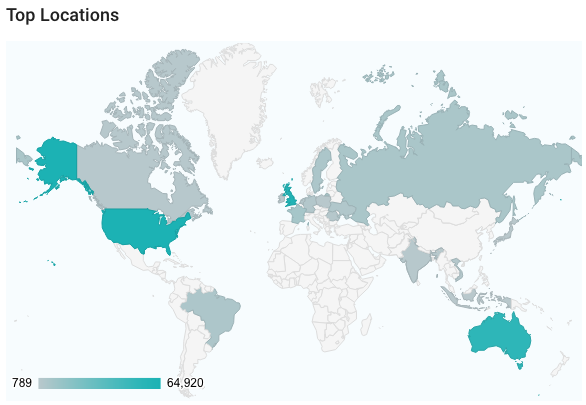
I have just had a look at this blog's statistics! There have been 21.1K views in the past 12 months and 257K views over the 10 years I have kept this blog!

The top countries accessing my blog are: USA, UK, Australia, France, Russia, Sweden, Brazil, Hong Kong, Ukraine, Germany, Vietnam, Romania, Netherlands, Canada, India, Poland, Japan, Indonesia.


June 22, 2021

VietSpeech transcription, data entry and analysis meeting

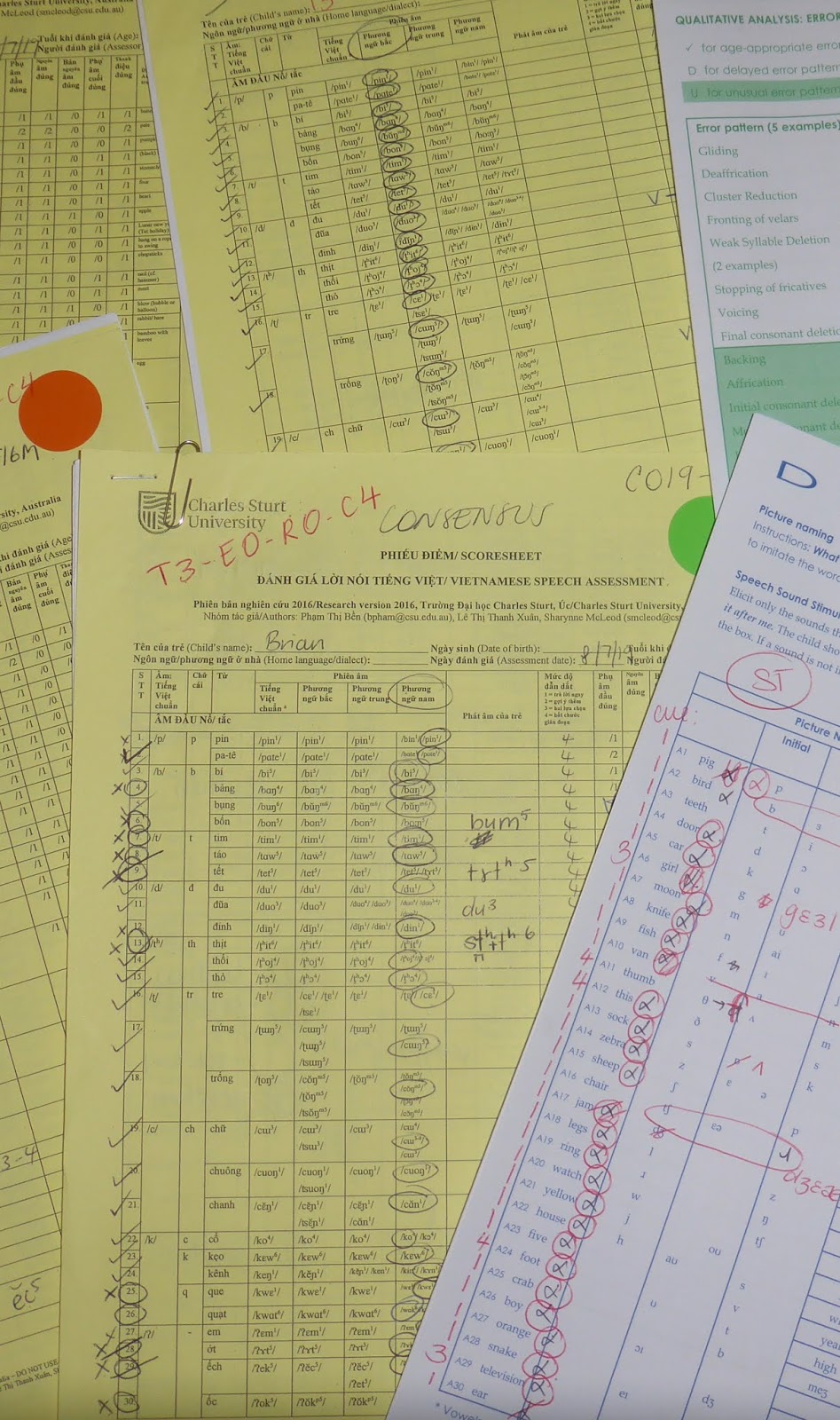
Tonight our VietSpeech research assistants met to discuss our transcription, data entry and analysis for Study 4. Transcription of data in two languages (English and Vietnamese) is complex and requires extensive checking and protocols to ensure accuracy. We have a fantastic team who are very rigorous  - ensuring a high level of confidence in our findings.

Katherine White, Sharynne McLeod, Lily To, Van Tran


May 7, 2021

VietSpeech data management

Today Evelyn Sowter and Katherine White worked together on systems for filing and digitising the VietSpeech data. It is an important part of research, especially since our team works from many different locations.

Evelyn Sowter in the CSU Bathurst office

December 7, 2020

Thank you Audrey

 Dr Cen (Audrey) Wang has been such an important part of our VietSpeech team. She has worked with us 1 day per week to support our data analysis and writing. Today was her last day for 2020 before she went on leave. We look forward to continuing to work with her into the future. We currently have 6 papers in submission and under review, so are hoping that 2021 will have many accepted papers. In 2019 we published the following papers together:

  • McLeod, S., Verdon, S., Wang, C., & Tran, V. H. (2019). Language proficiency, use, and maintenance among people with Vietnamese heritage living in Australia. Journal of Monolingual and Bilingual Speech, 1(1), 55–79. https://doi.org/10.1558/jmbs.10973
  • Hopf, S. C., McDonagh, S. H., Wang, C., & McLeod, S. (2019, published online 2018). English language and literacy proficiency of students in an urban Fiji primary school. Language, Culture and Curriculum, 32(2), 223-238. doi: 10.1080/07908318.2018.1541999 
  • McLeod, S., Harrison, L. J., & Wang, C. (2019). A longitudinal population study of literacy and numeracy outcomes for children identified with communication impairment in early childhood. Early Childhood Research Quarterly, 47, 507-517. doi:10.1016/j.ecresq.2018.07.004 

Discussing VietSpeech data analysis with Audry


August 5, 2020

VietSpeech Study 2 data milestone

This week we
  • finished the main analyses of the VietSpeech Study 2 English (adult and child) data analysis - Cen (Audrey) Wang and myself
  • finished entering all of the VietSpeech Study 2 Vietnamese (adult) data so it is ready for analysis - Kate Margetson and Katherine White
Not long ago we finished the VietSpeech Study 2 inter-rater reliability - and were extremely pleased with the high level of reliability amongst raters.

We are writing a series of journal articles that we hope to submit later this year.

Once data collection is over there is a LOT to do!


April 6, 2020

Publications using data from LSAC, LSIC, and BNLA

Our SLM team have published the following papers using data from the Australian Government Longitudinal Studies (CSU authors are in bold). It has been an amazing source of data to answer many fundamental questions about children's speech and language and has been used to inform policy and practice over the past decade.

1. LSAC, LSIC and BNLA studies
Book chapter
McLeod, S., McCormack, J., & Blake, H. L. (2019, in press December). Communication, participation and cohort studies. In J. Law, S. Reilly & C. McKean (Eds.). Handbook of language development in a social context. Cambridge, UK: Cambridge University Press.  

2. Longitudinal Study of Australian Children (LSAC)
Book chapter
Daniel, G., Wang, C., Murray, E., Harrison, L. J. (2017). School choice and parent involvement among Australian children starting school.  In S. Dockett., W. Griebel., & B. Perry (Eds). Families and Transition to School (pp. 131-143). Dordrecht: Springer.
Journal articles 
Daniel, G.,Wang, C. (2017). Inclusion and the practice of repeating Kindergarten in Australia. Australian Journal of Learning Difficulties, 22, 57-69. doi: 10.1080/19404158.2017.1367152  
Daniel, G., Wang, C., & Berthelsen, D. (2016). Early school-based parent involvement, children’s self-regulated learning and academic achievement: An Australian longitudinal study. Early Childhood Research Quarterly, 36, 168-177. doi: 10.1016/j.ecresq.2015.12.016  
Harrison, L. J. & McLeod, S. (2010). Risk and protective factors associated with speech and language impairment in a nationally representative sample of 4- to 5-year-old children. Journal of Speech, Language, and Hearing Research, 53(2), 508-529.
Harrison, L. J., McLeod, S., Berthelsen, D., & Walker, S. (2009). Literacy, numeracy and learning in school-aged children identified as having speech and language impairment in early childhood. International Journal of Speech-Language Pathology, 11(5), 392-403.
McCormack, J., Harrison, L. J., McLeod, S. & McAllister, L. (2011). A nationally representative study of the association between communication impairment at 4-5 years and children's life activities at 7-9 years. Journal of Speech, Language, and Hearing Research, 54(5), 1328-1348.  doi:10.1044/1092-4388(2011/10-0155)
McLeod, S. & Harrison, L. J. (2009). Epidemiology of speech and language impairment in a nationally representative sample of 4- to 5-year-old children. Journal of Speech, Language, and Hearing Research, 52(5), 1213-1229.
McLeod, S., Harrison, L. J.,Wang, C. (2019). A longitudinal population study of literacy and numeracy outcomes for children identified with speech, language, and communication needs in early childhood. Early Childhood Research Quarterly, 47, 507-517doi:10.1016/j.ecresq.2018.07.004 
McLeod, S., Harrison, L. J., Whiteford, C., & Walker, S. (2016). Multilingualism and speech-language competence in early childhood: Impact on academic and social-emotional outcomes at school. Early Childhood Research Quarterly, 34, 53-66. doi:10.1016/j.ecresq.2015.08.005
Shahaeian, A., Wang. C., Tucker-Drob, E., Geiger, V., Bus, A., & Harrison, L. (2018). Early shared reading, socioeconomic status, and children’s cognitive and school competencies: Six years of longitudinal evidence. Scientific Studies of Reading, 22, 485-502. doi: 10.1080/10888438.2018.1482901 
Wang, C., Harrison, L., McLeod, S., Walker, S., & Spilt, J. (2018). Can teacher-child relationships support human rights to freedom of opinion and expression, education, and participation? International Journal of Speech-Language Pathology20, 133-141. doi:10.1080/17549507.2018.1408855 
Wang, C., Hatzigianni, M., Shahaeian, A., Murray, E., & Harrison, L. (2016). The combined effects of teacher-child and peer relationships on children’s social-emotional adjustment. Journal of School Psychology, 59, 1-11. doi:10.1016/j.jsp.2016.09.003  
Wang, C., Williams, K., Shahaeian, A., & Harrison, L. (2018). Early predictors of escalating internalizing problems across middle childhood. School Psychology Quarterly, 33, 200-212. doi:10.1037/spq0000218   

3. Longitudinal Study of Indigenous Children (LSIC)
Journal articles
McLeod, S., Verdon, S., & Bennetts Kneebone, L. (2014). Celebrating young Indigenous Australian children’s speech and language competence. Early Childhood Research Quarterly, 29(2), 118-131. doi:10.1016/j.ecresq.2013.11.003
Verdon, S., & McLeod, S. (2015). Indigenous language learning and maintenance among young Australian Aboriginal and Torres Strait Islander children. International Journal of Early Childhood, 47(1), 153-170. doi:10.1007/s13158-015-0131-3
Verdon, S., McLeod, S., & Winsler, A. (2014b). Linguistic diversity among Australian children in the first five years of life. Speech, Language, and Hearing, 17(4), 196-203. doi:10.1179/2050572814Y.0000000038
Verdon, S., McLeod, S., & Winsler, A. (2014a). Language maintenance and loss in a population study of young Australian children. Early Childhood Research Quarterly, 29, 168-181. doi:10.1016/j.ecresq.2013.12.003
Government reports
McLeod, S. & Verdon, S. (2015). Longitudinal patterns of language use, diversity, support, and competence. In Department of Social Services (Ed.). Footprints in Time: Longitudinal Study of Indigenous Children Report from Wave 5 (pp. 66-70). Canberra, Australia: Commonwealth of Australia. ISBN: 978-1-925007-73-2

4. Building New Life in Australia (BLNA)
Blake, H. L., Bennetts Kneebone, L. & McLeod, S. (2019). The impact of oral English proficiency on humanitarian migrants’ experiences of settling in Australia. International Journal of Bilingual Education and Bilingualism, 22(6), 689-705, doi:10.1080/13670050.2017.1294557

March 16, 2020

VietSpeech study 2 statistics

Today Dr Cen (Audrey) Wang and I spent the day creating syntax for SPSS (a statistics program) so that we can undertake our analysis of the children's and their families' English and Vietnamese consonants, vowels and tones. We are trialing it with one family to ensure we understand the subtleties and complexities of the data before we finalize data from all of the participants.  It is exciting that we are beginning to see some results.
Sharynne, Audrey, data and SPSS
VietSpeech DEAP and VSA data

March 11, 2020

COVID-19 and its impact on the world (including our research)

COVID-19 (coronavirus) has and will impact many aspects of our lives, including our work and research. The following documents/sites are useful:
Talking to children about COVID-19
COVID-19 will impact our planned data collection for our current research grant.

March 3, 2020

StoryBabies research has begun

Dr Michelle Brown is my postdoctoral scholar as part of my CSU Senior Research Fellowship. This week her StoryBabies research to learn from speech-language pathologists has begun. Very soon, she will also open a questionnaire for early childhood educators.

If you are a speech-language pathologist (therapist) and work with children aged 0-2 years, please complete the questionnaire here: https://www.research.net/r/StoryBabies-SLP


April 3, 2019

NSW Health Translational Research Grant data collection has finished

Today data collection for the NSW Health Translational Research Grant finished. Katrina Rohr from Bathurst Community Health centre just sent 52,173 cells of data collected by the research team across 2 sites from 121 children over 4 stages of our randomised controlled trial. The data will now be cleaned then analysed. It is an exciting stage of research. What have we found?

July 12, 2018

Data collection

We are in the middle of two large grants - which means we are in the middle of data collection.
  • Our VietSpeech questionnaire about Vietnamese language maintenance is still open for people to answer either in English or in Vietnamese. We have had 179 people log into answer it in English and 11 in Vietnamese so far, but would like more respondents. Recruitment finishes in August.
  • Our Waiting for Speech Pathology grant involves 3- to 5-year-old children and so far we have 94 participants across 3 sites: Site 1 – 28 participants, Site 2 – 37 participants, and Site 3 – 29 participants. Recruitment finishes at the end of September.

July 2, 2016

Thank you Ninh

Ninh Dang Vu has been my research assistant from March - June this year. He has assisted with many tasks including data entry into SPSS and Excel, scanning, confidentializing, coding and organizing video, audio and data files, cataloguing journal articles and book chapters, and archiving my blog entries. Thank you Ninh!
Ben Pham, Ninh Dang Vu, and Sharynne