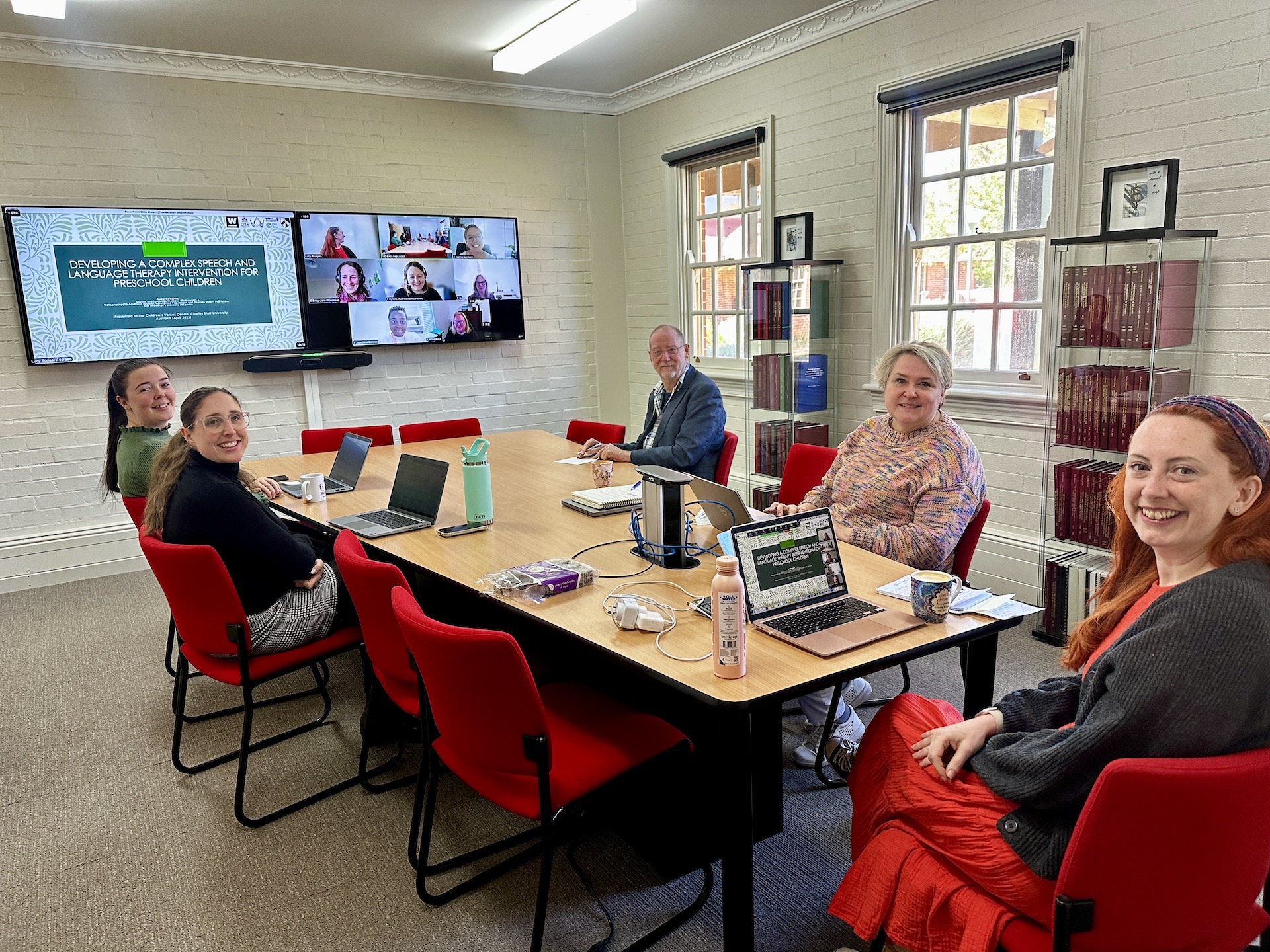
This afternoon I met online with Lucy Rodgers (UK) to discuss her next grant application so that she can come back to the Children's Voices Centre. We really enjoyed Lucy's visit earlier this year, so look forward to her coming again.

This afternoon I met online with Lucy Rodgers (UK) to discuss her next grant application so that she can come back to the Children's Voices Centre. We really enjoyed Lucy's visit earlier this year, so look forward to her coming again.

Today I co-presented an invited paper at the UNICEF UK Child Rights Academic Research Network with my colleague Prof Yvonne Wren from Bristol University/Cardiff Metropolitan University, UK.

The purpose of the Network is as follows:
"From the perspective of UNICEF UK, the broad intentions of the network are to:
- Develop an understanding of the scale and scope of research and other activities being undertaken on child rights in the UK
- Provide a forum for disseminating and sharing emerging and final research findings with the network, internal teams, and other key stakeholders such as programme implementers, in other words linking theory with practice.
- Create opportunities for scaling up research on child rights in general, developing the evidence base for our three UUK programmes and other relevant aspects of our work including advocacy and youth voice."
Our presentation was titled "Ensuring all children have a voice: Upholding a child’s right to communicate in the context of speech, language and communication needs".
Here is today's program - packed with excellent presentations:


This week we have welcomed Lucy Rodgers to the Children's Voices Centre. Lucy's visit is supported by her Wellcome funded clinical PhD fellowship. She is studying her PhD at City St Georges, University of London, UK. Here is her bio
Lucy is a Speech and Language Therapist who has been working in the UK National Health Service for 18 years. In 2021, she was awarded a National Institute of Health Research pre-doctoral clinical academic fellowship. In 2022, she commenced her Wellcome funded ‘health advances in under-represented populations and diseases’ (HARP) clinical PhD fellowship at City St Georges, University of London. In her PhD work, Lucy is developing a novel intervention for pre-school children with co-occurring features of a SSD and DLD. As well as her subject-specific interests in SSD and DLD, Lucy is passionate about co-design, patient and public involvement (PPI), and supporting healthcare access in under-served groups.
 |
| Sharynne and Lucy standing on Waluu (Mt Panorama) looking over Bathurst |
Lucy's seminar for the CVC team was titled: Developing a novel, complex intervention for pre-school children with co-occurring features of speech sound disorder (SSD) and developmental language disorder (DLD).
 |
| A/Prof Tamara Cumming, Prof Sharynne McLeod, Lucy Rodgers |
Approximately 40% of 4 year olds with a speech sound disorder (SSD) also have features of a developmental language disorder (DLD) (Eadie et al., 2015). This co-occurring profile is associated with later negative outcomes relating to communication, literacy and quality of life (Lewis et al., 2015; Wren et al., 2016; Hayiou-Thomas et al., 2017). Yet, there are few interventions to date which have been developed to meet the specific needs of this clinical group. The aim is to develop a novel, complex intervention for pre-school children with co-occurring features of SSD and DLD.
Methods: Methods were informed by the Medical Research Council (MRC) guidance for developing and evaluating complex interventions (Skivington et al., 2021).
• Phase 1- systematic review to explore similarities and differences between intervention techniques for SSD/DLD and relate to underlying theory.
• Phase 2- online survey of current clinical practice (108 UK SLTs).
• Phase 3- two round e-Delphi with 35 UK based expert SLTs to gain consensus on core intervention elements, based on the findings from phases 1 and 2.
• Phase 4a- refinements to the intervention in response to feedback from 6 parents from low SES and/or non English speaking backgrounds.
• Phase 4b (current)- six NHS SLTs reviewing the intervention protocol to optimise operationalisation within clinical services.
A mixed steering group of people with lived experience (an adult with DLD, a parent of a child with SSD/DLD) and professionals (3 speech and language therapists, a bilingual education support worker, a specialist teacher) have overseen all project phases.
Results and conclusions: Following the 4 study phases, we now have a draft intervention protocol which has been mapped on to the Template for Intervention Description and Replication (TIDieR) framework (Hoffmann et al., 2014). We also have a corresponding ‘Theory of Change’, which outlines how different intervention components (relating to linguistic and behaviour change theory, and implementation science) are anticipated to interact with each other. The face validity of the intervention has been strengthened by the involvement of a diverse range of relevant professionals and people with lived experience within the intervention development process. However, further refinements may be made to the intervention in response to initial trialling.
Conclusions & Implications: The results suggest that ECE teachers are moderately accurate in judging children’s language skills, while also showing tendencies for judgment inaccuracies. Furthermore, their assessments alone may not suffice for identifying language delays. Combining multiple sources of information is essential. Future research should report detailed teacher and child characteristics to enhance meta-analytic synthesis.
Here is Lucy's acknowledgment of country at the beginning of her presentation
As a British citizen I acknowledge the legacy of UK’s colonial history. I acknowledge that I am a visitor to the land of the Wiradjuri people. We acknowledge and pay our respects to the traditional custodians of the lands on which we meet today. We also pay respect to past, present and emerging elders and extend that respect to other Indigenous people who are present. I would like to encourage everyone to please share the Nation you are joining from today in the chat.
Lucy Rodgers is a PhD student at City St George's, University of London studying with Professors Ros Herman and Nikki Botting. She has received funding from the Wellcome Trust to visit us at Charles Sturt University next year. We had a wonderful conversation this evening to plan her trip to Bathurst in April 2025.

Tonight I attended the annual Child Language Teaching and Therapy (CLTT) editorial board meeting.
One interesting topic that was covered included the use of AI in publishing: https://us.sagepub.com/en-us/nam/using-ai-in-peer-review-and-publishing.
There was a great discussion about sourcing and incentivising reviewers.
I am excited to work with CLTT to initiate a special issue based on my summer lecture. The lecture was sold out - and apparently there has been a lot of discussion throughout the world about it. The recorded version of the talk will be uploaded on the CLTT website soon.
Thank you Professor Yvonne Wren and the Bristol Dental School who have sponsored my Bristol Benjamin Meaker Visiting Distinguished Professorship over the past 5 weeks. I have worked with Prof Yvonne Wren and her team to support their research, capacity building endeavours, and to write up research from the Cleft Collective Cohort. I have enjoyed learning from Yvonne and her teams and to contributing to the research and life of the University of Bristol. We have forged many new research agendas and I look forward to returning. It has been an inspirational and productive visit.


As Bristol Benjamin Meaker Visiting Distinguished Professor, Sharynne McLeod collaborated with colleagues in the Bristol Dental School, the Faculty of Health Sciences, and the wider University of Bristol community to advocate for communication for all, acknowledging the untapped potential of those who are underrepresented in society's conversations. Prof. McLeod was hosted by Prof. Yvonne Wren, who leads the Cleft Collective Cohort Study, a national longitudinal cohort study with over 11,000 participants from over 4000 families in the United Kingdom. The Cleft Collective uses the Intelligibility in Context Scale (ICS), an outcome measure developed by Prof. McLeod and team, that is also recommended in the International Consortium of Health Outcome Measures (ICHOM) Set of Patient-Centered Outcome Measures for Cleft Lip & Palate. During this visit, Prof McLeod worked with the Cleft Collective team to generate reference data at ages 3 and 5 years and found significant differences based on cleft type and whether a syndrome was present. Despite being available in over 70 languages, this is the first time the ICS has been studied longitudinally. In addition to her well-received lectures, Prof. McLeod undertook capacity building workshops and mentoring to support students and staff across the wider University of Bristol community.
https://www.bristol.ac.uk/international-research-development/visiting-researchers/visitors-for-202324/sharynne_mcleod/

Here are Yvonne's current roles that I have participated in during my visit:
I have provided the following lectures as part of the visit:
1. Open Lecture at Southmead Hospital: Communicating with Children and Families in a Multilingual World
https://www.nbt.nhs.uk/bristol-speech-language-therapy-research-unit/about-bsltru/bsltru-events
https://www.tickettailor.com/events/northbristolnhstrust/1140990
https://speakingmylanguages.blogspot.com/2024/05/invited-lecture-all-children-should-be.html
2. Bristol Dental School seminar: Speech, Language and Communication: An Overview for Dentists
Recent evidence-based techniques will enable dentists to be better equipped to work with individuals with speech, language and communication needs including those with oral structural alterations (tongue tie and cleft palate)
https://www.bristol.ac.uk/international-research-development/diary/2024/dental-school-talk-by-professor-sharynne-mcleod.html
https://speakingmylanguages.blogspot.com/2024/04/invited-lecture-speech-language-and.html
3. Faculty of Health Sciences lecture: Multilingual Children’s Speech
Aimed at students and staff in the Faculty of Health Sciences. Presentation of the benefits of multilingualism and insights from an international research program into how monolingual professionals can successfully work with multilingual children and families.
https://www.bristol.ac.uk/international-research-development/diary/2024/health-sciences-talk-by-professor-sharynne-mcleod.html
https://speakingmylanguages.blogspot.com/2024/05/university-of-bristol-health-sciences.html
I also provided the following lectures and workshops:
4. Communicating with children and families in a multilingual world - Cardiff Metropolitan University Centre of Hearing, Language and Communication Research Lecture Series
5. Communication rights and social justice: Enhancing communicative participation for children with speech, language and communication needs - University of Cambridge Faculty of Education
6. Communication professionals need to advocate for communication rights and the Sustainable Development Goals - Cylch Ieithyddiaeth/Bangor Linguistics Circle, Bangor University
7. Research wellness retreat - Cardiff Metropolitan University Centre of Hearing, Language and Communication Research Lecture Series
https://speakingmylanguages.blogspot.com/2024/05/writing-research-papers-in-bristol.html
I have enjoyed being hosted in Bristol by my friend and colleague Prof Yvonne Wren. She and her family have shown us around Bristol. We visited Bristol in 2010 and 2013 - and while many places are similar - there are new places and activities to discover and explore. Combining work and recreation is important when visiting universities around the world - because so much is learned while walking and talking and lifelong friendships are made.


What a pleasure to visit the Bristol Speech and Language Therapy Research Unit (BSLTRU) again. I first visited in 2010, and again in 2013. BSLTRU was founded by Prof Pam Enderby, then has been led by Prof Sue Roulstone and now by Prof Yvonne Wren. I constantly quote work from the PhD students and staff from BSLTRU. I was honoured to present their annual lecture and am enjoying my collaborative conversations during my fellowship.

 |
| Famous PhD theses from BSLTRU: including Enderby, Roulstone, Wren ... |
Today began my visit to the University of Bristol as the Bristol Benjamin Meaker Distinguished Visiting Professor (20 April - 26 May 2024). I am based in the Bristol Dental School with Professor Yvonne Wren: https://www.bristol.ac.uk/international-research-development/visiting-researchers/visitors-for-202324/sharynne_mcleod/


I am honoured to be working with Professor Yvonne Wren, PhD, MEd, BSc (Hons), FRCSLT
- Professor of Speech and Communication, University of Bristol
- Professor of Speech and Language Therapy, Cardiff Metropolitan University
- Director, Bristol Speech and Language Therapy Research Unit, North Bristol NHS Trust www.speech-therapy.org.uk
- Chief Investigator – Cleft@18-23, NIHR Programme Grant, Bristol Dental School, University of Bristol
- Chief Investigator - The Cleft Collective, Bristol Dental School, University of Bristol, www.cleftcollective.org.uk
- Chief Investigator - MISLToe-SSD, North Bristol NHS Trust, MISLToe SSD | North Bristol NHS Trust https://www.nbt.nhs.uk/bristol-speech-language-therapy-research-unit/bsltru-research/misltoe-ssd
Here is the project we are working on together:
Children born with cleft palate: Intelligibility and participation
Up to 1 million people in the UK have a communication disability which affects their ability to express themselves or to understand others. Our ability to communicate is impacted by our intelligibility and if we cannot make ourselves understood, then we will struggle to function in society. In particular, the impact on activities and participation, as defined by the World Health Organization can be significantly diminished, leading to social isolation and the potential for an impact on wellbeing and mental health, educational and occupational outcomes. Rarely will a clinician be aware of these difficulties as individuals can become quite adept at hiding their difficulties. Professor McLeod’s work has helped to draw attention to communication rights of all people with communication impairment and the difficulties that children with speech sound disorder in particular face in terms of everyday life as a child. Children born with cleft palate are at particular risk of communication disability as a consequence of problems with intelligibility. Using data from The Cleft Collective, the large-scale national cohort study of over 10,000 participants led by Dr Yvonne Wren at Bristol Dental School, Professor McLeod and Dr Wren will explore intelligibility in affected children using the Intelligibility in Context Scale. The Scale was developed by Professor McLeod and has now been translated in over 60 languages and is used worldwide. The outputs will provide unique reference data for children born with cleft, taking into account additional factors such as cleft subtype and syndromic status. Further analysis will enable us to determine the impact that differences in intelligibility in this population has on children’s levels of activity and participation.
During her visit and through her planned talks, Prof McLeod will raise awareness of communication disability and highlight additional challenges and benefits when working with multilingual individuals. Professor McLeod is hosted by Dr Yvonne Wren from the Bristol Dental School.
Lectures and seminars include:
 |
| Accommodation at The Principal's House, University of Bristol |
 |
| Prof Yvonne Wren and Prof Sharynne McLeod at Oakfield House, University of Bristol |
 |
| Prof Sharynne McLeod and Prof Yvonne Wren celebrating our first day at Lido |
I am very honoured to be speaking to a wide range of people across the world during 2024. Here is my invited lecture/keynote schedule so far (in reverse chronological order):
I am looking forward to being the Bristol Benjamin Meaker Distinguished Visiting Professor in April/May 2024. https://www.bristol.ac.uk/international-research-development/visiting-researchers/visitors-for-202324/sharynne_mcleod/

During my visit, I will be presenting a number of lectures in England and Wales, as well as undertaking collaborative research with colleagues at the University of Bristol including:
"...this year’s BSLTRU Underwood Trust Annual lecture is taking place on Tuesday 30th of April. We are thrilled to announce that our guest speaker this year is Professor Sharynne McLeod from Charles Sturt University, Australia who will be speaking on Communicating with Children and Families in a Multilingual World."

Grace Kelly worked with us at Charles Sturt University during 2021 and the beginning of 2022. She was our research assistant on the Say Bananas research. Our research has recently been published:
McLeod, S., Kelly, G., Ahmed, B., & Ballard, K. J. (2023). Equitable access to speech practice for rural Australian children using the SayBananas! mobile game. International Journal of Speech-Language Pathology, Advance online publication. https://doi.org/10.1080/17549507.2023.2205057
She moved back to the UK just over a year ago - so it was really lovely that she came to Manchester for the evening to catch up.

On Sunday I visited my colleague Prof Julie Marshall, and we walked on the spectacular West Pennine Moors discussing the week ahead.


Congratulations to the UK Department for Education who have announced a “£1 billion Covid catch up fund to directly tackle the impact of lost teaching time” including an “early years support package to help close the Covid language gap” (UK Department for Education, 2020) https://www.gov.uk/government/news/early-years-support-package-to-help-close-covid-language-gap
As indicated by the UNited Nations: “Children are the hidden victims of the COVID-19 pandemic” (United Nations Children's Fund, 2020)
Children are not the face of this pandemic. But they risk being among its biggest victims...for some children, the impact will be lifelong...the harmful effects...are expected to be most damaging for children...in already disadvantaged or vulnerable situations. (UNICEF, 2020)
 |
| Charles Rennie Mackintosh's Willow Tea Rooms |


 |
| Kirsty, Joanne, Sharynne, Jim and Alan |
 |
| Twitter post from CSDR Network |
 |
| Child Speech Disorder Research Network |

"English (or Welsh in Wales) was the main language for 92% of UK residents. Of the remaining 8% who had a different main language, the majority could speak English "well" or "very well". People who couldn’t speak English "well" or "at all" had a lower proportion of "good" general health than those with English as their main language."
- The top 10 languages spoken are: Polish, Panjabi, Urdu, Bengali (with Sylheti and Chatgaya), Gujarati, Arabic, French, All other Chinese, Portuguese, Spanish
- The top 10 languages spoken by people who are proficient in English are: Afrikaans, Welsh (in England only), Swedish, Danish, Northern European language (non EU), Shona, Finnish, German, Dutch, Tagalog/Filipino
- The top 10 languages spoken by people who are less proficient in English are: Gypsy/Traveller languages, Pakistani Pahari (with Mirpuri and Potwari), Vietnamese, Cantonese Chinese, Yiddish, Panjabi, Romani language (any), Bengali (with Sylheti and Chatgaya), Turkish, Latvian
 |
| Dr Blanca Schaefer and Sharynne at The University of Sheffield |
 |
| Some of the audience after my presentation |
