Showing posts with label cleft palate. Show all posts

June 15, 2026

Intelligibility in 3- and 5-year-olds born with cleft lip and/or palate: Reference data on Intelligibility in Context Scale scores

The following paper has just been published. It was commenced during my Benjamin Meaker Visiting Distinguished Professorship at the University of Bristol.

Davies, A., McLeod, S. & Wren, Y. (2026). Intelligibility in 3- and 5-year-olds born with cleft lip and/or palate: Reference data on Intelligibility in Context Scale scores. The Cleft Palate Craniofacial Journal. https://doi.org/10.1177/10556656261456526

Here is the abstract:

Objective
(a) Provide reference data for the Intelligibility in Context Scale (ICS) for children born with cleft lip and/or palate and (b) compare ICS scores: between cleft types; with typically developing and normative samples; and across ages 3- and 5-year-old children.
Design
Longitudinal prospective cohort study.
Setting
Questionnaire data from the Cleft Collective.
Participants
Three-year-old (n = 928) and 5-year-old children (n = 795) born with cleft lip and/or palate.
Main Outcome Measure(s)
ICS – parent-reported measure using a 5-point Likert scale to indicate how intelligible their child is with seven different communication partners.
Results
Median scores for children born with cleft lip only were higher (4.14, 95% CI = 4.00–4.14 for 3-year-olds; 5.00, 95% CI = 4.29–5.00 for 5-year-olds) than those born with any form of cleft palate (3.71, 95% CI = 3.57–3.86 for 3-year-olds; 4.14, 95% CI = 4.14–4.29 for 5-year-olds). Scores for children born with cleft lip only aligned with studies comprising typically developing children and normative samples, whereas those born with any form of cleft palate did not. Children born with cleft palate and a diagnosed syndrome scored lower than those born with non-syndromic cleft palate. For children who had data at both ages, 75.4% showed improvement over time, 14.3% stayed the same and 10.3% scored lower at age 5.
Conclusion
Reference data are now available for children with the major cleft subtypes which can be used for comparison in clinical settings. These data show how children born with cleft compare with the non-cleft population and change over time.

May 11, 2024

Cleft Collective Cohort Study: Writing research papers in Bristol

My Benjamin Meaker Visiting Distinguished Professorship involves working with Prof Yvonne Wren and team at the University of Bristol Dental School on the Cleft Collective Cohort Study https://www.bristol.ac.uk/dental/cleft-collective/. We have already published one paper together on this work, and during my visit we have been working on more papers from the outstanding data they have collected with 3- and 5-year-old children with cleft lip and palate. 

Here is the paper we wrote earlier Seifert, M., Davies, A., Harding, S., McLeod, S., & Wren, Y. (2021). Intelligibility in 3-year-olds with cleft lip and/or palate using the Intelligibility in Context Scale: Findings from the Cleft Collective Cohort Study. The Cleft Palate-Craniofacial Journal, 58(9), 1178-1189. https://doi.org/10.1177/1055665620985747

It is a joy to work with Yvonne and Amy Davies, the outstanding statistician on the Cleft Collective team: https://www.bristol.ac.uk/dental/cleft-collective/meet-the-team/

Amy Davies the amazing statistician with the Cleft Collective

Cleft Collective bake sale

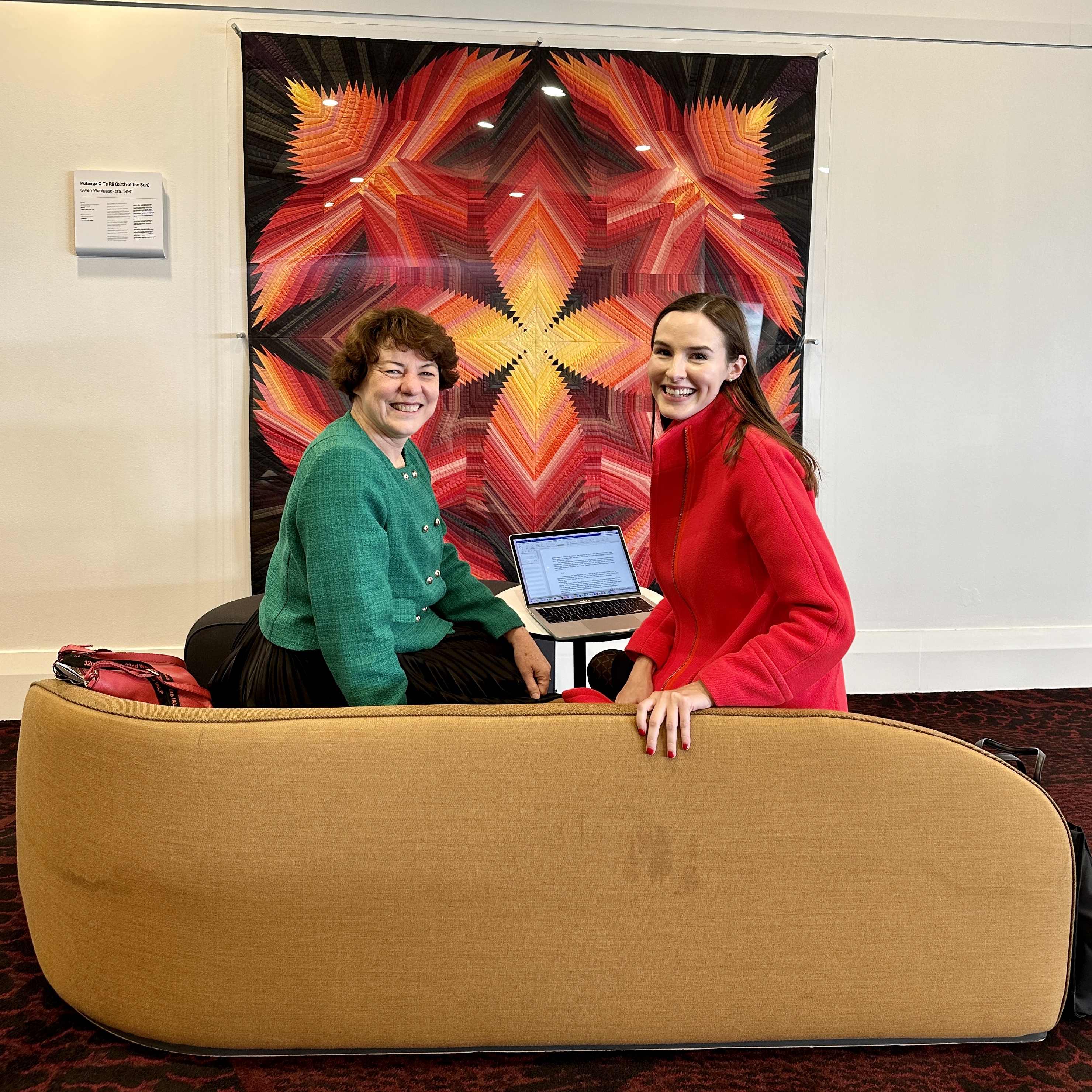
Amy Davies and Sharynne

April 23, 2024

Bristol Benjamin Meaker Distinguished Visiting Professor

Today began my visit to the University of Bristol as the Bristol Benjamin Meaker Distinguished Visiting Professor (20 April - 26 May 2024). I am based in the Bristol Dental School with Professor Yvonne Wren: https://www.bristol.ac.uk/international-research-development/visiting-researchers/visitors-for-202324/sharynne_mcleod/

I am honoured to be working with Professor Yvonne Wren, PhD, MEd, BSc (Hons), FRCSLT

Here is the project we are working on together:

Children born with cleft palate: Intelligibility and participation

Up to 1 million people in the UK have a communication disability which affects their ability to express themselves or to understand others. Our ability to communicate is impacted by our intelligibility and if we cannot make ourselves understood, then we will struggle to function in society. In particular, the impact on activities and participation, as defined by the World Health Organization can be significantly diminished, leading to social isolation and the potential for an impact on wellbeing and mental health, educational and occupational outcomes. Rarely will a clinician be aware of these difficulties as individuals can become quite adept at hiding their difficulties. Professor McLeod’s work has helped to draw attention to communication rights of all people with communication impairment and the difficulties that children with speech sound disorder in particular face in terms of everyday life as a child. Children born with cleft palate are at particular risk of communication disability as a consequence of problems with intelligibility. Using data from The Cleft Collective, the large-scale national cohort study of over 10,000 participants led by Dr Yvonne Wren at Bristol Dental School, Professor McLeod and Dr Wren will explore intelligibility in affected children using the Intelligibility in Context Scale. The Scale was developed by Professor McLeod and has now been translated in over 60 languages and is used worldwide. The outputs will provide unique reference data for children born with cleft, taking into account additional factors such as cleft subtype and syndromic status. Further analysis will enable us to determine the impact that differences in intelligibility in this population has on children’s levels of activity and participation. 

During her visit and through her planned talks, Prof McLeod will raise awareness of communication disability and highlight additional challenges and benefits when working with multilingual individuals. Professor McLeod is hosted by Dr Yvonne Wren from the Bristol Dental School. 

Lectures and seminars include: 

  • Open Lecture "Communicating with Children and Families in a Multilingual World"
  • Departmental seminar "Speech, Language and Communication: An Overview for Dentists"
  • Faculty of Health Sciences lecture: "Multilingual Children’s Speech"
Accommodation at The Principal's House, University of Bristol

Prof Yvonne Wren and Prof Sharynne McLeod at Oakfield House, University of Bristol

Prof Sharynne McLeod and Prof Yvonne Wren celebrating our first day at Lido


February 8, 2024

Impact - Intelligibility in Context Scale

The Intelligibility in Context Scale has been used as an outcome measure for the International Consortium of Health Outcomes Measurement (ICHOM) for patients with a cleft lip and/or palate. 

Here is their latest publication: 

Ombashi, S., Kurniawan, M. S., Allori, A., Sharif-Askary, B., Rogers-Vizena, C., Koudstaal, M., Franken, M.-C., Molen, A. B. M. v. d., Mathijssen, I., Klassen, A., & Versnel, S. L. (2023). What is the optimal assessment of speech? A multicentre, international evaluation of speech assessment in 2500 patients with a cleft. BMJ Open, 13(12), e071571. https://doi.org/10.1136/bmjopen-2023-071571

The analysis of ICS data is really interesting:

  • "Moderate correlations were found between PCC and ICS in patients with CP (r=0.64) and in patients with CL(A)P (r=0.5). VPC and ICS had a (negative) weak correlation in patients with CP (r=−0.49) and CL(A)P (r=−0.43)." (p. 4) 
  • "All correlations between PROMs were moderate, except for the strong correlation of the SFunction with both the SDistress and the ICS in patients with a CP. The fact that the correlation between the SFunction and SDistress is stronger in patients with CP than in patients with CL(A)P suggests that the visibly different appearance in patients with CL(A)P plays a significant role in SDistress as well; in a social context, looking differently may cause additional or more distress besides having speech problems. This is supported by our finding that the ICS correlated moderately with SFunction, but weakly with SDistress in the CL(A)P group. Parent- reported speech intelligibility correlated higher to children’s self report of their speech function than it did to the speech distress the children themselves experience. In the latter, distress about appearance could be included. This finding suggests that the ICS can give an indication of ‘patient- reported’ SFunction in young children who cannot complete a PROM themselves yet (7 years and younger)." (p. 5)
  • "A ceiling effect in ICS outcomes of patients with CP, without clear differences between average scores in patients with CP and CL(A)P, suggests that the group with CP contains a diverse population and severity of the speech problems vary widely. Furthermore, since ICS is not specifically developed for a population with CP±L, it is debatable whether this tool captures the information necessary to point out all relevant speech problems in the patient group.However, exclusion of ICS could mean that a large part of the speech problems in the population with CP would remain undetected. Assessment at 5 and 12 years in patients with both cleft types, which is the current timing in the ICHOM Standard Set, appears therefore appropriate despite the ceiling effect." (pp. 7-8)

September 6, 2023

Fulbright application conversations

I have had a number of wonderful conversations with Dr Chelsea Sommer about her Fulbright Scholarship application to come to visit our team at Charles Sturt University. She is an amazing scholar with expertise in Spanish and children with cleft palate. Her project fits so well into our multilingual children's speech research. I hope her application is successful. We really want her to visit!

Sharynne and Chelsea in NZ at the IALP congress in August 2023

Sharynne and Chelsea in US and Australia on Zoom

UPDATE - 15th September - APPLICATION SUBMITTED! 

Best wishes Chelsea - we really want you to come to CSU as a Fulbright Future Postdoctoral Scholar (funded by The Kinghorn Foundation) in 2025


February 17, 2023

Bristol Benjamin Meaker Distinguished Visiting Professorship

I have just learned that I have been awarded a Bristol Benjamin Meaker Distinguished Visiting Professorship (BBMDVP) to visit the University of Bristol for 5 weeks in 2024. I will work with Dr Yvonne Wren and her team on a project titled "Children born with cleft palate: Intelligibility and participation". I had been awarded a BBMDVP in 2020, but had been unable to visit due to COVID-19 restrictions. I am looking forward to visiting in 2024. 

http://www.bristol.ac.uk/international-research-partnerships/visiting-researchers/

http://www.bristol.ac.uk/international-research-partnerships/visiting-researchers/visitors/

July 11, 2022

Oral presentation at the 14th International Cleft Congress, Edinburgh

I have been working with a team of researchers from Bristol University and the Speech and Language Therapy Reserach Unit in Bristol. We have had the following paper accepted for presentation at the 14th International Cleft Congress (Cleft 2022) (https://cleft2022.com/) which is taking place in Edinburgh from 11th-15th July 2022: 

Exploring the association between intelligibility and language skills in 3-year-old children born with a cleft palate +/- lip 

Authors: Miriam Seifert, Lucy Southby, Amy Davies, Yvonne Wren, Sharynne McLeod 

The full program is here: https://cleft2022.com/cleft-2022-programme/

February 17, 2022

IALP Child Speech Committee Online Panel Series3: SSD and Cleft Palate

Tonight, the third IALP Child Speech Committee Online Panel Series 2021-2022 was held online. The topic was: SSD and Cleft Palate - How differences in anatomy and physiology affect the way we label and describe SSD in children? 

There were 176 watching 

The Panel speakers were: 

  • Dr Valerie Pereira, Chinese University of Hong Kong 
  • Dr Lucy Southby, Cleft.NET.East, Cambridge University Hospitals NHS Foundation Trust & University of Bristol, UK 
  • Associate Professor Yvonne Wren, Chair, IALP Child Speech Committee & Bristol Speech and Language Therapy Research Unit 

About this event (from IALP)

For many years we have debated terminology for describing the needs of children with communication impairment across the globe. Researchers, specialists, clinicians, parents and individuals with lived experience of the conditions have contributed to these discussions. The IALP Child Speech Committee have organised a series of panel meetings to discuss the overlap and distinctions between the label ‘Speech Sound Disorder’ and other closely related conditions. These meetings consist of short presentations by key figures in the field.  The meetings  take place virtually in October and December 2021 and February and April 2022. In this third panel meeting, invited speakers Dr Valerie Pereira and Dr Lucy Southby will discuss how differences in anatomy and physiology affect how we label SSD, which in turn affects our management. Twitter #SSDCP @IALP_Global 

https://www.youtube.com/watch?v=ZgAleRDG9zs

https://www.eventbrite.co.uk/e/ialp-child-speech-committee-panel-series-2021-2022-panel-3-ssd-and-cleft-tickets-238335486857

 (I am the Deputy Chair of the  IALP Child Speech Committee)


September 9, 2021

Keynote address to the Craniofacial Society of Great Britain and Ireland Virtual Conference

The Craniofacial Society of Great Britain and Ireland Virtual Conference is being held on 9-10 September 2021 https://cfsgbi21.online/. It is a pleasure to be invited to present at the 2021 virtual conference whose theme is "Making a Difference". There were 163 people online during my keynote address.

Originally, I was invited to present the keynote address in Cardiff Wales in April 2020. However, the 2020 conference was postponed due to COVID restrictions.

My 2021 presentation is titled: "Making a difference to children's ability to communicate and participate" and profiles my work of Dr Anna Cronin, Dr Sarah Verdon and Dr Yvonne Wren and colleagues:

  1. Cronin, A., Verdon, S., & McLeod, S. (2021). Persistence, strength, isolation and trauma: An ethnographic exploration of raising children with cleft palate. Journal of Communication Disorders, 106102. https://doi.org/https://doi.org/10.1016/j.jcomdis.2021.106102 
  2. Cronin, A., Verdon, S., & McLeod, S. (2020). Working with toddlers with cleft palate: Learning from clients and families Journal of Clinical Practice in Speech-Language Pathology, 22(2), 101–107. https://speechpathologyaustralia.cld.bz/JCPSLP-Vol-22-No-2-2020/30/ 
  3. Cronin, A., McLeod, S., & Verdon, S. (2020). Holistic communication assessment for young children with cleft palate using the International Classification of Functioning, Disability and Health:Children and Youth. Language, Speech, and Hearing Services in Schools, 51(4), 914–938. https://doi.org/10.1044/2020_LSHSS-19-00122 
  4. Cronin, A., McLeod, S., & Verdon, S. (2020). Applying the ICF-CY to specialist speech-language pathologists’ practice with toddlers with cleft palate speech. The Cleft Palate-Craniofacial Journal, 57(9), 1105–1116. https://doi.org/10.1177/1055665620918799 
  5. Seifert, M., Davies, A., Harding, S., McLeod, S., & Wren, Y. (2021). Intelligibility in 3-year-olds with cleft lip and/or palate using the Intelligibility in Context Scale: Findings from the Cleft Collective Cohort Study. The Cleft Palate-Craniofacial Journal. https://doi.org/10.1177/1055665620985747

 
My presentation is available here: https://prod-stitched-screen-recordings.s3-ap-south-1.amazonaws.com/recordings/ebfddbf0-0420-11ec-b585-7f7404f40a84/c1929699-6b74-4af3-907f-636ab4c61c7e/ebfddbf0-0420-11ec-b585-7f7404f40a84_80aedccb.mp4

May 31, 2021

Congratulations Anna - JCPSLP editors' award

Tonight at the Speech Pathology Australia National Conference's AGM Dr Anna Cronin was awarded the Editor's Award for the following article that was written to translate the research from her PhD for clinicians to use in practice. Congratulations Anna!

Cronin, A., Verdon, S., & McLeod, S. (2020). Working with toddlers with cleft palate: Learning from clients and families Journal of Clinical Practice in Speech-Language Pathology, 22(2), 101-107. https://speechpathologyaustralia.cld.bz/JCPSLP-Vol-22-No-2-2020/30/

Anna is the second member of our Speech-Langauge-Multilingualism team to win this award. Dr Kate Crowe won the same award for her 2014 JCPSLP article that was written to translate the research from her PhD for clinicians to use in practice. Here is my blogpost from 2015: https://speakingmylanguages.blogspot.com/2015/06/families-communication-choices-for.html

April 12, 2021

Persistence, strength, isolation and trauma: An ethnographic exploration of raising a child with cleft palate

The following paper has been accepted for publication.

Cronin, A., Verdon, S. & McLeod, S. (2021, in press). Persistence, strength, isolation and trauma: An ethnographic exploration of raising children with cleft palate. Journal of Communication Disorders. https://doi.org/10.1016/j.jcomdis.2021.106102

Congratulations Anna - this is the final paper to be published from her PhD.

Here is the abstract

Background: The lives of families of young children with cleft palate (±lip) are complex. Multiple interventions are required as part of the long-term multidisciplinary treatment for children with CP±L, with an impairment-focused approach prevailing. Research with young children with CP±L has focused on treatment and intervention, and previous qualitative research has been collected predominantly via interviews, so little is understood about the day-to-day lives of families of young children with CP±L.
Aims: (1) To increase understanding of the lives of children with CP±L and their families by applying an ethnographic lens to improve clinical practice (2) to identify key experiences that shape the experiences of children with CP±L and their families (3) to examine how family-centered practice can enhance practitioner-family relationships in providing effective and evidence-based care for children with CP±L.
Method: Ethnographic observations of seven families of children with CP±L and their families and educators including parents, siblings, aunts, grandparents, and teachers involved multiple site visits. Rich data were collected to gather information about different aspects of their lives (such as their strengths, routines, preferences, challenges and experiences). There were 84 artefacts collected: 18 interviews, 29 videos, one extended audio recording of a mealtime, seven photos contributed by families, seven case history questionnaires, and 22 field notes. These data were analyzed inductively using thematic analysis.
Results: Three overarching themes and 11 subthemes were identified: (1) the whole child (persistence, communication, activities, mealtimes), (2) family strength and support (strong families, external support, attitudes, advocacy, positive medical experiences) and (3) family isolation and trauma (negative medical experiences, traumatic and challenging experiences).
Conclusion: This is the first study to use ethnographic methodology to facilitate the collection of unique insights into the lives of young children with CP±L and their families to improve clinical practice for SLPs. The unique application of family-centered practice with these families promoted trust and highlighted their challenges and strengths which could be considered by SLPs to provide holistic intervention.

December 12, 2020

Intelligibility in 3-year-olds with cleft lip and/or palate using the Intelligibility in Context Scale

The following manuscript has been accepted for publication. 

Seifert, M., Davies, A., Harding, S., McLeod, S., & Wren, Y. (2020, in press December). Intelligibility in 3-year-olds with cleft lip and/or palate using the Intelligibility in Context Scale: Findings from the Cleft Collective Cohort Study. The Cleft Palate-Craniofacial Journal

Here is the abstract: 

Objective: To provide comparison data on the Intelligibility in Context Scale (ICS) for a sample of 3-year-old English-speaking children born with any cleft type. 

Design: Questionnaire data from the Cleft Collective Cohort Study were used. Descriptive and inferential statistics were carried out to determine difference according to children’s cleft type and syndromic status. 

Participants: 412 children born with cleft lip and/or palate whose mothers had completed the ICS when their child was 3-years-old. 

Main Outcome Measure(s): Mothers’ rating of their children’s intelligibility using the ICS.

Results: The average ICS score for the total sample was 3.75 (sometimes-usually intelligible) (SD=0.76, 95% CIs=3.68-3.83) out of a possible score of 5 (always intelligible). Children’s speech was reported to be most intelligible to their mothers (M=4.33, SD=0.61, 95% CIs=4.27-4.39) and least intelligible to strangers (M=3.36, SD=1.00, 95% CIs=3.26-3.45). There was strong evidence (p < 0.001) for a difference in intelligibility between children with cleft lip only (n=104, M=4.13, SD=0.62, 95% CIs=4.01-4.25) and children with any form of cleft palate (n=308, M=3.63, SD=0.76, 95% CIs=3.52-3.71). Children born with cleft palate with or without cleft lip and an identified syndrome were rated as less intelligible (n=63, M=3.28, SD=0.85, 95% CIs=3.06-3.49) compared to children who did not have a syndrome (n=245, M=3.72, SD= 0.71, 95% CIs=3.63-3.81). 

Conclusions: These results provide preliminary comparative data for clinical services using the outcome measures recommended by the International Consortium for Health Outcomes Measurement.

August 18, 2020

The rights of children with speech, language and communication needs in early childhood education and care

The following book chapter has been accepted for publication: Cronin, A., McLeod, S., & Wren, Y. (2020, in press). The rights of children with speech, language and communication needs in early childhood education and care. In F. Press & S. Cheeseman (Eds.). (Re)conceptualising children’s rights in infant-toddler early childhood care and education: Transnational conversations. Dordrecht, The Netherlands: Springer. 

Here is the abstract 

This chapter reviews international literature on communication rights and applies it to young children particularly in early childhood education and care (ECEC) settings. Communication rights within the United Nations Convention on the Rights of the Child encompass: freedom of expression and opinion (Articles 12 and 13) and the language(s) in which children communicate (Articles 2, 29, 30 and 40). Accommodating and upholding communicative rights for children may require flexibility and creativity, depending on the modality of the children’s communication, and the language that they use. Thought and consideration to children’s right to communicate is imperative given communication is necessary for protection of many other rights. The second part of the chapter expands the discussion to specific considerations relating to communication rights for young children with speech, language and communication needs (SLCN), in particular, those with cleft lip and palate. A commentary is presented by Dr Yvonne Wren focusing on the rights of children with SLCN (including those with cleft lip and palate) in the United Kingdom (UK). Dr Wren draws on information from the Cleft Collective Cohort Studies, a large-scale national cohort study of over 2,000 children born with cleft lip and/or palate in the UK, with a particular focus on the early childhood experiences of education and care for children in the cohort.

The Informed SLP reviews our paper on assessments for toddlers with cleft lip and palate

The Informed SLP has just published a review that includes our LSHSS paper on assessments for toddlers with cleft lip and palate. Their review is titled Under pressure: Looking beyond oral pressure consonants in children with cleft palate https://www.theinformedslpmembers.com/peds-under-review/under-pressure-looking-beyond-oral-pressure-consonants-in-children-with-cleft-palate

Our paper that they reviewed is here:

Cronin, A., Mcleod, S., & Verdon, S. (2020). Holistic Communication Assessment for Young Children With Cleft Palate Using the International Classification of Functioning, Disability and Health:Children and Youth. Language, Speech, and Hearing Services in Schools. https://doi.org/10.1044/2020_lshss-19-00122


July 24, 2020

Free access to recently published articles

The following articles have been published online this week - and the first two have 50 free online copies:
  1. McLeod, S., Davis, E., Rohr, K., McGill, N., Miller, K., Roberts, A., Thornton, S., Ahio, N., & Ivory, N. (2020). Waiting for speech-language pathology services: A randomised controlled trial comparing therapy, advice and device. International Journal of Speech-Language Pathology, 22(3), 372-386. https://doi.org/10.1080/17549507.2020.1731600
    Free access: https://www.tandfonline.com/eprint/F8ASRC26JS7BT8YJHUJV/full?target=10.1080/17549507.2020.1731600 
  2. McGill, N., Crowe, K., & McLeod, S. (2020). “Many wasted months”: Stakeholders’ perspectives about waiting for speech-language pathology services. International Journal of Speech-Language Pathology, 22(3), 313-326. https://doi.org/10.1080/17549507.2020.1747541
    Free access: https://www.tandfonline.com/eprint/SUPJSPDNMSZKSIG3TNZE/full?target=10.1080/17549507.2020.1747541 
  3. Cronin, A., McLeod, S., & Verdon, S. (2020, in press May). Holistic communication assessment for young children with cleft palate using the ICF-CY. Language, Speech, and Hearing Services in Schools. Advance online publication https://doi.org/10.1044/2020_LSHSS-19-00122

June 10, 2020

Congratulations Anna on your PhD submission

Today Anna Cronin submitted her PhD. Her thesis is titled: "Toddlers with Cleft Palate: Enhancing Communication through Holistic Child- and Family-Centred Practice". It was submitted as a series of two encyclopaedia entries, one book chapter, four journal articles and an exegesis. Anna was in Brisbane and was cheered on by her supervisory team: myself in Bathurst, Dr Sarah Verdon in Albury, members of the Speech-Language-Multilingualism team (in Shepparton, Sydney, Newcastle), her family and friends and received congratulatory messages from Sydney, Iceland, and Fiji. Her PhD scholarship was from Charles Sturt University.
The moment of submission
Congratulations Anna and best wishes for your examination!
Here is Anna's abstract:
Cleft palate with or without cleft lip (CP±L) is one of the most common congenital conditions affecting children across the world. Although high quality surgical and specialist multidisciplinary intervention for children with CP±L is available in many countries, this condition continues to impact children’s speech, early expressive language, feeding, middle ear function, appearance, and daily life. This thesis considered the views of international specialist speech-language pathologists (SLPs) working with toddlers with CP±L primarily in medical settings, as well as educators, families and toddlers with CP±L using a holistic child- and family-centred model. Demands resulting from diagnosis and intervention often have a significant impact, so families were given control and agency over their stories with the goal of informing and ultimately transforming SLPs’ practice. The thesis is innovative, theoretically driven, purposeful and sequential in its approach to recommending a shift in the way SLPs approach practice with children with CP±L.
The research presented in this thesis, known as the Toddlers with Cleft Palate Study, consisted of two parts presented as a series of seven publications: two encyclopaedia entries, one book chapter and four journal articles. Three theoretical frameworks underpinned the thesis: International Classification of Functioning, Disability and Health (ICF-CY; WHO, 2007), Convention on the Rights of the Child (United Nations, 1989), and family-centred practice (Dunst, 2002; Espe-Sherwindt, 2008). Combining these lenses provided unique insights and enabled holistic consideration of toddlers with CP±L, their rights, and their families’ experiences. Part One of the thesis provided definitions and outlined current practices with toddlers with CP±L. Drawing on the literature, the encyclopaedia entries outlined common craniofacial conditions and the impact of CP±L on speech. In the Toddlers with Cleft Palate Study 1: Specialist SLPs’ Perspectives, semi-structured interview data from the author’s Churchill Fellowship visits with six international specialist SLPs were analysed using directed content analysis framed by the ICF-CY. The findings indicated the ICF-CY had utility in describing specialist SLPs’ practice and that specialist SLPs do consider all components and contextual factors of the ICF-CY. However, there was less focus on Activities and Participation than on Body Structures and Functions and Environmental Factors (e.g., health services and geographic location).
Part Two of the thesis examined toddlers with CP±L and their families’ lived experiences, and how SLPs could best support them in the early years of life. A literature review outlined recommendations for supporting young children’s speech, language and communication to uphold their human rights in transnational early childhood education and care contexts. An innovative, ethnographic methodology was taken in the Toddlers with Cleft Palate Study 2: Toddlers’ and Families’ Experiences. This study involved observation, collection of speech and language data, interviews, photos, video data, and researcher reflection with seven toddlers with CP±L, 13 parents, and 12 significant others (e.g., educators and grandparents) around Australia. Speech and language data were evaluated to present a tutorial outlining a holistic communication protocol for SLPs to use with toddlers with CP±L. Interview data and 84 artefacts from the study (18 interviews, 29 videos, one extended audio recording of a mealtime, seven photos contributed by families, seven case history questionnaires, 18 field notes, four research reflections) were analysed inductively and revealed three themes in families’ experiences of raising toddlers with CP±L: the impact on the whole child, family strength and support, and family isolation and trauma.
The findings of the two parts of the study were synthesised to present how generalist SLPs working with toddlers with CP±L could learn from clients and their families and best support them in their early years, representing a shift away from the traditional professional-centred medical model of treatment. Overall, there were three main findings from the thesis: (1) having CP±L affects many aspects of toddlers’ lives and development, not just their speech, (2) children and families’ voices should be privileged in co-creating the intervention journey in collaboration with professionals, and (3) non-specialist medical, allied health, and education professionals need to understand that the impact of CP±L extends beyond speech, and know how to support toddlers and families holistically. The thesis contributes to the literature on the impact of CP±L on toddlers and their families and is significant in terms of its ethnographic methodology and shift towards a collaborative, family-centred approach to speech-language pathology practice. 
The following papers have been published to date (more to come):
  • Cronin, A., & McLeod, S. (2019). Craniofacial anomalies. In M. J. Ball & J. S. Damico (Eds.), The SAGE encyclopedia of human communication sciences and disorders (pp. 515-519). Thousand Oaks, CA: SAGE Publications. 
  • Cronin, A., & McLeod, S. (2019). Cleft lip and palate: Speech effects. In M. J. Ball & J. S. Damico (Eds.), The SAGE encyclopedia of human communication sciences and disorders (pp. 348-351). Thousand Oaks, CA: SAGE Publications. 
  • Cronin, A., McLeod, S., & Verdon, S. (2020). Applying the ICF-CY to specialist speech-language pathologists’ practice with toddlers with cleft palate speech. The Cleft Palate-Craniofacial Journal. Advance online publication.doi:10.1177/1055665620918799 
  • Cronin, A., McLeod, S., & Verdon, S. (in press). Holistic communication assessment for young children with cleft palate using the ICF-CY. Language, Speech, and Hearing Services in Schools.

May 2, 2020

Holistic communication assessment for young children with cleft palate using the ICF-CY

The following manuscript has been accepted for publication.
Cronin, A., McLeod, S., & Verdon, S. (2020, in press May). Holistic communication assessment for young children with cleft palate using the ICF-CY. Language, Speech, and Hearing Services in Schools.

It forms part of Anna's PhD thesis. Congratulations Anna!
Here is the abstract:
Purpose: Children with a cleft palate (+/- cleft lip; CP±L) can have difficulties communicating and participating in daily life, yet speech-language pathologists typically focus on speech production during routine assessments. The International Classification of Functioning, Disability and Health: Children and Youth (ICF-CY, World Health Organization, 2007), provides a framework for holistic assessment. This paper describes holistic assessment of children with CP±L illustrated by data collected from a non-clinical sample of seven 2-to 3-year-old children, 13 parents, and 12 significant others (e.g., educators and grandparents).
Method: Data were collected during visits to participants’ homes and early childhood education and care centers. Assessment tools applicable to domains of the ICF-CY were used to collect and analyze data. Child participants’ Body Functions including speech, language, and cognitive development were assessed using screening and standardized assessments. Participants’ Body Structures were assessed via oral motor examination, case history questionnaires, and observation. Participants’ Activities and Participation, and Environmental and Personal Factors, were examined through case history questionnaires, interviews with significant others, parent-report measures and observations.
Results: Valuable insights can be gained from undertaking holistic speech-language pathology assessments of children with CP±L. Using multiple tools allowed for triangulation of data and privileging different viewpoints, to better understand the children and their contexts. Several children demonstrated speech error patterns outside of what is considered cleft speech characteristics which underscores the importance of broader assessment.  
Conclusion: SLPs can consider incorporating evaluation of all components and contextual factors of the ICF-CY when assessing and working with young children with CP±L to inform intervention and management practices.

May 1, 2020

Postponed events

There are a number of events in late April/May that I am no longer speaking at.
  • Last week I was meant to be a keynote speaker in Cardiff, Wales at the Craniofacial Society of Great Britain and Ireland 
  • Today, I was meant to be the speaker at a 1-day workshop on the Gold Coast in Queensland  with 65 speech pathologists from the South East Region of Queensland.
  • Later in May our team had a number of papers accepted to be presented at the Speech Pathology Australia National Conference in Darwin.
I look forward to when these are rescheduled. Meanwhile, I am working hard with my team to write up more research so that when these are rescheduled I'll have even more to share.

March 4, 2020

Important PhD meeting with Anna

Today Anna Cronin, Sarah Verdon and I met to discuss PhD Anna's thesis. We have just finished reading all she has written to date and today's meeting was about celebrating her work over the past 3 years, crafting the story of her PhD, organising the order of chapters, and mapping out what else has to be written before submission. This is such a landmark moment in a PhD, and we all were very excited and enthused throughout the meeting.
"It's really exciting how close we're getting"
(Cronin, 2020, personal correspondence).

February 19, 2020

Applying the ICF-CY to expert SLPs’ practice with toddlers with cleft palate speech

The following paper has been accepted today:
Cronin, A., McLeod, S., & Verdon, S. (2020, in press February). Applying the ICF-CY to expert SLPs’ practice with toddlers with cleft palate speech. The Cleft Palate-Craniofacial Journal.
It forms part of Anna's PhD. Congratulations Anna!
Here is the abstract:
Objective: To evaluate how the practice of specialist speech-language pathologists (SLPs) working with young children with cleft palate ± cleft lip (CP±L) maps onto the International Classification of Functioning, Disability and Health (ICF-CY) and consider the functionality of the categories of the ICF-CY for this specialist area of practice.  
Design: Cross-sectional, qualitative study.
Setting: Semi-structured face-to-face interviews were conducted with SLPs working in tertiary level hospitals, universities, private and public clinics.
Participants: Six specialist SLPs with 17-39 years of experience working with young children with CP±L as researchers and clinicians in Australia, Brazil, Denmark, Ireland, New Zealand, and USA.  
Main Outcome Measure(s): Specialists’ practices were captured using in-depth, semi-structured interviews. Data collected were analyzed by directed content analysis applying the ICF-CY coding schema.  
Results: In total 4,077 data points were coded. Most mapped onto Body Structures (684, 16.8%), Body Functions (906, 22.2%) and Environmental Factors (1626, 39.9%). A “best fit” approach was taken to topics that did not map exactly onto categories of the ICF-CY (e.g., velopharyngeal insufficiency; VPI); however, there was not always an ideally suitable category available.  
Conclusions: The current study revealed challenges in categorizing key aspects of practice with children with CP±L, including collaboration with parents and significant others, specificity around speech, language and articulation, and the different types of VPI within the ICF-CY. Therefore, future discussion around how best to use the framework with children with CP±L is needed.