Showing posts with label speech acquisition. Show all posts

October 9, 2025

Bright Ideas Media - Live and online presentations

We were invited to present a Speech Sound Disorders Series for Bright Ideas Media in the US. 


This morning Dr. Kelly Farquharson and I presented a live 90 minute session to over 100 speech-language pathologists across the United States. Our presentation was titled: "Clinical Use of Speech Sound Acquisition Data"

"Don't ask when should a child say /s/ - instead ask what sound is the child making instead of /s/"

Dr Helen L. Blake and Dr Kate Margetson and I were invited to present a 2-hour online session titled "Multilingual Children’s Speech Assessment: A Contemporary Global Update"


 Here is a description of the while series from the website https://www.bethebrightest.com/en/events/speech-sound-disorders-series:

Welcome to the Speech Sound Disorders Series for 2025—a fresh look at how we treat speech sound disorders, grounded in what we know now. This year, we’re placing a strong focus on updated, evidence-based practices that reflect the evolving landscape of our field.

Joining the series are international experts Drs. Kelly Farquharson and Sharynne McLeod, bringing global insights and current research to deepen our understanding. From the nuances of treating R to conducting effective multilingual assessments, they’ll guide us through practical strategies that are informed, inclusive, and responsive to today’s clinical challenges.

The series includes:
* The 90-min live session, and the replay, co-presented by Drs. Sharynne McLeod and Kelly Farquharson: "Clinical Use of Speech Sound Acquisition Data"
* A 60-min on-demand course by Dr. Farquharson: "/ɹ/ you frustrated by working on /ɹ/? Try facilitative contexts!"
* An 120-min on-demand course by Drs. McLeod, Kate Margetson, and Helen Blake: "Multilingual Children’s Speech Assessment: A Contemporary Global Update"

This year's series is designed to challenge outdated assumptions and provide clear answers to common questions.

Our presenters are passionate about helping clinicians grow in confidence and competence. With their support—and expertise —you’ll walk away with sharper tools, broader perspective, and renewed clarity in how you treat speech sound disorders today.

Both on-demand courses will be available after the live event on Oct. 8 at 8:30 p.m. ET. 


November 8, 2023

ASHA Special Collection: Developmental Milestones

The American Speech-Language-Hearing Association has just launched a new developmental milestones collection. https://www.asha.org/public/developmental-milestones/communication-milestones/

It is pleasing to see that the data they have used to describe children's speech development (https://pubs.asha.org/special-collections/developmental-milestones) is from our paper:

Crowe, K., & McLeod, S. (2020). Children's English consonant acquisition in the United States: A review. American Journal of Speech-Language Pathology, 29(4), 2155–2169. https://doi.org/10.1044/2020_AJSLP-19-00168

July 27, 2023

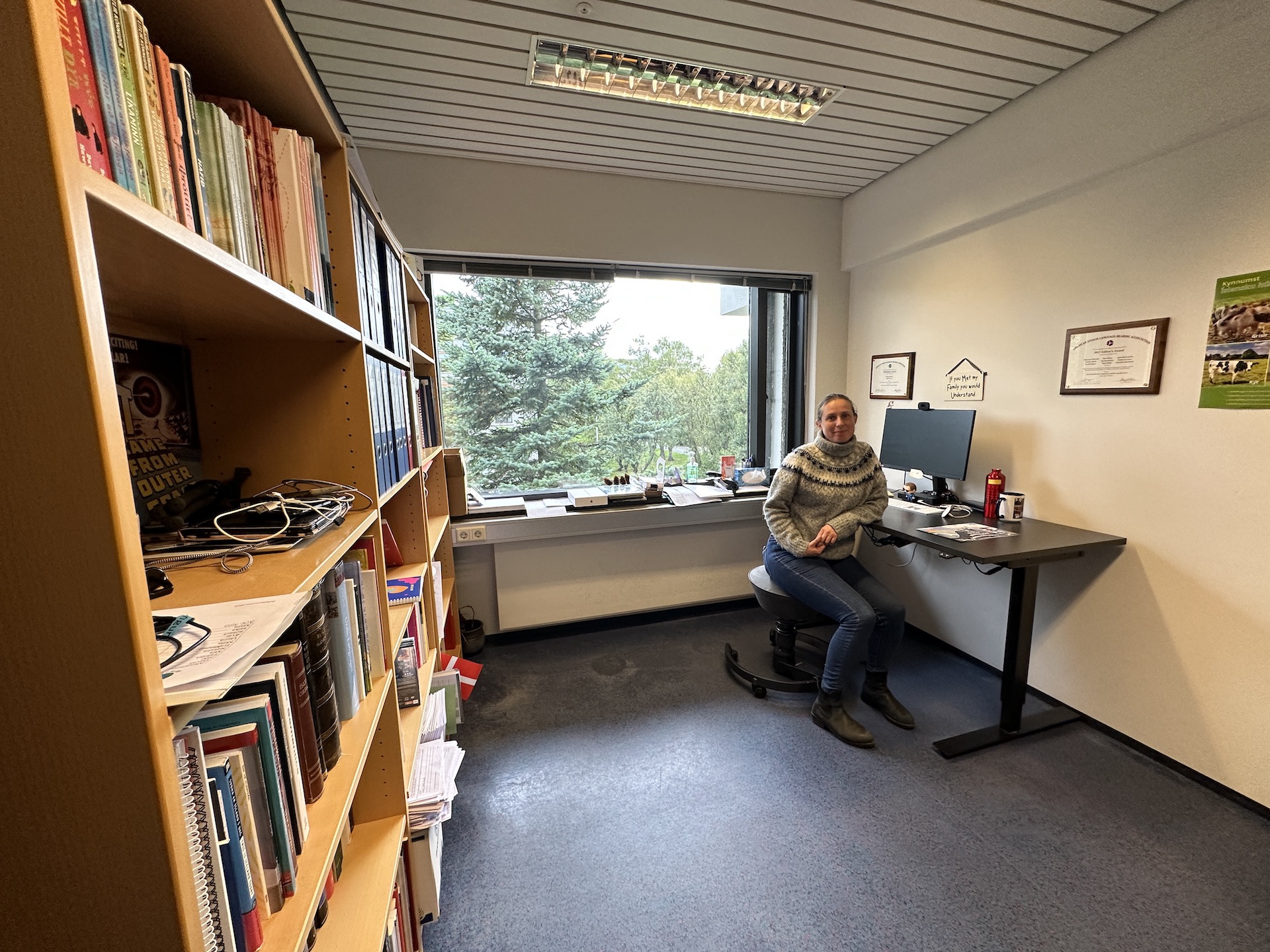
Visiting Kate at The University of Iceland

Aðjúnkt Kathryn Crowe and A/Prof Þóra Másdóttir teach and research in the Talmeinafræði program at the University of Iceland
https://ugla.hi.is/kennsluskra/index.php?tab=nam&chapter=namsleid&id=820072_20176&kennsluar=2023 

I enjoyed visiting to see exactly where they worked - and Icelandic research into speech development and their home language maintenance research with their multilingual children.

Working on a book chapter and a Memorandum of Understanding between our universities
McLeod and Crowe (2018) posters in Iceland
Icelandic speech development poster featuring Lubbi and based on Masdottir & McLeod (2021)
Kate with her CSU award
Kate's office
Kate and Thora are currently undertaking a large-scale randomised controlled trial in preschools across Iceland to support multilingual children's speech and language development.

May 10, 2023

Statistical learning or phonological universals? Ambient language statistics guide consonant acquisition in four languages

 What an exciting email to receive this morning:

"We are very pleased to inform you that your paper submission
"1812 - Statistical learning or phonological universals? Ambient language statistics guide consonant acquisition in four languages" has been accepted for presentation as a poster with full paper publication at CogSci 2023. We received 875 paper submissions this year. We accepted 155 (17.7%) papers for oral presentation and inclusion in the proceedings and 380 (43.4%) papers for poster presentation with full paper publication in the proceedings...The dates of the conference are July 26 – 29, 2023. Detailed conference schedules and guidelines about participation in the conference will be made available through the conference webpage: https://cognitivesciencesociety.org/cogsci-2023/"

This work represents a collaboration between Kate Crowe and myself and researchers from Cornell University (Steven Elmlinger, Pablo Contreras Kallens, Michael Goldstein, Katharine Wang).

Kallens, P. C., Elmlinger, S. L., Wang, K. S., Goldstein, M. H., Crowe, K., McLeod, S., & Christiansen, M. H. (2023). Statistical learning or phonological universals? Ambient language statistics guide consonant acquisition in four languages. CogSci2023, Sydney, Australia.

Here is the abstract:

What predicts individual differences in children’s acquisition of consonant production across languages? Considerations of children’s development of early speech production have traditionally emphasized inherent physiological constraints of the vocal apparatus that speakers generally have in common (i.e., articulatory complexity). In contrast, we propose a statistical learning account of phonological development, in which phonological regularities of the ambient language guide children’s learning of those regularities in production. Across four languages (English, Spanish, Japanese, and Korean), we utilized recent meta-analytic dataset of age of consonant acquisition spanning 28 studies. High-density measures of children's ambient language environment from over 8,000 transcripts of speech directed to over 1,000 children were used to assess how well the frequency of consonants in child-directed speech predict the age of consonant acquisition. Our results suggest that both frequency and articulatory complexity are related to age of acquisition, with similar results found for English, Spanish, Japanese, and Korean. Consonants heard frequently by children tended to be incorporated into their production repertoires earlier and consonants heard less frequently are incorporated into production repertoires later in development. We discuss future directions that incorporate a statistical learning pathway towards learning to produce the sound patterns of the ambient language.

May 19, 2022

Explaining patterns in children's speech acquisition data

This morning Dr Kate Crowe and I met with Prof Morten Christiansen, Steven Elmlinger and Pablo Andres Contreras Kallens from Cornell University https://psychology.cornell.edu/morten-h-christiansen 

We are going to collaborate on a project to use statistical learning to explore whether young children's linguistic experiences can explain patterns in children's speech acquisition data. The Cornell University team will re-analyse the data from the following papers. I'm looking forward to see the first set results because their pilot work using data contained within these papers is very promising.

  • McLeod, S., & Crowe, K. (2018). Children’s consonant acquisition in 27 languages: A cross-linguistic review. American Journal of Speech-Language Pathology, 27(4), 1546–1571. https://doi.org/10.1044/2018_AJSLP-17-0100 
  • Crowe, K., & McLeod, S. (2020). Children's English consonant acquisition in the United States: A review. American Journal of Speech-Language Pathology, 29(4), 2155–2169. https://doi.org/10.1044/2020_AJSLP-19-00168 

February 17, 2022

Fijian school students’ Fiji English speech sound acquisition

The following manuscript has just been accepted for publication: McAlister, H., McLeod, S., & Hopf, S. C. (in press). Fijian school students’ Fiji English speech sound acquisition. International Journal of Speech-Language Pathology

It is the first publication from Holly McAlister's honours thesis. Congratulations Holly! 

Here is the abstract: 

Purpose: The aim of this study was to investigate Fijian students’ acquisition of Fiji English speech sounds. 

Method: Participants were 72 multilingual students (5-10 years) living in Fiji who spoke the Fijian or Fiji Hindi dialects of Fiji English. The students’ productions of single words from the Diagnostic Evaluation of Articulation and Phonology were analysed according to dialect using the Children’s Independent and Relational Phonological Analysis (CHIRPA) (Baker, 2017). 

Result: Most English consonants were acquired by 6;0. English consonants that were not in the inventories of Fijian or Fiji Hindi were the last acquired, while those that were common between English and the two languages were some of the earlier acquired consonants. Percentage of consonants correct for Fiji English was significantly lower for Grade 1 students (M = 93.01, SD = 0.07) in comparison to Grade 4 students (M = 99.03, SD = 0.01). Plosive and nasal sounds were acquired by 90% of the students earlier than fricative, approximant and affricate sounds, though acquisition of some plosive and fricative sounds varied between Fiji English dialects. All word-initial consonant clusters were acquired by 90% of the students by 9;6, with r-clusters tending to be the latest acquired. The acquisition of word-final consonant clusters was highly variable as students often produced appropriate dialectal variants. 

Conclusion: Multilingual Fijian children may acquire English specific sounds later than their monolingual English-speaking peers. Consideration of the language environment and analysis of the speech sample with reference to the child’s dominant English dialect is imperative for valid identification of SSD in children who speak different dialects of English.

October 1, 2021

18,595 page views in September for Multilingual Children's Speech website

I have just received the September 2021 Google analytics report for our Multlingual Children's Speech website https://www.csu.edu.au/research/multilingual-speech that has free multilingal resources in over 60 languages.

There were 18,595 page views during September! 

6,933 for https://www.csu.edu.au/research/multilingual-speech/speech-acquisition and 

5,166 for https://www.csu.edu.au/research/multilingual-speech/ics 

The top 25 countries were: United States, Australia, Canada, United Kingdom, Germany, Netherlands, Ireland, Philippines, Italy, France, India, Hong Kong, Iceland, Denmark, Finland, Singapore, Vietnam, Switzerland, China, Portugal, Sweden, New Zealand, Austria, Spain, South Africa 

This map shows the location of users who have accessed the site from January - September 2021. During the first 9 months of 2021 there were 130,390 page views and 81.8% were new visitors.

September 17, 2021

Which speech sound norms are used in US public schools?

I have just had the opportunity to read a preprint copy of the following manuscript that will be published in Seminars in Speech and Language soon: 

Farquharson, K., & Stevenson, K. L. (2021). Which speech sound norms are used in US public schools? A retrospective survey analysis. Seminars in Speech and Language

Here is the abstract: 

Speech sound acquisition normative data are widely and heavily used in the United States (US) to determine eligibility for services. Normative studies differ in the age and geographic location of participants, which can limit applicability across the US. In 2016, we queried school-based speech-language pathologists (SLPs) in the US using a web-based survey, to determine which speech sound norms are used. All 9 regions from the US census were represented. The Iowa-Nebraska norms were most commonly reported. However, many SLPs were unable to name the source of the data that they used. Over 60% of the sample indicated that they referred to one source of normative data. Results of a logistic regression indicated that region of the US predicted if SLPs used one or multiple sources. Specifically, SLPs in the West North Central region of the US (which includes Iowa and Nebraska) were more likely to use only one source of data, the Iowa-Nebraska norms. We recommend that speech sound norms are less heavily relied upon for eligibility decisions, particularly due to the substantial variations in culture and dialect throughout the various regions of the US. 

The opening paragraph shows the impact of our recent review paper about children's speech acquisition:

In 2018, the McLeod and Crowe article on speech sound acquisition “broke the internet”1. Although the article did not include new data, it did include an important reexamination of how speech sounds are acquired. This raised many questions for practicing clinicians regarding the age at which they should consider treating certain sounds. As a part of that broad discussion, it became evident that clinicians may be placing too much clinical weight on speech sound normative data for making eligibility decisions, and that speech sound normative data was being used for diagnostic purposes2. In the past three years, there has been substantial discussion regarding the use of speech sound normative data (henceforth: speech sound norms), particularly in school-based settings...

I look forward to the continued "substantial discussion regarding the use of speech sound normative data" once this paper is published. 

McLeod, S., & Crowe, K. (2018). Children’s consonant acquisition in 27 languages: A cross-linguistic review. American Journal of Speech-Language Pathology, 27(4), 1546–1571. https://doi.org/10.1044/2018_AJSLP-17-0100 

Crowe, K., & McLeod, S. (2020). Children's English consonant acquisition in the United States: A review. American Journal of Speech-Language Pathology, 29(4), 2155–2169. https://doi.org/10.1044/2020_AJSLP-19-00168

April 27, 2021

Icelandic children’s acquisition of consonants and consonant clusters

The following article has just been published as an early online article. 

Másdóttir, T., McLeod, S., & Crowe, K. (2021). Icelandic children's acquisition of consonants and consonant clusters. Journal of Speech, Language, and Hearing Research, Advance online publication. https://doi.org/10.1044/2021_JSLHR-20-00463

Here is the abstract: 

Purpose. This study investigated Icelandic-speaking children’s acquisition of singleton consonants and consonant clusters.
Method
. Participants were 437 typically-developing children aged 2;6 to 7;11 acquiring Icelandic as their first language. Single-word speech samples of the 47 single consonants and 45 consonant clusters were collected using Málhljóðapróf ÞM [ÞM's Test of Speech Sound Disorders].
Results
. Percentage of consonants correct for children aged 2;6-2;11 was 73.12 (SD = 13.33) and increased to 98.55 (SD = 3.24) for children aged 7;0-7;11. Overall, singleton consonants were more likely to be accurate than consonant clusters. The earliest consonants to be acquired were /m, n, p, t, j, h/ in word-initial position and /f, l/ within words. The last consonants to be acquired were /x, r, r̥, s, θ, n̥/, and consonant clusters in word-initial /sv-, stl-, str-, skr-, θr-/, within-word /-ðr-, -tl-/, and word-final /-kl̥, -xt/ contexts. Within-word phonemes were more often accurate than those in word-initial position, with word-final position the least accurate. Accuracy of production was significantly related to increasing age, but not sex.
Conclusion
. This is the first comprehensive study of consonants and consonant cluster acquisition by typically developing Icelandic-speaking children. The findings align with trends for other Germanic languages; however, there are notable language-specific differences of clinical importance. 

This research has been the result of a long-term collaboration with Thora Másdóttir (Þóra Másdóttir) and Kate Crowe that began with my visit to Iceland in 2014 https://speakingmylanguages.blogspot.com/2014/06/icelandic-association-of-speech-and.html

January 14, 2021

Icelandic children’s acquisition of consonants and consonant clusters

The following article has been accepted for publication: 

Másdóttir, T. & McLeod, S. & Crowe, K. (2021, in press). Icelandic children’s acquisition of consonants and consonant clusters. Journal of Speech, Language, and Hearing Research

Here is the abstract:

Purpose. This study investigated Icelandic-speaking children’s acquisition of singleton consonants and consonant clusters.
Method. Participants were 437 typically-developing children aged 2;6 to 7;11 acquiring Icelandic as their first language. Single-word speech samples of the 47 single consonants and 45 consonant clusters were collected using Málhljóðapróf ÞM [ÞM's Test of Speech Sound Disorders].
Results. Percentage of consonants correct for children aged 2;6-2;11 was 73.12 (SD = 13.33) and increased to 98.55 (SD = 3.24) for children aged 7;0-7;11. Overall, singleton consonants were more likely to be accurate than consonant clusters. The earliest consonants to be acquired were /m, n, p, t, j, h/ in word-initial position and /f, l/ within words. The last consonants to be acquired were /x, r, r̥, s, θ, n̥/, and consonant clusters in word-initial /sv-, stl-, str-, skr-, θr-/, within-word /-ðr-, -tl-/, and word-final /-kl̥, -xt/ contexts. Within-word phonemes were more often accurate than those in word-initial position, with word-final position the least accurate. Accuracy of production was significantly related to increasing age, but not sex.
Conclusion. This is the first comprehensive study of consonants and consonant cluster acquisition by typically developing Icelandic-speaking children. The findings align with trends for other Germanic languages; however, there are notable language-specific differences of clinical importance.

Here is the feedback we received from the reviewer and editor in the acceptance email: 

"There is paucity of information regarding the acquisition of consonants in Icelandic. A total of 437 children with typical speech and language development, ages 2;6 to 7;11, participated in the study. The manuscript reports percentage of consonants correct and ages of acquisition of consonants and consonant clusters...The study has great clinical significance as there is a paucity of information on the acquisition of consonants in Iceland. The manuscript now has very clear potential to advance the discipline; the detailed tables and figures will be very useful clinically..."

We began discussing this work in Italy in 2013, then started working on it in Iceland in 2014 - so are really pleased it is finally in press: https://speakingmylanguages.blogspot.com/2014/06/thank-you-thora.html

August 28, 2020

Congratulations Holly on honours research presentation today

Today Holly McAlister presented her honours research to the Faculty of Science. This is a requirement of her honours degree. She did a great job - and her supervisors (Dr Suzanne Hopf and myself) were very proud of her. Next step - submission of her honours thesis in a few weeks' time!


August 3, 2020

Children's English consonant acquisition in the United States: A review

Our US consonant acquisition review paper has been published overnight (OPEN ACCESS):
Crowe, K., & McLeod, S. (2020). Children's English consonant acquisition in the United States: A review. American Journal of Speech-Language Pathology. https://doi.org/10.1044/2020_AJSLP-19-00168

(The US posters are located below the posters for English acquisition across the whole world. Note the different images in the top right corner – either children around the world or around the US flag)

This paper used the same methods as the McLeod and Crowe (2018) paper that analysed data across 27 languages (OPEN ACCESS).
McLeod, S. & Crowe, K. (2018). Children’s consonant acquisition in 27 languages: A cross-linguistic review. American Journal of Speech-Language Pathology, 27, 1546-1571. https://doi.org/10.1044/2018_AJSLP-17-0100

To support the application of this research to practice, we have co-authored the following paper that is currently in press (but not yet available online):
Ireland, M., McLeod, S., Farquharson, K., & Crowe, K. (2020, in press June). Evaluating children in U.S. public schools with speech sound disorders: Considering federal and state laws, guidance, and research. Topics in Language Disorders. https://doi.org/10.1097/TLD.0000000000000226

It would have been great to be able to present this work in our invited session at the ASHA convention this year, but it has been cancelled due to COVID-19.

There has been a LOT of positive social media interest in this paper already. For example,


May 4, 2020

Children’s English consonant acquisition in the United States: A review

The following manuscript has been accepted for publication.
Crowe, K. & McLeod, S. (2020, in press May). Children’s English consonant acquisition in the United States: A review. American Journal of Speech-Language Pathology. 

It accompanies this manuscript (that won the AJSLP editor's award)
McLeod, S. & Crowe, K. (2018). Children’s consonant acquisition in 27 languages: A cross-linguistic review. American Journal of Speech-Language Pathology, 27(4), 1546-1571. doi:10.1044/2018_AJSLP-17-0100

Here is the abstract
Purpose: Speech-language pathologists’ (SLPs) clinical decision-making and consideration of eligibility for services relies on quality evidence, including information about consonant acquisition (developmental norms). The purpose of this review is to describe the typical age and pattern of acquisition of English consonants by children in the United States.  
Method: Data were identified from published journal articles and assessments reporting English consonant acquisition by typically developing children living in the United States. Sources were identified through searching 11 electronic databases, review articles, and the Buros database, and contacting experts. Data describing studies, participants, methodology, and age of consonant acquisition were extracted.
Results: Fifteen studies (six articles and nine assessments) were included, reporting consonant acquisition of 18,907 children acquiring English in the United States. These cross-sectional studies primarily used single-word elicitation. Most consonants were acquired by 5;0 years. The consonants /b, n, m, p, h, w, d/ were acquired by 2;0-2;11 (years;months); /ɡ, k, f, t, ŋ, j/ by 3;0-3;11; /v, ʤ, s, ʧ, l, ʃ, z/ by 4;0-4;11; /ɹ, ð, ʒ/ by 5;0-5;11; and /θ/ by 6;0-6;11 years (ordered by mean age of acquisition, 90% criterion). Variation was evident across studies resulting from different assessments, criteria, and cohorts of children.
Conclusions: These findings echo the cross-linguistic findings of McLeod and Crowe (2018) across 27 languages that children had acquired most consonants by 5;0 years. On average all plosives, nasals, and glides were acquired by 3;11, all affricates by 4;11, all liquids by 5;11 and all fricatives by 6;11 (90% criterion). As SLPs apply this information to clinical decision-making and eligibility decisions, synthesis of knowledge from multiple sources is recommended.

January 29, 2020

Continued interest in McLeod and Crowe (2018)

There continues to be interest on social media about the "new norms" from the McLeod and Crowe (2018) cross-linguistic review of speech acquisition, including the "SLPs for Evidence Based Practice" Facebook group and Children's Literacy and Speech Sound Lab (see below)
https://buff.ly/33Cn7Wq
 McLeod, S., & Crowe, K. (2018). Children’s consonant acquisition in 27 languages: A cross-linguistic review. American Journal of Speech-Language Pathology, 27, 1546–1571. https://doi.org/10.1044/2018_AJSLP-17-0100

Free graphics: https://www.csu.edu.au/research/multilingual-speech/speech-acquisition 

November 30, 2019

Supporting students' critical thinking about developmental norms

While at the ASHA 2019 convention in Orlando, FL Dr Kate Crowe and I met Dr. Alyssa Boucher from Boston University and were inspired by her innovative way to support her students' critical thinking using our recent journal article about children's speech acquisition across 27 languages.
She asked her students to
**(All of these resources are free to download)
She then gave her students the following exam question:
“A fellow SLP in your school district stops by one day to ask you about the “new norms.” She’s in a panic and worries this will increase her caseload. Using McLeod and Crowe (2018) and the other related resources, (kindly) debunk the “new norms” hysteria and help your colleague to interpret the results of the study and the implications for determining special education eligibility.”
What a great way to support students' critical thinking.

Extra information:
  1. Chapter 6 in Children's Speech (McLeod & Baker, 2017) provides a clinically-oriented overview of children's speech acquisition and available evidence. (Currently available for free to US and Canadian students during COVID-19 shutdown at https://studentresponse.redshelf.com/search/?terms=0132755963)
  2. We were thrilled that this paper won the Editor's Award from the American Journal of Speech-Language Pathology that was presented at the 2019 ASHA convention in Orlando, FL. Some photos are here and some associated media is here.
  3. Dr. Kate Crowe and I recently have analysed speech acquisition data from children in the US (excluding the rest of the world). The paper is currently under revision in a journal - and we are hoping that it may be published in 2020.
Dr. Kate Crowe, Dr. Alyssa Boucher, Prof Sharynne McLeod
@SLPToolkit Podcast
InformedSLP blogpost
McLeod & Crowe (2018) infographic poster

April 30, 2019

Impact! Apparently we "broke the internet" with our speech acquisition paper

Recently I was shown a blog post documenting the impact of the publication of McLeod and Crowe (2018) after the distribution of our speech sound infographics at the American Speech-Language-Hearing Association convention.

Here is the blog post talking about the impact of our work: "That one time a journal article on speech sounds broke the SLP internet"
https://www.theinformedslp.com/how-to/that-one-time-a-journal-article-on-speech-sound-norms-broke-the-slp-internet

Here is my blog post about our original journal article (McLeod & Crowe, 2018) with all of our relevant links: https://speakingmylanguages.blogspot.com/2018/11/childrens-consonant-acquisition.html

I had heard that our paper and infographics had been of interest to SLPs - particularly in the US - but hadn't realised the extent of discussion about it. I am pleased that its legacy has been to promote extensive discussion about how to identify children for intervention. Kate and I have been invited to discuss our work at the 2019 American Speech-Language-Hearing Association convention, so this should be fun.

Here are some other blog posts about our journal article:

March 30, 2019

Why some Asian accents swap Ls and Rs in English

Why some Asian accents swap Ls and Rs in English is an excellent YouTube video created by Vox that has been uploaded this week:  https://www.youtube.com/watch?v=2yzMUs3badc It has already had over 1 million views and 49K likes. At 2:40, they quote our speech acquisition norms: (McLeod & Crowe, 2018).

March 15, 2019

VietSpeech planning meeting

This week Dr Van Tran, Kate Margetson and I met to plan Study 2 of our VietSpeech grant where we are researching Australian Vietnamese-English-speaking children’s speech acquisition in Vietnamese and English.
Van Tran, Sharynne and Kate Margetson using the VSA and DEAP speech assessments

February 14, 2019

ASHA's most shared articles in 2018

The American Speech-Language-Hearing Association has published a blog today titled: In case you missed it: Our most shared articles of 2018.
https://academy.pubs.asha.org/2019/02/in-case-you-missed-it-our-most-shared-posts-of-2018/

The first article in the blog was ours!
Children’s Consonant Acquisition in 27 Languages: A Cross-Linguistic Review by Sharynne McLeod and Kathryn Crowe

Here is the altmetric score (275): https://asha.altmetric.com/details/47435915#score
It states:
"Altmetric has tracked 12,465,602 research outputs across all sources so far. Compared to these this one has done particularly well and is in the 99th percentile: it's in the top 5% of all research outputs ever tracked by Altmetric."

November 7, 2018

Children's Consonant Acquisition presentation

I have created an 18 minute video presentation titled "Children's Consonant Acquisition".
It can be downloaded here: https://cloudstor.aarnet.edu.au/plus/s/3Z2fDvDvR4voMhz (58.9MB .mp4 file)

The presentation profiles the following paper:
McLeod, S., & Crowe, K. (2018). Children's consonant acquisition in 27 languages: A cross-linguistic review. American Journal of Speech-Language Pathology, 27, 1546–1571. https://doi.org/10.1044/2018_AJSLP-17-0100
 The paper can be downloaded for free here: https://ajslp.pubs.asha.org/article.aspx?articleid=2701897

The presentation will be played at the American Speech-Language-Hearing Association convention in Boston next week.

Here is the link to the posters that outline English-speaking children's speech acquisition:
https://speakingmylanguages.blogspot.com/2018/10/speech-acquisition-posters.html

The posters can be downloaded for free here:
https://www.csu.edu.au/research/vietspeech/publications

More information and resources about speech acquisition is available from our Multilingual Children's Speech website:
http://www.csu.edu.au/research/multilingual-speech/speech-acquisition
http://www.csu.edu.au/research/multilingual-speech/speech-acq-studies