Showing posts with label speech-language pathology. Show all posts

September 14, 2024

Visiting University of São Paulo (USP)

Yesterday Prof Yvonne Wren and I had a tour around two of the campuses of the University of São Paulo (USP) with Dr Marília Pereira. USP is a large and impressive university - with 97,325 students (2022). We had a tour of the medical museum displaying historic wax models that were used to teach students how to identify different skin diseases. We also visited the Fonoaudiologica [speech-language pathology] Department. The students undertake a 5 year bachelor's degree and are dual qualified in speech pathology and audiology at the end of their degree. We spent time visiting Prof. Haydee's office - and looking at the assessments she had developed (including ABFW) and the ultrasound equipment (including the helmet that I was involved in trialing at Queen Margaret University in the UK in 2006).
Dr Marília Pereira (USP, Brazil), Prof Sharynne McLeod and Prof Yvonne Wren (UK)
Photographs of students who have graduated from USP
Visiting the Historical Museum of the Faculty of Medicine
Fonoaudiologica Department

Ultrasound  helmet that I was involved in trialing at Queen Margaret University in the UK in 2006

April 9, 2019

Transcription of Vietnamese adults’ and children’s consonants by English-speaking speech-language pathologists

The following paper has been accepted for publication today:
Masso, S., McLeod, S., Cronin, A., & Phạm, B. (2019, in press April). Transcription of Vietnamese adults’ and children’s consonants by English-speaking speech-language pathologists. Folia Phoniatrica et Logopedia.

Here is the abstract:
Objective: To examine English-speaking speech-language pathologists’ (SLPs) transcription of consonants in Vietnamese words and identification of correct/incorrect productions of Vietnamese children’s speech.
Participants and Methods: Twenty English-speaking SLPs completed three tasks. Task 1: transcription of 22 English words using the International Phonetic Alphabet. Task 2: transcription of 47 words spoken by Vietnamese adults. Task 3: transcription of 94 Vietnamese words spoken by Vietnamese children and identification of correct/incorrect productions. Participants completed questionnaires exploring language proficiency, transcription skill, musicality, and confidence with multilingual clients.
Results: Task 1: participants demonstrated good accuracy transcribing English words (M = 97.2%). Task 2: An average of 52.9% consonants were transcribed correctly (89.4% when Vietnamese–English common transcription errors were considered). Common transcription errors included voicing of plosives, place, and syllable-final omission. Accuracy was higher on shared English and Vietnamese consonantal articulations (e.g., /b/ and /m/). Task 3: On average SLPs correctly identified accuracy of 73.8% of Vietnamese children’s productions and transcribed 69.2% consonants correctly (83.8% when Vietnamese–English common transcription errors were considered). Musicality was correlated with SLPs’ accuracy of transcription.
Conclusion: English-speaking SLPs have some skills transcribing Vietnamese adults and transcribing and identifying correct/incorrect productions of children’s speech. SLPs may use knowledge of common transcription errors to support understanding of their transcription of speech.

April 13, 2017

Bathurst speech pathologists' dinner

Last night some of the local speech pathologists met for dinner. I really enjoyed chatting with my colleagues, including our newest Bathurst speech pathologists, Ally Barrett and Chris Ferrito (who began working in Bathurst two days ago).
Autumn has arrived in Bathurst

November 16, 2016

Meeting with colleagues in Philadelphia

Today I had meetings with colleagues in Philadelphia. I spent the morning with Dr. Carol Scheffner-Hammer who specialises in Spanish-English bilingual language acquisition and disorder and currently works at Teachers College Columbia University in New York.
Then I visited La Salle University, spending a short time with my co-author and colleague Dr. Brian Goldstein (who is the Provost), and the Chair of the Department of Communication Sciences and Disorders, Dr. Barbara Amster. While I was there, I felt that La Salle's ethos resonates with Charles Sturt University's motto: For the public good.
Carol Scheffner-Hammer and Sharynne
Provost Brian Goldstein, La Salle University
St Benilde Tower, La Salle University

September 27, 2016

Presentations from ASHA's research symposium on about Primary Language Impairment in Children with Nonmainstream Language Backgrounds

I have just learned of these free videos from ASHA's YouTube channel that are from the 24th Research Symposium on Primary Language Impairment in Children with Concomitant Health Conditions or Nonmainstream Language Backgrounds

November 11, 2015

Shared knowledge and mutual respect: Enhancing culturally competent practice through collaboration with families and communities

The following article has just been accepted for publication.  It is the final paper to be published from Sarah's PhD.
Verdon, S., Wong, S., & McLeod, S. (2015, in press November). Shared knowledge and mutual respect: Enhancing culturally competent practice through collaboration with families and communities. Child Language Teaching and Therapy. 
Here is the abstract:
Collaboration with families and communities has been identified as one of six overarching principles to speech and language therapists’ (SLTs’) engagement in culturally competent practice with children from culturally and linguistically diverse backgrounds (Verdon et al., 2015a). The aim of this study was to describe SLTs’ collaboration with families and communities when engaging in practice to support the speech, language and communication of children from culturally and linguistically diverse backgrounds. The study also aimed to identify the benefits and tensions related to such collaborations and to describe opportunities for SLTs to enhance their cultural competence through engagement with families and communities. The current study drew upon three data sources collected during the Embracing Diversity – Creating Equality study: field notes, narrative reflections by the researcher, and semi-structured interviews with SLTs. This study was conducted in 14 international sites across five countries (Brazil, Canada, Hong Kong, Italy and the US) representing a diverse range of cultural and practice contexts. Cultural-Historical Activity Theory (CHAT, Engeström, 1987) was used as both an heuristic framework though which the study was conceptualised and as a tool for analysis to describe the varied nature of collaboration in different cultural contexts, the benefits of collaborating with families and communities, and the tensions that can arise when engaging in collaborative practice to support multilingual children’s learning and education. The results illuminate the importance of SLTs’ collaboration with families in order to gain an understanding of different cultural expectations and approaches to family involvement, and to build partnerships with families to work towards common goals. Collaboration with communities was highlighted as important for its ability to both facilitate understanding of children’s cultural context and build respectful, reciprocal relationships that can act as a bridge to overcome often unspoken or invisible tensions arising in cross-cultural practice. The findings of this study highlight opportunities for professionals involved in supporting children’s development to enhance the cultural competence of their practice through engagement with families and communities.

July 23, 2015

PhD publications

The following papers have just been published that have been written as part of Suzanne and Kate's PhDs. Congratulations Suzanne and Kate!

Hopf, S. C., & McLeod, S. (2015). Services for people with communication disability in Fiji: Barriers and drivers of change. Rural and Remote Health, 15, 2863. (Online). Retrieved from http://www.rrh.org.au/articles/subviewnew.asp?ArticleID=2863
Here is the blogpost from when it was accepted for publication earlier this year.

Crowe, K., McLeod, S., McKinnon, D. H., & Ching, T. Y. C. (2015).  Attitudes towards the capabilities of deaf and hard of hearing adults:  Insights from the parents of deaf and hard of hearing children.  American Annals of the Deaf, 160(1), 24–35. Retrieved from https://muse.jhu.edu/login?auth=0&type=summary&url=/journals/american_annals_of_the_deaf/v160/160.1.crowe.pdf
Here is the blogpost from when it was accepted for publication in September 2014.

September 16, 2014

Interprofessional practice

This week Dr Jane Payler from the University of Winchester, UK has been visiting Charles Sturt University. On Monday she presented a lunchtime lecture titled "Researching interprofessional practice in early years settings in England". Today she met with a group of early childhood and speech pathology researchers from the Research Institute of Professional Practice, Learning and Education (RIPPLE) to explore more deeply the issues of and opportunities for interprofessional practice. It has been a very informative and generative time of networking and planning for future collaborations.
L-R: Tamara Cumming, Sandie Wong, Jane Payler, Jennifer Sumsion, Fran Press,
Jane McCormack, Sarah Verdon, Sharynne McLeod, Angela Fenton (via video conference)

August 30, 2014

A new speech pathologist begins her career

This morning I met up with Elissa Shand who has just graduated as a speech pathologist from the University of Newcastle. In a few weeks she will begin her first job as a speech pathologist at Therapy ACT working in early intervention. Elissa worked with Hannah Wilkin and I to collect data on our talking about talking project in 2012. Based on her previous work with me I am sure that Elissa will be a wonderful colleague and an excellent therapist as she works with children and families in her new job. Best wishes Elissa.
Elissa Shand and Sharynne

June 15, 2014

50th anniversary of speech and language pathology education in Sweden

Speech and Language Pathology education in Sweden celebrated its 50th anniversary on June 14th 2014. The 50th anniversary symposium took place in Aula Medica, Karolinska Institutet in Solna.
Professor Christine Dollaghan from University of Texas at Dallas was the invited speaker and her keynote was titled: Evidence-based practice in speech and language pathology: How far have we come and how much farther do we need to go? The program also included presentations by invited Swedish researchers and speech and language pathologists. The event concluded with a celebratory dinner at City Hall, the venue for awarding Nobel Prizes.
Professor Christine Dollaghan's keynote address
Dinner at City Hall
 

November 19, 2013

A geographical analysis of speech-language pathology services to support multilingual children

The following manuscript has just been accepted for publication. 
Verdon, S., McLeod, S., & McDonald, S. (in press). A geographical analysis of speech-language pathology services to support multilingual children, International Journal of Speech-Language Pathology.
This is Sarah's first manuscript that has been accepted within her PhD. Here is the abstract:

The speech-language pathology workforce strives to provide equitable, quality services to multilingual people. However, the extent to which this is being achieved is unknown. Participants in this study were 2,849 practicing members of Speech Pathology Australia and 4,386 children in the Birth cohort of the Longitudinal Study of Australian Children (LSAC). Statistical and geospatial analyses were undertaken to identify the linguistic diversity and geographical distribution of Australian speech-language pathology services and Australian children. One fifth of services provided by Speech Pathology Australia members (20.2%) were available in a language other than English. Services were most commonly offered in Australian Sign Language (Auslan) (4.3%), French (3.1%), Italian (2.2%), Greek (1.6%), and Cantonese (1.5%). Among 4- to- 5-year-old children in the nationally representative LSAC, 15.3% were regularly spoken to in a language other than English. The most common languages spoken by the children were Arabic (1.5%), Italian (1.2%), Greek (0.9%), Spanish (0.9%), and Vietnamese (0.9%). Despite the relatively high number of multilingual SLP services, there was a mismatch between the location of multilingual services and the languages in which they were offered and the location of, and languages spoken by children. These findings highlight the need for speech-language pathologists, both multilingual and monolingual, to be culturally competent in providing equitable services to all clients regardless of the languages they speak.

November 16, 2013

Meeting old friends and making new friends at ASHA

The annual American Speech-Language-Hearing Convention is a wonderful time to reconnect with colleagues from around the world, and to meet new colleagues. Much of my time at ASHA is spent discussing research ideas with my colleagues. Here are a few photos of people I was able to meet with while at ASHA this year.
Brian Goldstein and Sharynne
(we are the co-chairs for the 2014 ASHA Cultural and Linguistic Diversity topic)
Li-Rong Lilly Cheng and Sharynne (at Lilly's ASHA Honors party)
Barbara Hodson and Sharynne
Sharynne, Lynn Williams, Marc Fey, Ann Tyler
Stephen Camarata and Sharynne
(Stephen has just written the lead and final articles to the IJSLP scientific forum on autism)
Sharynne and John Bernthal
(happy because we have just finished writing an encyclopedia entry together)

August 14, 2013

Speech and language in Turkey

This week I am visiting Professor Seyhun Topbaş and colleagues at Dilkom, Anadolu University, Eskişehir,  Turkey. Seyhun founded the speech-language pathology program in Turkey, and it is wonderful to finally visit her department. I have known Seyhun for many years and have continually been impressed by her research and ability to develop assessments and interventions for Turkish children.

On Wednesday I gave an invited presentation titled "Children's speech acquisition around the world" then worked with a group of speech-language pathologists to review the Turkish version of the International Speech Screen.
Staff and students who attended the presentation titled
"Children's speech acquisition around the world"

Sharynne with Professor Seyhun Topbaş at Dilkom
Dr Esra Ertan and Prof Seyhun Topbaş in the Student Union Building
View across Eskişehir from Anadolu University
Group therapy room in the Dilkom clinic
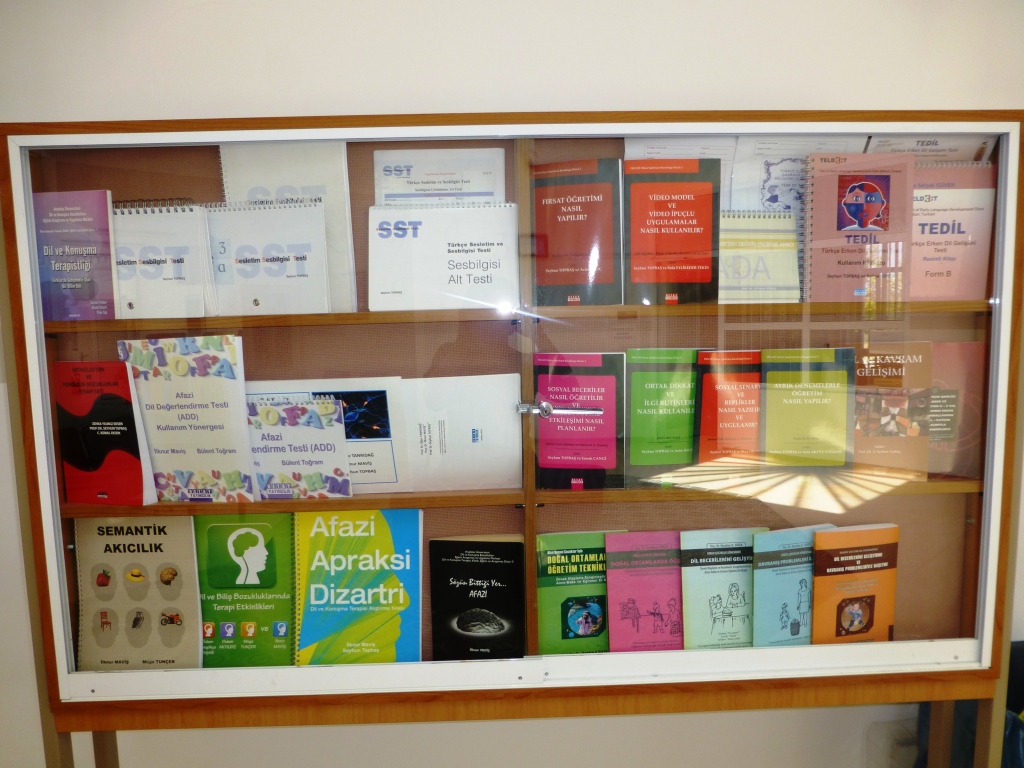
Turkish speech and language assessments created at Dilkom

June 25, 2013

Resourcing speech pathologists to work with multilingual clients: From Arabic to isiZulu

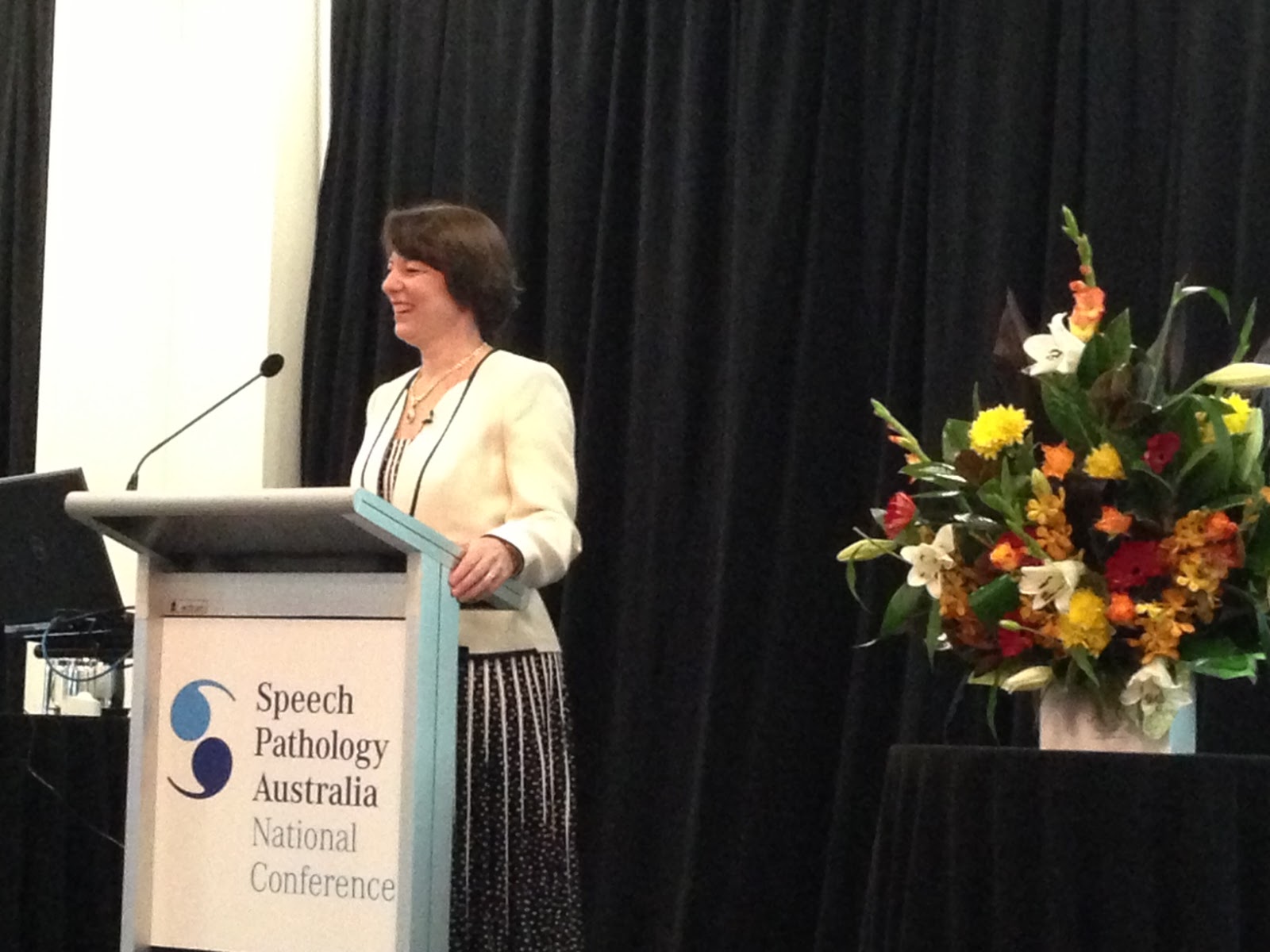
Today I presented the Elizabeth Usher Memorial Address to the Speech Pathology Australia National Conference on the Gold Coast. The abstract for my presentation is below. During the presentation relevant URLs were tweeted to the audience (see below). Here is the chirpstory containing the tweets from day 2 of the conference and the media release.

 
ABSTRACT
Resourcing speech pathologists to work with multilingual clients: From Arabic to isiZulu
Almost 7000 languages are spoken throughout the world, and many people speak more than one language. Speech pathologists across the world have critical roles to play in supporting children to be competent communicators in the languages of their communities. However, there is a mismatch between the languages spoken by children and families and the languages spoken by speech pathologists. Recent population studies of Australian preschool children show that the most common languages other than English are: Arabic, Vietnamese, Italian, Spanish, and Greek; whereas, Speech Pathology Australia members frequently offer services in: Auslan, French, Italian, Greek, and Cantonese. The need for accessible culturally and linguistically appropriate resources for working with multilingual children has been highlighted in international surveys. For example, Guiberson and Atkins (2012) found that only 51% of speech pathologists were  confident in assessing and providing intervention for multilingual children. Recent international collaborations have resulted in innovative and practical strategies to support speech pathologists during assessment, intervention, and collaboration with families, communities, and other professionals. The International Expert Panel on Multilingual Children’s Speech was assembled to prepare a position paper to address issues faced by clinicians in working with multilingual populations. The new Multilingual Children’s Speech website fulfils one of the aims of the position paper by providing resources and information for speech pathologists in over 30 languages. The recent international collaborations have been framed around the World Health Organization’s International Classification of Functioning, Disability and Health (ICF-CY) and have been established with the goal of supporting  multilingual children to participate in society.
Chris Stone (President of Speech Pathology Australia) presenting the Elizabeth Usher Award
Links
UNESCO Do one thing for diversity
https://www.facebook.com/DoOneThingforDiversityandInclusion   
Early Years Learning Framework
http://foi.deewr.gov.au/system/files/doc/other/belonging_being_and_becoming_the_early_years_learning_framework_for_australia.pdf    
The cultural and linguistic diversity of 3-year-old children with hearing loss
http://jdsde.oxfordjournals.org/content/17/4/421.abstract   
Factors contributing to language use for multilingual children with hearing loss
http://clt.sagepub.com/content/29/1/111.abstract    
Influence of bilingualism on speech production: A systematic review
http://onlinelibrary.wiley.com/doi/10.1111/j.1460-6984.2012.00178.x/abstract   
Prevalence of speech and language concern for Australian children
http://jslhr.asha.org/cgi/content/full/52/5/1213   
Speech-language pathologists’ assessment and intervention practices with multilingual children
http://informahealthcare.com/doi/abs/10.3109/17549507.2011.636071  
Multilingual children’s speech position paper
http://www.csu.edu.au/research/multilingual-speech/position-paper   
Multilingual children’s speech acquisition
http://www.csu.edu.au/research/multilingual-speech/speech-acquisition   
Children's acquisition of Hong Kong Cantonese consonants, vowels, and tones
http://jslhr.asha.org/cgi/content/abstract/56/1/103   
Non-English speech assessments
http://www.csu.edu.au/research/multilingual-speech/speech-assessments   
English validation of Intelligibility in Context Scale
http://jslhr.asha.org/cgi/content/abstract/55/2/648   
Intelligibility in Context Scale
http://www.csu.edu.au/research/multilingual-speech/ics   
Comparison between the speech sounds of English and other languages
http://www.csu.edu.au/research/multilingual-speech/languages  
Multilingual and multicultural considerations in speech-language pathology
http://informahealthcare.com/toc/asl/14/6   
World Report on Disability and people with communication disability
http://informahealthcare.com/toc/asl/15/1   
Working in a Culturally and Linguistically Diverse Society: SPA position paper

http://www.speechpathologyaustralia.org.au/library/Clinical_Guidelines/Working_in_a_CALD_Society.pdf
  
References
Guiberson, M., & Atkins, J. (2012). Speech-language pathologists’ preparation, practices, and perspectives on serving culturally and linguistically diverse children. Communication Disorders Quarterly, 33(3), 169-180.

World Health Organization (2007). International Classification of Functioning, Disability and Health: Children and Youth Version (ICF-CY). Geneva, Switzerland: Author.


Sharynne presenting the Elizabeth Usher Memorial lecture