Showing posts with label early childhood. Show all posts

March 20, 2026

Meeting with Department of Education today

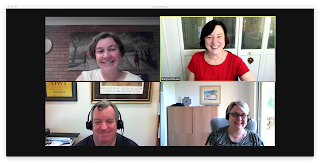
Today I was with a co-hort of universities across NSW  meeting with Claire Britt and others from the NSW Department of Education. We were discussing future research possibilities to support children in early childhood education and care in NSW.

Here are some public statistics that they shared about the NSW Department of Education:

  • 1.2 million + learners in early childhood, public schools and training
  • 94,000+ teaching staff
  • 47,000+ school-based support staff
  • 2,200+ principals and schools
  • 6,000+ early childhood education and care services 


September 2, 2025

Belinda's PhD - the final step

I was thrilled to receive a copy of Belinda Downey's bound PhD thesis today. What a significant moment - to hold the final product. Congratulations Belinda. Here is the link to the online version of her thesis titled "Staying in Early Childhood: Struggle, Hope and Connection": https://researchoutput.csu.edu.au/en/publications/staying-in-early-childhood-struggle-hope-and-connection


November 20, 2024

Leadership and retention in early childhood education

Congratulations to Belinda Downey who has just had this paper published from her PhD: 

Downey, B., Letts, W., Gibbs, L., & McLeod, S. (2024). Leadership and retention in early childhood education. Australasian Journal of Early Childhood, 49(4), 343-357. https://doi.org/10.1177/18369391241286935 

Here is the abstract: 

Global early childhood education workforce shortages have highlighted the importance of recruitment and retention. The development of effective leadership has not been a retention policy focus even though effective leadership has been identified as an important driver for improving working conditions and supporting educator retention. The aim of this research was to investigate what factors affect retention focussing on retention challenges for leaders in an under researched context. Participants were 34 early childhood educators in the Northern Territory of Australia. A constructivist grounded theory methodology framed the research and the data analysis, and a constant comparative method was used to generate categories. The lack of learning on leadership, coupled with competing priorities, were identified as critical factors that contribute to increased attrition. However, informal mentoring was found to support both the positional and emerging leaders, increasing the probability of their retention regardless of their access to leadership development.

November 19, 2024

Nord/ CSU Early Childhood Education Group

Tonight we had a meeting with the Nord/Charles Sturt University Early Childhood Education Group working towards a memorandum of understanding between the universities. 

There are three sub-groups:

  • Children's Voices (Leads: Elisabeth Bjornestad)
  • Online Learning for Early Childhood Education/ITE and Med (Lead: Leanne Gibbs/Martin Per Samuelsson)
  • Quality Assurance, Regulation and Qualifications (Leads: Kelly Tribolet/Belinda Downey)

The Children's Voices group shared the following projects and would like to have a seminar where people share their work

  • Nord University is working with Malta on a project about children's voices + a philosophical approach regarding children's hut building in Sweden/Norway and New Zealand.
  • CSU is running the Early Childhood Voices Conference (ECV2024) next week and are working with the World Health Organization on a project about children's voices. 

Children's Voices Group


September 12, 2024

Leadership and retention in early childhood education

The following article has been accepted for publication from Belinda's PhD. Congratulations Belinda. Downey, B., Letts, W., McLeod, S. & Gibbs, L. (2024). Leadership and retention in early childhood education. Australasian Journal of Early Childhood. https://doi.org/10.1177/18369391241286935

February 8, 2024

ECIR symposium presentation at 2024 AJEC Research Symposium

The 2024 Australian Journal of Early Childhood (AJEC) Research Symposium is taking place virtually on 8 and 9 February. 

https://www.earlychildhoodaustralia.org.au/events/ajecsymposium/ 

https://www.earlychildhoodaustralia.org.au/wp-content/uploads/2024/02/2024-AJEC-Research-Symposium_Discussion-papers_Final.pdf

The conference includes papers on innovative research methodologies, research and pedagogical practices. It will be attended by early years professionals, policymakers, researchers, leaders, academics, and students from Australasia and beyond. The 2024 AJEC Research Symposium program includes more than 50 presentations by Australian and international early childhood researchers. 

The CSU Early Childhood Interdisciplinary Research Group (ECIR) are presenting a symposium on the first day.

Our presentations were titled: Empowering children’s voices through the Children Draw Talking Project 

  • Listening to children: The Children Draw Talking Project - Belinda Downey, Sharynne McLeod 
  • Development of an instrument and protocol for the virtual collection and analysis of children’s drawings - Carolyn Gregoric, Van H. Tran, Suzanne C. Hopf, Sharynne McLeod 
  • A meaning-making analysis of children’s drawing vs children’s talking in the drawing: A cultural-historical perspective - Shukla Sikder, Lysa Dealtry, Sarah Stenson 

Dr Belinda Downey

Dr Carolyn Gregoric

Dr Shukla Sikder
The discussion after our presentation highlighted the work of Dr Barbara Piscitelli AM https://www.slq.qld.gov.au/bigvoices

We enjoyed the International Keynote Address by Associate Professor Sonja Macfarlane titled "He Awa Whiria and Early Literacy: The emancipatory power of braiding knowledge streams in research and practice". The keynote speaker shared this resource: https://www.education.govt.nz/early-childhood/teaching-and-learning/assessment-for-learning/te-whatu-pokeka-english/

We also attended the following fascinating presentation:

Children’s voices in policy: How considered study design is vital in balancing rigour and authenticity - Dan Leach-McGill, Chris Mason, and Daniel Hannington-Pinto

They work for The Front Project - https://www.thefrontproject.org.au/ 

October 13, 2023

Staying in Early Childhood: Struggle, Hope and Connection

Belinda Downey's PhD is now available online. It is titled: Staying in Early Childhood: Struggle, Hope and Connection 

Here is the link: https://researchoutput.csu.edu.au/en/publications/staying-in-early-childhood-struggle-hope-and-connection

Congratulations Belinda.

September 13, 2023

Early childhood research conversations

Today I had lunch with Dr Tamara Cumming, who is currently at Macquarie University. Tamara and I worked together to establish the Early Childhood Research Group a number of years ago. It was great to reconnect and dream about future collaborations.

March 24, 2023

Congratulations Belinda on your PhD submission

Today Belinda Downey submitted her PhD. Hooray!

Her primary supervisor was A/Prof Will Letts and her co-supervisors over her candidature have been Dr Leanne Gibbs, Dr Tamara Cumming, Dr Doreen Rorison and myself.

It was a joyful celebration with some of Belinda's "village" who walked with her as she undertook her PhD.

Some of Belinda's village

Belinda with her co-supervisors:
Prof Sharynne McLeod, Dr Tamara Cumming, Dr Leanne Gibbs

Hooray - it's submitted!

Belinda with her proud supervisors:
Dr Leanne Gibbs, A/Prof Will Letts, Prof Sharynne McLeod


Here is her abstract:

Retention of early childhood educators (ECEs) has become a wicked problem with estimates of more than 39,000 ECEs currently required to meet workforce demands and projections that an additional 24,000 ECEs may be needed by 2025. Attrition of ECEs can negatively impact upon the relationships held with children and families, the quality of care and education, and workload of educators. Although wages and working conditions have been identified as one concern, there are additional complex issues impacting retention including professional recognition of the early childhood education and care (ECEC) field, administrative and regulatory burden, and the intensity of the ECE role. While high attrition can have compounding effects, such as job dissatisfaction and burnout, increased educator wellbeing, supportive leadership, and professional development have been found to support the retention of ECEs. Retention in ECEC specifically focused on the Northern Territory of Australia provides a unique perspective regarding complex issues impacting retention in the ECEC sector. Therefore, this research aimed to investigate factors that enabled or constrained ECEs’ retention in the Northern Territory. 

Participants were recruited through purposive random sampling, across the ‘top end’ of the Northern Territory in Australia. Yarning sessions (cf. focus groups) were undertaken, discussing the ECEC profession, national sector reforms, and retention. A constructivist grounded theory approach was used, and a constant comparative analysis of the data was undertaken. Through the constructed grounded theory methodology, a substantiative grounded theory was generated to explain attrition and retention in the ECEC field. The generated theory supported the concept that connection within the ECEC field fostered retention resulting in the substantive grounded theory, building connection builds retention. The connections that were identified as supporting retention in this research were the relationships educators built with the children, families, colleagues, their wider professional networks, and to their profession. 

The research findings generated one core category, adjusting practices and accommodating values, as the overarching main concern for participants. The core category was central to all of the data categories and held a traceable connection to them. The core category had two properties, struggle and hope: (a) Hopeful educators felt connected to their role, their ECEC service and the policy and legislation of ECEC, (b) Struggling educators felt disconnected from either their role, their ECEC service, the policy, and legislation of ECEC or all three. A basic social process of attrition and retention was identified which formed a three-stage process and became the basis of this thesis. The first stage, becoming a professional, the second, belonging in an organisation, and the third stage, engaging with policy and legislation, participants either found hope in the connections developed through these stages and were retained or they struggled to build connection through these stages leading to turnover or attrition. Participants ability to find connection depended on their ability to find hope in adjusting their practices and accommodating their educational values. 

The findings identified that when becoming a professional the participants who struggled most were those who had limited support and access to resources (both social and material). Belonging in an organisation created struggle for those participants who were experiencing resistance or horizontal violence due to a misalignment of educational practices with their colleagues. Participants who were studying also identified struggle through increased stress and personal time pressures. When engaging with policy and legislation participants’ feelings of being undervalued in their role, and financial insecurity due to the low wages, combined with the onerous position of the requirement to transition to multiple polices and legislation at once decreased their job satisfaction and wellbeing, which increased their risk of turnover or attrition. 

In comparison this research found that ECEC retention could be supported when becoming a professional through the development of trusted, collaborative relationships, practice-level mentors and scaffolded examples of documentation and assessment. Similarly, belonging in an organisation was fostered through leadership that encouraged and supported inclusive practices and values-based approaches through robust conversations that encouraged professional autonomy and agency building participants’ confidence, knowledge and skills. Participants who engaged with the policy and legislation found that the Australian Government’s Early Years Learning Framework supported their understandings around practice and provided them with the terminology they needed to advocate for their profession. Participants’ ability to articulate what they did as an educator provided visibility for the professional nature of the role in the wider community. 

The impacts that increased ECEs’ attrition or turnover was a lack of support or knowledge around building relationships and connections. Conversely, ECEs’ retention was enabled through the connections these ECEs developed, which increased their motivation to ensure high quality care and education and the probability of their retention. These findings supported the substantive grounded theory that building connection builds retention, which provides a possible solution moving into the future, to the ECEC fields’ wicked problem of retention.

December 15, 2021

Belinda's last PhD meeting for 2021

It has been wonderful to work with Belinda Downey on her PhD during 2021. I have enjoyed working with Belinda and her two supervisors Will Letts and Tamara Cumming. Here is a photo from our meeting today.

Belinda, Sharynne, Will, Tamara

September 9, 2021

Sturt Scheme Team: Early Childhood Services

I am thrilled to be part of the Sturt Scheme Team focussing on Early Childhood Services. We met today to plan the next phase of our collaboration.

Tamara Cumming, Sharynne, Julian Grant, Sarah Verdon

July 22, 2021

Balancing struggle and hope in early childhood education

Belinda Downey, Sharynne, Will Letts, Tamara Cumming
Belinda Downey is writing up her PhD on the topic of balancing struggle and hope in early childhood education supported by her supervisor A/Prof Will Letts, Dr Tamara Cumming and myself.

August 14, 2020

Early Childhood Research Group - new website

 Today we launched Charles Sturt University Early Childhood Research Group website: https://earlychildhoodresearch.csu.domains

We also have a new Twitter account: @CSU_ECRG

We will be advertising the Early Childhood Voices 2020 Conference very soon!

Here is our overview:

The Early Childhood Research Group (ECRG) promotes social justice for children, families and practitioners working with the early childhood sector (generally birth-8 years). We do this by using innovative methods, theories and partnerships with children, families, practitioners and the early childhood sector to co-produce, translate and implement research, and to generate evidence-based practice and practice-based evidence. Our research emphasises sustainability, children’s rights, enhancing children’s access to, participation in and outcomes from equitable, quality early childhood programs and services, workforce sustainability, and transformation of the social, policy and organisational conditions that enable social justice. We seek opportunities to bridge gaps and promote holistic approaches between settings (early childhood education and care, schools, homes, health and disability services), and bodies (government departments, international and national organisations). We build capacity for engaging in transformative research within our group and with other researchers. 

We are guided by Charles Sturt University’s ethos: Yindyamarra winhanganha "The wisdom of respectfully knowing how to live well in a world worth living in" and Charles Sturt University’s motto: "For the public good". We also align with the United Nations Sustainable Development Goals  3, 4, 8, 10

 More information 

Website (CSU-FOAE) https://arts-ed.csu.edu.au/research/research-groups/early-childhood-research-group 

Our research (CRO) https://researchoutput.csu.edu.au/en/organisations/early-childhood-research-group 

Our impact (PlumX) https://plu.mx/csu-au/g/early-childhood-research-group 

Please contact us if you would like to join our research group, partner with us, or participate in our research.We welcome comments and inquiries from professionals, researchers, research partners, and aspiring PhD students. Dr Tamara Cumming tcumming@csu.edu.au and Professor Sharynne McLeod smcleod@csu.edu.au 

We have purchased some fantastic new iStock images to use on the website.

 Photo credit: iStock.com/monkeybusinessimages


August 5, 2020

Early Childhood Research Group meeting - exciting innovations

Today our Early Childhood Research Group met and discussed a number of innovations stemming from the focus on research by our new Dean, Professor John McDonald.

February 10, 2020

Resources for supporting young children and families during disasters (fire, flood, earthquakes etc.)

Over the past few months, many Australians have experienced bushfires and now floods. Here are some links that can be used to support young children and families during disasters:

January 24, 2020

Sharing ideas with Prof Sheila Degotadi

I had a lovely time catching up with Prof Sheila Degotadi in Bathurst and sharing ideas about grants, journals, and international research across early childhood and speech pathology. Both Sheila and I have current Australian Research Council grants that include assessing young children's speech and language:

June 28, 2018

Investigating new approaches to child assessment and educator reflection

This week Sandie Wong presented a paper at the World Organization for Early Childhood Education Conference (OMEP) on behalf of our team who is investigating new approaches to child assessment and educator reflection for children under 3 in early childhood education and care settings:
Janus, M., Harrison, L., Wong, S., McLeod, S., Elwick, S., Alexander, W., Mulhearn, G., & Williams, K. (2018, June). Investigating new approaches to child assessment and educator reflection on practice in early childhood education and care services for children under 3. Paper presented at World Organization for Early Childhood Education Conference, Prague, Czech Republic.

The paper described the two tools being developed/validated by the team:
  • Infant & Young Child Development-Educator Version (IYCD-E) (based on the World Health Organization's IYCD) 
  • Observing, Reflecting, Improving Children’s Learning (ORICL)

March 14, 2018

Farewell Professor Linda Harrison

Professor Linda Harrison has worked at Charles Sturt University for 25 years in the field of early childhood education. She developed the Early Years Learning Framework for Australia (EYLF) with Prof Jennifer Sumsion and was on the advisory group for the Longitudinal Study of Australian Children (LSAC). She has has a strong influence on researchers and research at CSU, including in her role as the inaugural Associate Dean Research for the Faculty of Arts and Education. We have worked together for 14 years (see here). She is moving to Macquarie University and tonight was her farewell party. It was a wonderful time of celebration. We will miss her greatly.
Some of the people celebrating Linda's contribution to CSU
Carol Burgess (Head, School of Teacher Education), Dr Peter Wilson, Prof Linda Harrison, Prof Sharynne McLeod
Prof Linda Harrison, Emeritus Prof Bob Meyenn (previous Dean of Education), Prof Sharynne McLeod
Dr Shuka Sikder, Dr Audrey Wang, Prof Linda Harrison, Mark Situ

August 21, 2017

Assessment of Children as Effective Communicators in Early Childhood Education and Care

It has been great to work with a team from Charles Sturt University (led by Sarah Verdon) to submit the following government report:
Verdon, S., Mackenzie, N., McLeod, S., Davidson, C., Masso, S., Verdon, L., & Edwards-Groves, C. (2017). Assessment of children as effective communicators in early childhood education and care: Literature review. Melbourne, Australia: Victorian Curriculum and Assessment Authority.

This resource for early childhood professionals and will be profiled on the VCAA website
http://www.vcaa.vic.edu.au/Pages/earlyyears/vfldoutcomes/communication.aspx

Here is the executive summary
The Victorian Early Years Learning and Development Framework (VEYLDF, State of Victoria Department of Education, 2016) targets five key learning outcomes. This report contains a review of the fifth outcome: children are effective communicators. The development of communication skills begins at birth and is integral to a child’s self-expression, wellbeing, identity, sense of agency and capacity to make friends (State of Victoria Department of Education, 2016). Therefore, communication skills are essential for developing confident and creative individuals who can effectively navigate and participate in life in the twenty-first century and beyond. The following principles for assessing communicative competence have been identified in this review to inform practice:
1. Effective assessment of communication requires a clearly defined purpose.
2. A range of assessments may be required to develop a clear understanding of a child’s strengths and challenges since communication is multifaceted (including but not limited to speaking, listening, reading and writing).
3. Communication assessment can use both formal and informal methods.
4. Assessment of communication considers all languages and communication systems used by a child to gain a holistic understanding of a child’s communicative competence.
5. Effective assessment of communication is based on the input of multiple stakeholders including parents, early childhood professionals, health professionals and children.
6. Assessment of communication considers functionality and participation, not only competence in comparison to adult targets.
7. Assessment of communication is an opportunity for multidisciplinary collaboration.
A range of tools available to support early childhood professionals in their assessment of children’s communication have been identified within this review. These tools were selected to address the each of the key components of children as competent communicators across the full range of communicative skills that children develop from birth to eight years. Nineteen following tools to support early childhood professionals’ assessment of children’s communication are reviewed in this report.
The purpose of this review is to provide a comprehensive resource for early childhood professionals seeking to assess the communication of the children they work with. The review identifies appropriate communication assessment tools for use by early childhood professionals and outlines the areas of communication development that are addressed by the tools. The review provides an overview of the purpose and features of each tool and a discussion of its usefulness in assessing children’s communication. Early identification of communication needs is essential to supporting children’s long-term social and educational outcomes. It is hoped that this document will empower early childhood professionals with the knowledge to identify areas of children’s communication in need of assessment and the resources to confidently undertake these assessments.

May 19, 2017

Early Learning Languages Australia

The Australian Government Department of Education and Training have created apps for preschool children to learn languages and details are found here: https://www.ella.edu.au
Currently the ELLA program is available in 8 languages: Arabic, Chinese (Mandarin), French, Indonesian, Italian, Japanese or Spanish.
In 2018 two more languages will be added: Hindi and Modern Greek
More information is available here
The evaluation report is here