Showing posts with label presentations. Show all posts

April 6, 2022

International Symposium on Monolingual and Bilingual Speech 2022

The International Symposium on Monolingual and Bilingual Speech (ISMBS) (6-9 April 2022) is a hybrid conference with both on site and online presentations and events at the Department of Communicative Disorders at the University of Louisiana at Lafayette (Université des Acadiens et Créoles). https://speechandlanguage.louisiana.edu/international-symposium-monolingual-and-bilingual-speech-ismbs-2022 

Kate Margetson and I are chairing a session each (starting ~6:30am our time!) and over three days are virtually presenting three papers from our VietSpeech research:

  1. VietSpeech: Vietnamese-Australian children’s speech and language competence (Sharynne McLeod, Sarah Verdon, Kate Margetson, Van H. Tran, Cen Wang, Ben Pham) 
  2. The VietSpeech Multilingual Transcription Protocol: A 4-step process for transcribing Vietnamese-Australian children’s speech (Kate Margetson, Sharynne McLeod, Sarah Verdon, Van H. Tran) 
  3. Cross-linguistic transfer during multilingual speech acquisition: A longitudinal Vietnamese-English case study (Kate Margetson, Sharynne McLeod, Sarah Verdon, Van H. Tran) 

Additionally, I am on the ISMBS International Scientific Committee https://speechandlanguage.louisiana.edu/international-symposium-monolingual-and-bilingual-speech-ismbs/ismbs-international-scientific

It has been an inspiring conference with fascinating papers from across the world.

December 15, 2021

Sturt Scheme Round Table

This afternoon I participated in the Sturt Scheme Round Table. I am one of four leaders on the Accelerating Interdisciplinary Education Research (AIER) Sturt Scheme that is funded by CSU for 3 years. The Group Leads of each Sturt Scheme gave a 10 minute presentation about their projects and project plans for 2022. Invitees to the Sturt Scheme Round Table were DVCR (on leave), PVC-RI, Executive Deans and Faculty Executive Officers, ADRs and Group Leads of each project.

November 19, 2021

American Speech-Language-Hearing Association Convention 2021

The American Speech-Language-Hearing Association Convention is on this week in Washington, DC. I am disappointed that I am unable to be in Washington to catch up with my colleagues from across the world. I really miss the networking and face-to-face interactions. There are over 10,000 attendees (5,200 onsite and 5,200 virtual). There are over 660 sessions and 1000 posters across 31 topic areas.

I stayed up until 12:30am to watch Lynn Williams, President of ASHA open the convention. 

 During the convention, my colleagues and I are presenting the following papers and posters virtually. 

  1. McLeod, S. (2021). Evidence-based resources for working with children with speech sound disorders [Invited 1-hour oral presentation]. 
  2. McLeod, S., Williams, A. L., McCauley, R. J., Baker, E., Ballard, K., Bernhardt, B. M., Camarata, S., Cleland, J., Hayden, D., Morrisette, M., Pennington, L., Leece, M., Pezas, R., Scherer, N., Strand, E., Tyler, A., Williams, P., Wren, Y., Preston, J. (2021). Twenty interventions for speech sound disorders: A guide for selection and implementation [1-hour oral presentation]. 
  3. Wren, Y., Davies, A., Seifert, M., Harding, S. & McLeod, S. (2021). Intelligibility in 3-year-olds with cleft lip and/or palate: findings from the cleft collective study [Oral presentation]. 
  4. McLeod, S., Verdon, S., Margetson, K., Wang, C., Tran, V. H., White, K,, Pham, B. (2021). Children’s speech acquisition in a 3-generation Vietnamese-English bilingual family [Virtual poster presentation]. 
  5. Hopf, S. C., Crowe, K., Verdon, S., Blake, H. L. & McLeod, S. (2021). Culturally Responsive Teamwork: A framework to advance workplace diversity [Virtual poster presentation]. ***Awarded Meritorious Poster Submission (from over 1200+ posters) https://speakingmylanguages.blogspot.com/2021/10/award-2021-asha-convention-meritorious.html

There have been a lot of people who have already viewed our presentations via the Virtual Library platform and many people have sent emails indicating that they have learned from the presentations and have asked for copies of the slides. This is great - but it is not the same as having conversations with these people. I hope I can attend next year.

May 31, 2021

Speech Pathology Australia National Conference (31 May-3 June 2021)

The Speech Pathology Australia National Conference was postponed from being held in Darwin in 2020 and is running as an online event from 31 May-3 June 2021. The conference platform was made live earlier so that people had time to view the presentations in advance of the conference.

Here are our presentations:

  1. McLeod, S. & Crowe, K. (2021, May-June). A cross-linguistic review of studies of 49,000 children’s consonant acquisition and intelligibility. [Paper presentation online]. Speech Pathology Australia National Conference, Darwin, Australia. 
  2. McLeod, S., Verdon, S., Margetson, K., Tran, V. H., Wang, C., & Pham, B. (2021, May-June). Vietnamese-Australian adults’ and children’s productions of English and Vietnamese consonants to support differential diagnosis. [Paper presentation online]. Speech Pathology Australia National Conference, Darwin, Australia. 
  3. Margetson, K., McLeod, S., Tran, V. T., Verdon, S., To, L., Huynh, K. (2021, May-June). Speech assessment for multilingual children: Transcription of bilingual Vietnamese-English children and adults. [Paper presentation online]. Speech Pathology Australia National Conference, Darwin, Australia. 
  4. Brown, M. I. & McLeod, S. (2021, May-June). Books, babies, and therapy: Speech-language pathologists’ perspectives and practices. [Paper presentation online]. Speech Pathology Australia National Conference, Darwin, Australia. 
  5. Cronin, A., Verdon, S. & McLeod, S. (2021, May-June). Beyond the medical model: Listening to families raising toddlers with cleft palate. [Paper presentation online]. Speech Pathology Australia National Conference, Darwin, Australia. 
  6. McGill, N., McLeod, S., Crowe, K., & Hopf, S. C. (2021, May-June). Waiting list management strategies for speech pathologists: Summary of evidence [Paper presentation online]. Speech Pathology Australia National Conference, Darwin, Australia. 
  7. McAlister, H, Hopf, S.C., & McLeod (2021, May-June). The impact of dialect on Fijian children’s acquisition of English speech sounds [Paper presentation online]. Speech Pathology Australia National Conference, Darwin, Australia. 
  8. Verdon, S., McLeod, S., Tran, V. H., & Margetson, K., (2021, May-June). Supporting children’s global voices in local contexts: International experts’ recommendations for home language maintenance. [Poster presentation online]. Speech Pathology Australia National Conference, Darwin, Australia. 
  9. Margetson, K., McLeod, S., Verdon, S., Tran, V. H., & Wang, C., (2021, May-June). Speech sound disorder or cross-linguistic transfer? Speech profiles of four Vietnamese-English bilingual children. [Poster presentation online]. Speech Pathology Australia National Conference, Darwin, Australia.  

Dr Sarah Verdon presenting her workshop (Wed pm)

September 28, 2019

Preparing for the ASHA convention in November

The next American Speech-Language-Hearing Association convention will held in Orlando, FL in November, so my colleagues and I are busily preparing our presentations.  Recently I have had a video conference with Elise Baker, Lynn Williams and Rebecca McCauley (US - Friday night; Australia - Saturday morning) and another with Kate Crowe (Iceland - Monday morning; Australia - Monday night). My other co-authors are in Australia - so the conversations don't require timezone negotiations.
Elise, Sharynne, Lynn, and Rebecca planning on Friday night (US)/
Saturday morning (Australia)
Kate Crowe (Iceland) and Sharynne (Australia)
 Here are a list of our presentations
  • Brown, Wang & McLeod - Parent-Child Book Reading Impacts Academic Achievement in Grade 3 
  • Baker, Williams, McCauley & McLeod - A Taxonomy of Phonological Intervention to Guide & Teach Clinical Decision-Making & Fidelity of Implementation 
  • McLeod & Crowe - Children’s Consonant Acquisition Across Languages 
  • Blake, McLeod & Verdon - Intelligibility Enhancement Assessment & Intervention for Multilingual University Students

June 2, 2019

Presentations at the Speech Pathology Australia National Conference, Brisbane, June 2019

The Speech Pathology Australia  and New Zealand Speech-language Therapists' Association Conference is being held in Brisbane 2-5 June 2019.

The conference began with an excellent workshop from Professor Susan Rvachew from McGill University in Canada titled "Input-oriented approach to phonological intervention: Why? When? How?".
Dr Alison Holm, Dr Suzanne Hopf, Dr Nicole Watts Pappas, Prof Susan Rvachew,
Dr Elise Baker, Nicole McGill, Anna Cronin, Prof Sharynne McLeod
Here are the presentations from our Charles Sturt University Speech-Language-Multilingualism team.

Oral presentations:
  1. Cronin, A., McLeod, S., & Verdon, S. - Expert practice for children with cleft palate across the world: Application of the ICF-CY
  2. Cronin, A., Verdon, S., & McLeod, S. - What are the experiences of families of young children with cleft palate?
  3. McGill, N., Crowe, K., McLeod, S., & Hopf, S. - Waiting lists and prioritisation for paediatric speech pathology services: Speech pathologists’ perspectives.
  4. McGill, N., Crowe, K., & McLeod, S. - “Struggling and needing help”: Experiences of waiting for speech pathology services in Australia.
  5. McCormack, J., McLeod, S., & Crowe, K. - Comparing children’s and parents’ perspectives about speech in the Sound Start Study.
  6. McLeod, S., Cronin, A., Masso, S., & Phạm , B. - Transcribing Vietnamese: English-speaking speech pathologists’ transcription of child and adult speech.
Poster presentations:
  1. Blake, H. L., McLeod, S., & Verdon, S. - Enhancing the English intelligibility of multilingual speakers.
  2. Brown, M. I., Wang, C., & McLeod, S. - Reading with babies impacts literacy, language, and numeracy skills at 8-9 years.
  3. Davis, E., McLeod, S., Rohr, K., Roberts, K., McGill, N., Miller, K., Thornton, S., Ahio, N. - Randomised controlled trial evaluating the effectiveness of advice versus device for children on speech pathology waiting lists.
  4. McGill, N., McLeod, S., Davis, E., Rohr, K., & Miller, K. - ‘Wait’ lifting: Randomised controlled trial evaluating active versus passive waiting for speech pathology by children with speech and language difficulties.
  5. Lyons, R., McAllister, L., Atherton, M., Bickford, J., Bright, F., Bryant, L., Davidson, B., Easton, C., Foster, A., Hersh, D. McLeod, S., O'Halloran, R., Siyambalapitiya, S., Spencer, S., Verdon, S., & Worrall, L. - Introducing qualitative research in speech pathology.
  6. Verdon, S., Wang, C., McLeod, S. & Tran, V. - Vietnamese-Australians’ language use, proficiency, and maintenance. 
  7. Tran. V., Verdon, S., McLeod, S., & Wang, C. - Factors affecting home language maintenance: A narrative review. 
SLM team at SPA2019: Back: Dr Michelle Brown, Kate Margetson, Anna Cronin, Anniek van Doornik, Sadie and Dr Sarah Verdon. Front: Helen Blake, Prof Sharynne McLeod, Prof Susan Rvachew, A/Prof Jane McCormack, Nicole McGill
Dr Michelle Brown presenting her poster
The SLM team at the conference dinner

May 30, 2018

Speech Pathology Australia National Conference - Adelaide

This week the Speech Pathology Australia National Conference is in Adelaide.
Our team are presenting a number of papers and posters, including:
  1. Baker, E., Williams, A. L., McLeod, S. & McCauley, R. J. – There are so many different phonological intervention approaches: What’s the difference? 
  2. Blake, H. L., McLeod, S. & Verdon, S. – Multilingual university students’ perceptions of the impact of English proficiency and intelligibility on participation. (e-poster) 
  3. Blake, H. L., Verdon, S. & McLeod, S. – Exploring multilingual speakers’ perspectives on their English intelligibility. 
  4. McGill, N., McLeod, S. & Crowe, K. (2018). ‘Wait’ lifting: Development of a website to facilitate active waiting for speech pathology. 
  5. McGill, N., & McLeod, S. (2018). The theory of preparative waiting: A framework for considering parents’ experiences of waiting for speech pathology services. (poster) 
  6. McLeod, S. – Communication rights: Celebrating the 70th anniversary of the Universal Declaration of Human Rights.
  7. McLeod, S., Harrison, L. J., Wang, C., & Verdon, S. – Academic outcomes for Indigenous Australian children whose parents were concerned about their speech and language in early childhood. 
  8. Phạm, B., & McLeod, S. – Vietnamese children’s speech acquisition: A normative cross-sectional study. 
  9. Verdon, S. & McLeod, S. – Aboriginal and Torres Strait Islander children’s access to and engagement in speech and language treatment. 
Past and present members of our team who are attending are: Helen Blake, Ben Phạm, Nicole McGill, Dr Van Tran, Dr Sarah Verdon, Dr Sarah Masso and Dr Jane McCormack.
Nicole McGill presenting her paper
Dr Sarah Verdon presenting her paper
Dr Elise Baker, Dr Caroline Bowen, Prof Sharynne McLeod
Nicole McGill (3rd from left) presenting her poster with Dr Diane Jacobs, Dr Jane McCormack, Prof Sharynne McLeod
Prof Sharynne McLeod and Ben Pham
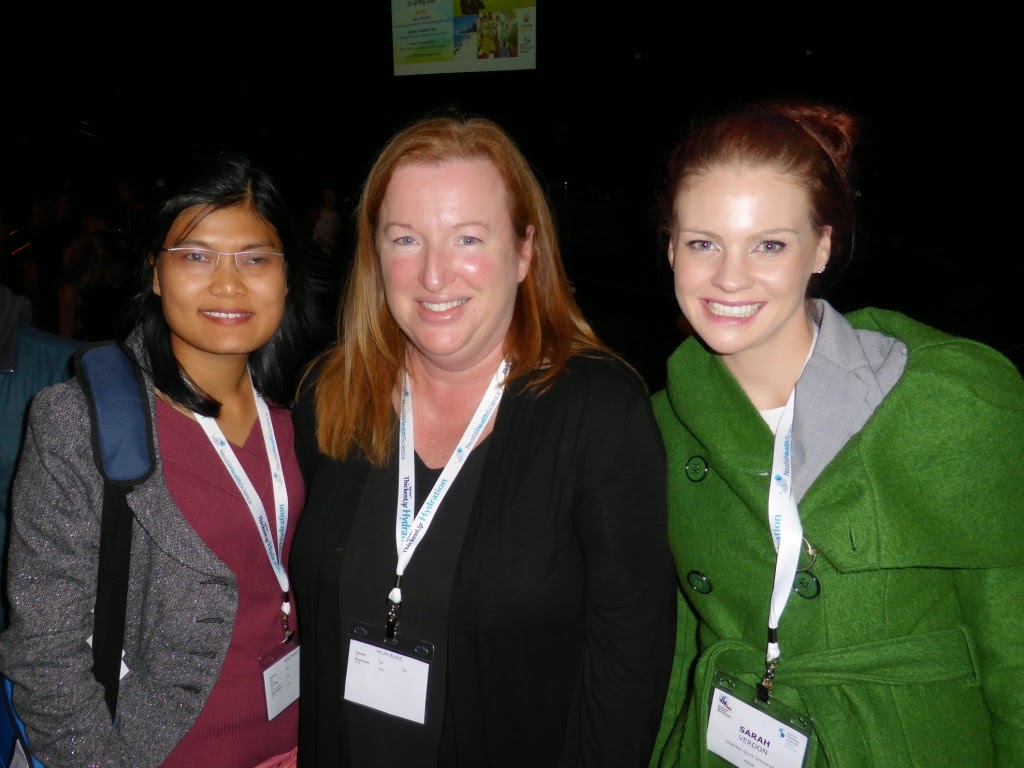
Dr Sarah Verdon, Prof Sharynne McLeod, Helen Blake

January 30, 2018

Intelligibility Enhancement in English for multilingual speakers

Helen Blake is presenting an online seminar titled "Intelligibility Enhancement in English for multilingual speakers" on 24 April 2018. The seminar is sponsored by Speech Pathology Australia and more details are here.
(UPDATE new title and new date "Updating accent modification practice: Intelligibility Enhancement for multilingual speakers"- https://www.cpdlive.com/speechpath/seminars4/7633/preview.html)

The abstract is here:
This event aims to support speech-language pathologists working with multilingual adults to enhance their intelligibility in English. Clinicians working in Intelligibility Enhancement, as in any area of clinical practice, need information not only to make appropriate clinical decisions, but also to better understand the needs of clients in order to advocate for and empower them. This webinar will review the literature and terminology relating to Intelligibility Enhancement and multilingual speakers in Australia. Presentation of principles for assessment and intervention will be supplemented with specific examples from different languages.

May 4, 2017

Creating the Vietnamese Speech Assessment for Vietnamese speech therapists

Today Xuân presented a paper about our work to develop the Vietnamese Speech Assessment. Here are the details formatted in two ways:
English:
Le, X. T. T., Phạm, B., & McLeod, S. (2017, May). Creating the Vietnamese Speech Assessment for Vietnamese speech therapists. Oral presentation at the 10th Scientific Conference Pham Ngoc Thach University of Medicine, Ho Chi Minh City, Viet Nam.
Vietnamese:
Lê Thị Thanh Xuân, Phạm Thị Bền, & Sharynne McLeod (tháng 5, 2017). Xây dựng bộ trắc nghiệm đánh giá lời nói tiếng Việt dành cho chuyên viên âm ngữ trị liệu Việt Nam. Báo cáo tại Hội thảo khoa học công nghệ lần thứ X Trường Đại học Y khoa Phạm Ngọc Thạch, thành phố Hồ Chí Minh, Việt Nam.

Here is the abstract:
Mục tiêu nghiên cứu: Phác thảo hai giai đoạn xây dựng Bộ trắc nghiệm đánh giá lời nói tiếng Việt (VSA). Thiết kế nghiên cứu: Nghiên cứu tổng quan, thử nghiệm thiết kế và tiến hành định chuẩn Phương pháp nghiên cứu: Giai đoạn 1 thiết kế VSA, xây dựng các khái niệm, và giai đoạn 2 định chuẩn và kiểm định các chỉ số tâm trắc của VSA Kết quả: Trong giai đoạn thiết kế trắc nghiệm, bước đầu, các tác giả thực hiện nghiên cứu tổng quan để xác định các phụ âm, nguyên âm, bán nguyên âm và thanh điệu trong tiếng Việt (Phạm & McLeod, 2016). Bước kế tiếp, lựa chọn 77 từ với các tiêu chí: có chứa tất cả các âm vị tiếng Việt, mỗi âm vị có ít nhất hai từ và xuất hiện trong các cấu tạo âm tiết khác nhau, được dùng phổ biến ở trẻ em, được người Việt ở các vùng khác nhau sử dụng thường xuyên, có thể minh hoạc bằng tranh, hoặc danh từ hoặc động từ. Các tranh được xác định là dễ nhận diện. VSA đã được thử nghiệm với những người Việt ở các vùng và độ tuổi khác nhau. Phiếu chấm điểm được thiết kế để các chuyên viên âm ngữ trị liệu có thể chấp nhận các cách phát âm đúng khác nhau theo các phương ngữ, và có khả năng tính phần trăm đúng của các âm vị và phân tích quy trình (đặc trưng) âm vị. Trong giai đoạn định chuẩn, VSA đã được sử dụng để đánh giá trên mẫu khảo sát là trẻ em phát triển bình thường ở Hà Nội, Hải Phòng và TP. Hồ Chí Minh. Kết luận: Các dữ liệu thu thập được hiện tại đang được xử lý, phân tích để xây dựng dữ liệu chuẩn lĩnh hội lời nói tiếng Việt. Hy vọng VSA sẽ được các chuyên viên âm ngữ trị liệu sử dụng trong năm 2018. 
Objective. To outline the two stages of the creation of the Vietnamese Speech Assessment (VSA). Study Design. Literature review; pilot testing; and normative data collection. Method. The first stage of developing the VSA involved conceptualisation and the second stage involved operationalisation of the VSA. Result. In the conceptualisation stage, firstly the authors undertook an extensive literature review to comprehensively summary of all Vietnamese consonants, vowels, semivowels, and tones for Vietnamese (Phạm & McLeod, 2016). Next, 77 words were selected to: contain all of the Vietnamese speech sounds, have at least two words containing each phoneme, have different syllable structures for each phoneme, be within the vocabulary range of young children, be frequently used by Vietnamese people in different regions, be picturable, and either a noun (not including classifiers) or verb. Appropriate pictures were identified. The VSA was piloted with Vietnamese speakers of different ages who spoke different dialects. A score sheet was created so speech therapists can accept different correct pronunciations, and to enable calculation of percentage of consonants/ vowels/ semivowels/ tones correct and a phonological process (pattern) analysis. In the operationalization stage, typically developing children in Ha Noi, Hai Phong and Ho Chi Minh City have been tested using the VSA. Conclusion. Normative data are currently being analysed to create speech acquisition norms for Vietnamese. It is hoped that the VSA will be available in 2018 for Vietnamese speech therapists to use.

Phạm, B., McLeod, S., & Le, X. T. T. (2016). Development of the Vietnamese Speech Assessment. Journal of Clinical Practice in Speech-Language Pathology, 18(3), 126-130. 

Phạm, B. & McLeod, S. (2016). Consonants, vowels, and tones across Vietnamese dialects. International Journal of Speech-Language Pathology, 18(2), 122-134. doi 10.3109/17549507.2015.1101162

November 27, 2016

Management of phonological speech sound disorders: A survey of current UK speech and language therapy practice

Last week, Natalie Hegarty  presented a poster titled: "The Management of Phonological Speech Sound Disorders: A Survey of Current UK Speech and Language Therapy Practice" at the Royal College of Speech and Language Therapists Northern Ireland Hub Conference in Templepatrick, Northern Ireland. The poster included data based on a survey of 165 speech and language therapists conducted as part of her PhD. Natalie is supervised by Jill Titterington and Laurence Taggart from Ulster University, and myself. Here are some of her conclusions:
  • SLTs commonly employ speech discrimination, phonological awareness and the minimal pairs approach to remediate phonological SSD. They rarely use complexity approaches.
  • SLTs typically employ once weekly, 1:1 sessions lasting 21-30mins for 9-12 weeks. Most SLTs (70.8%) feel that this dose is sufficient to remediate moderate-severe consistent phonological SSD.

July 20, 2015

Sound Start Study: CSU School of Teacher Education Brown Bag Seminar

I presented a Charles Sturt University School of Teacher Education Brown Bag Seminar on 20th July. The topic was "Sound Start Study: A large community-based study supporting preschoolers’ speech and pre-literacy skills". A podcast of the event is here:
http://traffic.libsyn.com/tarabrabazon/Sound_Start_Study.mp3
Here is the abstract:
The Sound Start Study is a large randomized controlled trial funded by the Australian Research Council Discovery Grant (DP1030102545). The three aims are (1) to determine whether a software program, Phoneme Factory Sound Sorter® improves the speech and phonological awareness abilities of preschoolers with speech sound disorders when undertaken in early childhood education settings (2) to determine the relationship between children’s speech errors, pre-literacy, and phonological processing skills and (3) to explore which child- and family-related variables are positively or negatively associated with the rate of change in speech production and pre-literacy status.
The Sound Start Study is being conducted over three years (2013-2015) and there are six stages of data collection per year: (1) screening via parent and teacher questionnaire, (2) face-to-face screening, (3) comprehensive assessment, (4) intervention, (5) immediate post-intervention assessment and (6) delayed post intervention assessment. In the first two years there have been 853 4- to 5-year-old preschool children from 34 early childhood education settings who have participated in stage 1, 197 in stage 2, 95 in stage 3, 86 children have been randomised to either intervention/no intervention across 29 sites in stage 4, 82 children were assessed in stage 5 and 80 in stage 6.
During stage 1 parents and educators completed the Parents’ Evaluation of Developmental Status (Glascoe, 2000) documenting their level of concern regarding their children’s/ students’ development. The most common area of concern was children’s “talking and making speech sounds”. The eight other areas were less frequently reported:“behaviour”, “understanding what you say”, “learning preschool/school skills”, “getting along with others”, “learning to do things for him/herself”, “using hands and fingers”, and “using arms and legs”. Overall, more parents and educators were concerned about children’s speech and expressive language skills than any other area. The results underscore the need for services to support children’s speech and language and the importance of assessment and intervention to support children’s transition to school.
Some of the Sound Start Study team:
Elise Baker, Sarah Masso, Sharynne McLeod, Kate Crowe, Charlotte Howland

May 20, 2015

Speech Pathology Australia National Conference in Canberra

This year's Speech Pathology Australian National Conference was held in Canberra. There were over 600 delegates, with keynote addresses from Nicola Nelson, Jay Rosenbek, and Pam Snow. Many of my students and colleagues attended and presented papers. In addition to the Sound Start Study symposium, we presented the following posters and papers:

  • Hopf, S. C. & McLeod, S. (2015, May). Agents of intervention for people with communication disability in Fiji.
  • Pham, B. T. & McLeod, S. & McCormack, J. (2015, May). Comparison of consonants, vowels, and tones across three dialects of Vietnamese. 
  • Verdon, S., McLeod, S., & Wong, S. (2015, May). Universal principles, individual approaches: The provision of culturally and linguistically appropriate speech pathology services to diverse populations.
Suzanne Hopf and Ben Pham with their posters

Current and past PhD students: Ben Pham, Helen Blake and Sarah Verdon
Xuan Le (visiting from Vietnam) and Ben Pham

Sound Start Study at Speech Pathology Australia National Conference

The Sound Start Study team presented a symposium at the Speech Pathology Australia National Conference this week in Canberra. It was well attended and we received great feedback from the delegates. Here are the presentation titles:

Baker, E., McLeod, S., Masso, S., Crowe, K., McCormack, J., Wren, Y., & Roulstone, S. (2015, May). Sound Start Study: The home literacy environment and print knowledge of preschool children with speech sound disorders.
Baker, E., McLeod, S., Masso, S., & Wren, Y. (2015, May). Sound Start Study: Dummies, bottles and thumb sucking in preschool children with speech sound disorders.
Crowe, K., Cumming, T., McCormack, J., McLeod, S. Wren, Y., &  Roulstone, S. (2015, May). Sound Start Study: Educators’ perceptions of supporting speech pathology intervention in preschools.
Masso, S., Baker, E., McLeod, S., McCormack, J., & Crowe, K. (2015, May). Polysyllable production in preschool-aged children with speech sound disorders.
McCormack, J., Baker, E., McLeod, S., Crowe, K., Masso, S., Wren, Y., & Roulstone, S. (2015, May). Sound Start Study: How do children with speech sound disorders feel about their talking?
McLeod, S., Baker, E., McCormack, J., Wren, Y., Roulstone, S., Crowe, K., & Masso, S. (2015, May). Sound Start Study: A community-based randomized controlled trial for preschoolers with speech sound disorders. 
McLeod, S., Crowe, K., White, P., Masso, S., Baker, E., McCormack, J., Wren, Y., & Roulstone, S. (2015, May). Sound Start Study: Preschool children’s speech and language is of concern for more parents and teachers than other aspects of development
Sharynne McLeod, Elise Baker, Kate Crowe, Jane McCormack
Sarah's poster presentation: Jane, Elise, Debbie James, Kate and Sharynne

May 9, 2015

European CPLOL conference in Florence, Italy

The European CPLOL conference was held in Florence, Italy on 8-9 May. There were 600 attendees from 4 continents representing more than 32 countries and 25 different languages. The keynote speakers included:
  • Dorothy Bishop (United Kingdom) Why do some children find language so hard to learn?
  • Virginia Volterra (Italy) From action to language: Recent theoretical perspectives and empirical evidence
  • Jois Stansfield (United Kingdom) Education, effective practice and ethics in speech and language therapy
I presented the following paper: McLeod, S. (2015, May). Intelligibility in Context Scale: A screening tool for multilingual children in 60 languages.
I enjoyed talking with colleagues from around the globe (including the Speech Fairy (Barbara May Bernhardt) and my Turkish friends Ilknur Mavis, Pinar Ege, Sharynne, Seyhun Topbas) and walking around this beautiful city.
CPLOL opening session
Sharynne with the Duomo in the Tuscan sunshine
Speech Fairy (May Bernhardt) and Sharynne at CPLOL
Turkish friends: Ilknur Mavis, Pinar Ege, Sharynne, Seyhun Topbas
CPLOL conference dinner at the Palazzo Borghese

November 25, 2014

Jamaican children's speech and language research continues

At the ASHA convention, I co-authored two presentations about our research in Jamaica
  • Washington, K. N., McLeod, S., McFarland, A., Weisbarth, J. (2014).  Jamaican Creole-speaking children’s expressive language, emergent literacy & communicative-participation: SLP, parent, and teacher evaluations. Technical paper.
  • Weisbath, J., Washington, K. N., McLeod, S., Samms-Vaughan, M., & Devonish, H. (2014, November). Print concept development in English: Comparing Jamaican preschoolers to US ELL and monolingual English-speaking preschoolers. Poster. 
 After the ASHA convention, Karla Washington and I met to plan grants, papers, and data analysis.
Sharynne, Karla Washington and Jamie Weisbath
Karla and Sharynne meeting after the ASHA convention

Friends and collaborators at the ASHA convention in Florida

One of the best parts of attending the American Speech-Language-Hearing Convention each year is meeting up with friends and collaborators. We do a lot of work throughout the year on email - but lots more gets done face-to-face. Here are a few people I enjoyed speaking with this year.
ABOVE: Brian Goldstein (US), Lemmietta McNeilly (ASHA), Sharynne

BELOW: Larry Shriberg, Gregg Loff, Sharynne, Peter Flipsen
Françoise Brosseau-Lapré (US), Arlene Pietranton (CEO, ASHA), Gina Olwoch (ASHA), Sharynne
Sharynne, Carol To (Hong Kong), Elise Baker (Australia)