Showing posts with label government. Show all posts

December 3, 2025

International Day of People with Disability

The International Day of People with Disability is held on 3rd December each year. 

In 2022, the Australian Bureau of Statistics (https://www.abs.gov.au/) reported that 5.5 million Australians, or 21.4% of our national population, live with a disability. In NSW, this equated to 1.3 million individuals, or almost one-fifth of the state’s population. As of July 2025, almost 750,000 Australians were accessing supports through the NDIS.

Research shows that individuals living with a disability face numerous barriers in accessing and feeling included in the health care system. This contributes to higher rates of unmet healthcare needs and poorer health outcomes when compared to people without disability (Australian Institute of Health and Welfare, 2024 https://www.aihw.gov.au/reports-data/australias-health).  

Santiago Velasquez was selected for the 2025 ambassadorship program run by the Australian Government's Department of Social Services


"Santiago Velasquez Hurtado is the CEO and founder of two companies, and an accomplished innovator and designer. Santiago utilises his lived experience and degree in electrical engineering to invent solutions to make the world more accessible. As a UN panellist, Churchill Fellow and TedX speaker, he is determined to change the way the world perceives people with disability."


November 28, 2025

CVC submissions to government and global organizations

 The Children's Voices Centre has worked with children to create a number of submissions: 


November 18, 2025

Getting over jetlag in Washington DC before the ASHA convention

We arrived in Washington DC last night to prepare for the American Speech-Language-Hearing Association convention to be held this week. Today was spent visiting important sites in Washington DC, soaking up some sunshine to get over jetlag, seeing some squirrels, and catching up on work.

The White House

Washington Monument

Capitol Building

Capitol Building

Capitol Building

A squirrel!


Helen Blake and I had fun creating these photos in Washington DC

November 3, 2025

Community Recognition Statement in the NSW State Parliament

Thank you to Paul Toole MP who sent me a letter to say that he had read a Community Recognition Statement in the NSW State Parliament recently. I received a letter and copy of the statement in the mail. I am very honoured that our work has been recognised in this way.

https://www.parliament.nsw.gov.au/Hansard/Pages/HansardResult.aspx#/docid/HANSARD-1323879322-158940 

Legislative Assembly Hansard – 22 October 2025 
Sharynne McLeod 
Mr PAUL TOOLE (Bathurst)—The contribution that Sharynne McLeod has made to research science cannot be underestimated. In fact, the former student at Bathurst West Public School is among the top two per cent of scientists in the world. Sharynne is known and renowned for research to enhance equitable participation for children with speech, language, and communication needs. And now the distinguished Professor has taken on the role of director of a world-first research centre located on campus at Charles Sturt University in Bathurst ‑ The Children's Voices Centre. Its focus is on research with children for children and about children. Adding merit to the initiative is the fact the World Health Organisation has invited Sharynne and her team to create a research project to listen to children across the world about their perspectives, and to remind the world that there are not only children in the world, but they are not only the future of our society, but they are also the present. Congratulations Professor McLeod, your cutting-edge research, based right here in Bathurst, is something you and our entire community should be proud of.


October 30, 2024

Early childhood education and care: Productivity Commission Report

The Early childhood education and care: Productivity Commission Report has been tabled https://www.pc.gov.au/inquiries/completed/childhood/report

From the website:

"This report outlines what a universal ECEC system would look like, and the significant reforms necessary to achieve it. These reforms tackle issues that affect ECEC availability, inclusion, affordability, quality and equity. The report's recommendations aim to remove barriers to ECEC access and support better outcomes for children and families." 

The review included consultation with children:

I am so glad that Jane Delaney was able to represent speech pathologists' perspectives at the April 2024 Joint Roundtable with Academy of Social Sciences (volume 3, p. 20) since I was overseas at the time. Her input enhanced the submission made by Speech Pathology Australia. https://www.pc.gov.au/inquiries/completed/childhood/report/childhood-volume3-appendices.pdf

March 14, 2024

Are public funding models for speech-language pathology reflecting recommended evidence?

I enjoyed speaking with Tristan Nickless at the IALP conference in Auckland about his research into policies and practices impacting speech pathology services in Australia. He has just informed me about the publication of this important article: 

Nickless, T., Davidson, B., Finch, S., Gold, L., & Dowell, R. (2024). Aligned or misaligned: Are public funding models for speech-language pathology reflecting recommended evidence? An exploratory survey of Australian speech-language pathologists. Health Policy OPEN, 100117. https://doi.org/10.1016/j.hpopen.2024.100117

Acknowledgments: The authors wish to thank all participants who shared their experiences and time for this study. In addition, the authors would also like to acknowledge the following colleagues for their assistance with identifying differential treatment intensity studies: Associate Professor Suze Leitao and Dr Samuel Calder (language); Professor Tanya Serry, Professor Pamela Snow and Dr Lisa Furlong (literacy); Dr Katherine Sanchez and Ms Carly Veness (infant feeding); Professor Sharynne McLeod (speech); and Associate Professor Debra Phyland (voice).

September 13, 2023

Congratulations to Emeritus Professor Lindy McAllister AM

Congratulations to Emeritus Professor Lindy McAllister who has been appointed as a Member of the Order of Australia (AM) at Government House in Brisbane today for her outstanding achievements and contributions to speech pathology in Australia and Vietnam.

April 4, 2023

Submission to the Productivity Commission Inquiry into Early Childhood Education and Care

I was invited to be a member of the Academy of the Social Sciences in Australia experts who will write a submission to the Productivity Commission Inquiry into Early Childhood Education and Care. The meeting was chaired by ASSA Fellow, Prof Susan Danby and included Prof Marilyn Fleer, Dr Tara Robertson, Dr Chris Hatherly (ASSA) and Dr Andi Verdich (ASSA). Prof Suzie Edwards, Prof Fiona Stanley are also on the team. We will work on this over the next month. It is a very important submission.

October 5, 2022

Expert Panel - PwC Disability Loading Review - Final meeting

Over the past 2 years I have been an invited member of the Expert Panel for the Federal Government's Disability Loading Review run by PwC. This is our 5th meeting - and each meeting has been rigorous and extensive lasting many hours. Today the final results were presented based on the data collection (e.g., regression approach that considered data from 14,196 students). The data were really compelling. We have confidentiality agreements - so are unable to discuss/share the findings. I really hope that the government takes these findings seriously.


July 25, 2022

DESE National Reference Group for disability funding in Australian schools

Over the past two weeks I have continued tasks and meetings in my role on the National Reference Group to consider the disability loading review for education in Australia. The Department of Education, Skills and Employment (DESE) has engaged PricewaterhouseCoopers Consulting Australia to conduct a review of the loading. The project draws on the expertise of a National Reference Group, convened by DESE and made up of representatives from each jurisdiction department of education, National Catholic Education Commission and the Independent Schools Association. The project uses four methods to determine the costs of making adjustments for students with disability. To date 255 schools have been surveyed,  18,819 students with disability have been costed, and 40 case studies were created.

I was invited to review five of the 40 case studies, then the National Reference Group had a 4 hour meeting to discuss discrepancies between reviews undertaken.


Here is some of the background information for the case study review. 

"You have been nominated to participate in the Professional Judgement Approach based on your expertise in inclusive education. Please use the Nationally Consistent Collection of Data for Student with Disability (NCCD's) definition of a reasonable adjustment when you are reviewing each case study... 

"In Australia, public funding for schools is provided by the Commonwealth and State and Territory governments. Recurrent schools funding is based on the Schooling Resource Standard (SRS) and includes six needs-based funding loadings for priority student cohorts and disadvantaged schools, one of which is a loading for students with disability (the loading). Since 2018, the students with disability loading has been informed by the Nationally Consistent Collection of Data on School Students with Disability (NCCD) which collects information about the number of students with disability in schools and the adjustments they receive to ensure they can access and participate in school education on the same basis as other students. The current loadings are based on the median costs of providing adjustments at the supplementary, substantial and extensive levels of the NCCD... 

"The definition of reasonable adjustment under the NCCD: A reasonable adjustment: 

  • supports a student with disability to participate in education on the same basis as other students 
  • takes into account the student’s learning needs 
  • balances the interests, including safety, of all parties, such as the student with disability, staff members and other students..."


July 12, 2022

Meeting with Education Minister Jason Clare MP and Vice Chancellor Professor Renée Leon

I sincerely appreciated the opportunity to have lunch with Education Minister Jason Clare MP and Charles Sturt Vice Chancellor Professor Renée Leon to talk about about equity and access solutions for early childhood education, teacher education, children's communication and speech pathology that we've addressed in our Australian Research Council research.

June 8, 2022

PwC Expert Advisory Panel

Today the PwC Expert Advisory Panel met to plan for the last steps of this two year project to inform the Australian Government about funding for students with disabilities across all educational sectors. The project has four steps: 1. Evidence - literature review 2. Good practice school survey 3. Regression analysis of sector and school survey results to cost support for students with disability 4. Professional judgement of 40 case studies, then a Delphi approach to come to consensus about costs for reasonable and better practice adjustments (June - July 2022). My contribution will conclude in September 2022 at the final meeting.

June 24, 2021

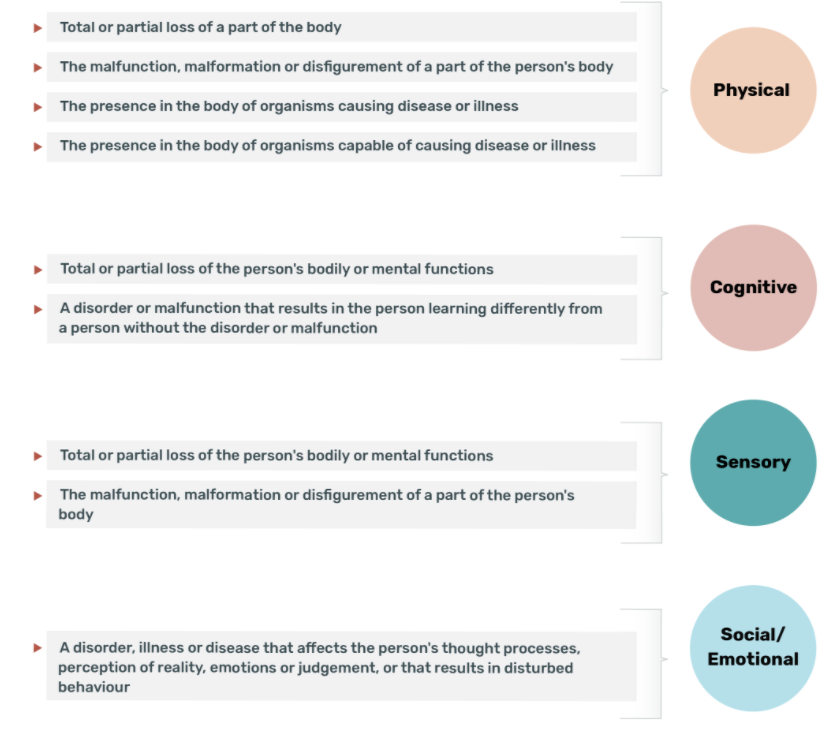
Problems with the Australian Government's categories of disability

The Australian Government has four categories of disability that are based on the Disability Discrimination Act (1992) and the Disabililty Standards for Education (2005) are used in the NCCD census across schools https://www.nccd.edu.au/wider-support-materials/definitions-disability-and-nccd-categories 

  • Physical 
  • Cognitive 
  • Sensory 
  • Social/Emotional 

This is a really problematic grouping since most students with communication disability do not fit easily into these categories.

https://www.nccd.edu.au/wider-support-materials/definitions-disability-and-nccd-categories
 

We wrote about this issue over a decade ago: 

McLeod, S., Press, F., & Phelan, C. (2010). The (in)visibility of children with communication impairment in Australian health, education, and disability legislation and policies. Asia Pacific Journal of Speech, Language, and Hearing, 13(1), 67-75. 

Here is a paper that outlines the impact of having a communication disability on the support required in schools:

McLeod, S., & McKinnon, D. H. (2010). Support required for primary and secondary students with communication disorders and/or other learning needs. Child Language Teaching and Therapy, 26(2), 123-143. https://doi.org/10.1177/0265659010368754


Expert Panel Meeting 3: Students with Disability Loading Settings Review

Today was the third (of 5) Expert Panel Meeting for the Australian Government's Department of Education, Skills and Employment Students with Disability Loading Settings Review. It has been an honour to contribute to this expert panel.

June 8, 2021

Good Practice Schools Framework

I am an invited member of the Students With Disability Loading Review Expert Panel coordinated by PricewaterhouseCoopers on behalf of the Australian Government. We met today to discuss the draft Good Practice Schools Framework and Cost Framework. It is an honour to have an input into this work, and to hear of the importance of speech pathologists in schools from across the sector nationally.

July 25, 2019

Medicare Benefits Schedule Review

Today I spent time providing advice for the definition of "speech sound disorders" for the Australian Medicare Benefits Schedule Review. Important work!

June 14, 2019

Australian Government events while in New York

The Australian Government was extremely welcoming and helpful while we were in New York. They hosted two events that we attended, as well as supporting our attendance and presentations at the Conference of States Parties at the United Nations.
  1. Australian Civil Society Reception with H.E. Ms Gillian Bird Ambassador and Permanent Representative to the United Nations (Sunday 9th June)
  2. Australian delegation debriefing after the Conference of States Parties at the Australian Mission to the UN (Friday 14th June)
Additionally, the Australian Government co-sponsored our Speech Pathology Australia/International Communication Project Side Event.

H.E. Ms Gillian Bird Ambassador and Permanent Representative to the United Nations with Speech Pathology Australia delegates at the Civil Society Reception

Australian delegation debriefing at the Australian Mission to the UN
Sharynne with Wagga the Wombassador
Some of the Australian delegation with Mika Kontiainen from DFAT

August 21, 2017

Assessment of Children as Effective Communicators in Early Childhood Education and Care

It has been great to work with a team from Charles Sturt University (led by Sarah Verdon) to submit the following government report:
Verdon, S., Mackenzie, N., McLeod, S., Davidson, C., Masso, S., Verdon, L., & Edwards-Groves, C. (2017). Assessment of children as effective communicators in early childhood education and care: Literature review. Melbourne, Australia: Victorian Curriculum and Assessment Authority.

This resource for early childhood professionals and will be profiled on the VCAA website
http://www.vcaa.vic.edu.au/Pages/earlyyears/vfldoutcomes/communication.aspx

Here is the executive summary
The Victorian Early Years Learning and Development Framework (VEYLDF, State of Victoria Department of Education, 2016) targets five key learning outcomes. This report contains a review of the fifth outcome: children are effective communicators. The development of communication skills begins at birth and is integral to a child’s self-expression, wellbeing, identity, sense of agency and capacity to make friends (State of Victoria Department of Education, 2016). Therefore, communication skills are essential for developing confident and creative individuals who can effectively navigate and participate in life in the twenty-first century and beyond. The following principles for assessing communicative competence have been identified in this review to inform practice:
1. Effective assessment of communication requires a clearly defined purpose.
2. A range of assessments may be required to develop a clear understanding of a child’s strengths and challenges since communication is multifaceted (including but not limited to speaking, listening, reading and writing).
3. Communication assessment can use both formal and informal methods.
4. Assessment of communication considers all languages and communication systems used by a child to gain a holistic understanding of a child’s communicative competence.
5. Effective assessment of communication is based on the input of multiple stakeholders including parents, early childhood professionals, health professionals and children.
6. Assessment of communication considers functionality and participation, not only competence in comparison to adult targets.
7. Assessment of communication is an opportunity for multidisciplinary collaboration.
A range of tools available to support early childhood professionals in their assessment of children’s communication have been identified within this review. These tools were selected to address the each of the key components of children as competent communicators across the full range of communicative skills that children develop from birth to eight years. Nineteen following tools to support early childhood professionals’ assessment of children’s communication are reviewed in this report.
The purpose of this review is to provide a comprehensive resource for early childhood professionals seeking to assess the communication of the children they work with. The review identifies appropriate communication assessment tools for use by early childhood professionals and outlines the areas of communication development that are addressed by the tools. The review provides an overview of the purpose and features of each tool and a discussion of its usefulness in assessing children’s communication. Early identification of communication needs is essential to supporting children’s long-term social and educational outcomes. It is hoped that this document will empower early childhood professionals with the knowledge to identify areas of children’s communication in need of assessment and the resources to confidently undertake these assessments.

April 24, 2017

Impact of our research: Use by Speech Pathology Australia and the Australian government

The work of the Charles Sturt University’s speech research team has been used by Speech Pathology Australia and in three Australian Government Senate Committees and Reports, one NSW Government Briefing paper, and one Australian Broadcasting Commmission site:
  1. Senate Community Affairs References Committee: Prevalence of different types of speech, language and communication disorders and speech pathology services in Australia Report (12/03/2015). Our research is identified in points 3.20, 3.21, 3.22, 3.31. 3.33 in Chapter 3 (also points 5.31 (McCormack et al.), 4.20 (Verdon et al.) in subsequent chapters) here. For example
    3.21 There have been some significant studies in Australia into the prevalence of speech and language disorders among children. In one of her submissions to the inquiry, Professor Sharynne McLeod of Charles Sturt University, summarised the findings of her study of 14 514 children across 44 schools in New South Wales.
  2. Education and Employment References Senate Committee (25/09/2015): Students with disability in the school system. Professor McLeod and Speech Pathology Australia President Dixon were invited to be interviewed and recorded in Hansard here 
    Subsequently, Speech Pathology Australia’s submission was identified in points 2.22, 2.35 of the Senate Education and Employment References Committee: Access to real learning: The impact of policy, funding and culture on students with disability—Report (January 2016) here
  3. Speech Pathology Australia also used the CSU research regarding prevalence and impact of communication difficulties in their submission to the Productivity Commission's Education Evidence Base Inquiry – Submission 35 here
    Speech Pathology Australia’s full submission is here
  4. Speech Pathology Australia also used our CSU research regarding prevalence and impact of communication difficulties in their submission to the NSW Parliamentary Committee addressing Students with a disability or special needs in New South Wales schools (2016-2017) here - Submission 125 is here
  5.  NSW Parliamentary Research Service Briefing Paper No 12/2015 NSW School Education: NAPLAN, Measurement and Performance here
    Point 9.8 Children with Speech and Language Problems (pp. 26-27) describes research undertaken by CSU researchers (Professor McLeod, Professor Harrison and Dr Wang) into the identification of children with speech and language and their academic outcomes on NAPLAN testing. 
  6. ABC Life at 7 Resources here include Risk factors associated with speech and language impairment at 4–5 years of age - Linda Harrison and Sharynne McLeod here

March 28, 2017

Speech Pathology in Schools Resource Project

I am a member of the Expert Advisory Group for the NSW Department of Education Speech Pathology in Schools Project being run by Speech Pathology Australia. The website outlining the project has just been launched here.
The website states:
The purpose of the kit is to provide:
  •  information to principals, teachers, parents and speech pathologists about best practice speech pathology in an educational setting.
  • support to encourage more schools in NSW to engage (either employ or contract) speech pathologists to work in their schools.
  • advice regarding how speech pathologists working collaboratively in schools can improve student learning outcomes and wellbeing.