Showing posts with label disability. Show all posts

April 5, 2026

Technical Expert Group for WHO Global Health Policy and Systems Research Agenda on Disability Health Equity (2026 - 2030)

I am one of 25 people across the world who have been selected by the World Health Organization to be a member of the Technical Expert Group for WHO Global Health Policy and Systems Research Agenda on Disability Health Equity (2026 - 2030). What an honour.

Objectives of the Global Research Agenda
Overall Goal: The WHO Global Research Agenda will guide research that generates the evidence policymakers need to reduce health inequities experienced by persons with disabilities.  

1. Define the key knowledge gaps and research areas for evidence generation on health equity for persons with disabilities at a global level over the next five years (from 2026 – 2030).
2. Strengthen knowledge production for evidence-informed policies, plans and practices relating to disability inclusion in health systems strengthening and primary health care.
3. Build research capacity on health equity for persons with disabilities by creating a framework for research priorities to be applied and further contextualized at the regional and national levels.

Background

Persons with disabilities – an estimated 16% of the global population – experience health inequities, as they die up to 20 years earlier and have poorer health compared to persons without disabilities, due to unjust or unfair conditions at all levels of health systems and society. The WHO Global Report on Health Equity for Persons with Disabilities calls on policymakers to take action on disability inclusion in health systems strengthening efforts at country level, including by establishing national agendas for health policy and systems research.i
Health policy and systems research seeks “to understand and improve how societies organize themselves in achieving collective health goals, and how different actors interact in the policy and implementation processes to contribute to policy outcomes”.ii Health policy and systems research on disability health equity would explore a wide range of system-level questions − from financing to governance, through to issues surrounding the implementation of services and delivery of care, to the role of social determinants of health and the roles and responsibilities of different stakeholders across sectors. Such research is crucial for policymakers to make informed decisions about which actions will contribute to the realization of universal health coverage (UHC), and to the smooth coordination between sectors, when advancing health equity for persons with disabilities.iii
There is currently no global health policy and system research agenda on health equity for persons with disabilities, but there is a growing need and demand for such a resource and approach. The World Health Assembly Resolution 74.8 on the “Highest attainable standard of health for persons with disabilities” requested WHO to support Member States with "the creation of a global research agenda that aligns with UHC, health emergencies and health and well-being, including health systems and policy research”.iv


April 1, 2026

United Nations presentation: Congratulations A/Prof Kathy Cologon and Tim Cologon

The Children's Voices Centre is so proud to have supported our associate director A/Prof Kathy Cologon to present at the United Nations in New York with her co-researcher Tim Cologon.

They were invited to present at World Down Syndrome Day. Their presentation was powerful - describing their research with children who experience disability - and their insights about belonging.

They have just returned to Australia and it has been wonderful to hear about their impact, experiences and all of the people they met. Congratulations.


December 3, 2025

International Day of People with Disability

The International Day of People with Disability is held on 3rd December each year. 

In 2022, the Australian Bureau of Statistics (https://www.abs.gov.au/) reported that 5.5 million Australians, or 21.4% of our national population, live with a disability. In NSW, this equated to 1.3 million individuals, or almost one-fifth of the state’s population. As of July 2025, almost 750,000 Australians were accessing supports through the NDIS.

Research shows that individuals living with a disability face numerous barriers in accessing and feeling included in the health care system. This contributes to higher rates of unmet healthcare needs and poorer health outcomes when compared to people without disability (Australian Institute of Health and Welfare, 2024 https://www.aihw.gov.au/reports-data/australias-health).  

Santiago Velasquez was selected for the 2025 ambassadorship program run by the Australian Government's Department of Social Services


"Santiago Velasquez Hurtado is the CEO and founder of two companies, and an accomplished innovator and designer. Santiago utilises his lived experience and degree in electrical engineering to invent solutions to make the world more accessible. As a UN panellist, Churchill Fellow and TedX speaker, he is determined to change the way the world perceives people with disability."


October 10, 2025

Monthly meeting with World Health Organization

We had another wonderful meeting with Dr Mélanie Gréaux from the World Health Organization to update everyone on the huge amount of work that we have done over the past month. 

This has included being certified as a Member of the WHO Disability Health Equity Network. We learned that to date, 1088 expressions of interest were received, 261 were full applications and 141 have been approved. The deadline has been extended for Member States. The launch will be held from 12-13 November in Geneva.

We also have finished our Children's Voices Centre Children's Advisory Group analysis of 126 drawings from 18 countries to provide an overview of children's recommendations about health and access to healthcare. Our recommendations are ready to present in Fiji in a few weeks' time.

Our scoping review is in full swing with full text data extraction continuing being led by Dr Kate Freire. 

Thanks team!

Sharynne, Mel, Helen, Belinda, Carolyn

September 29, 2025

Disability Equity in Research Expert Meeting: Invitation from the World Health Organization

I have been invited to participate in the Disability Equity in Research Expert Meeting - and attended tonight from 11pm - 1am. The invitation came from Kaloyan KAMENOV from the World Health Organization. Here is a summary from the briefing notes:

World Health Organization and Johns Hopkins Disability Health Research Center Guidance Checklists for Disability Equity in Research Persons with disabilities and disability health equity more broadly are often overlooked in research design, study implementation and scientific reporting, as well as in general science communication. This oversight limits the generalizability of research findings and their applicability to clinical practice.
The Disability Equity in Research guidance checklists are primarily designed to:

  1. support editors to integrate assessment of disability equity in all manuscripts as an integral part of the editorial process;
  2. guide authors in preparing their manuscripts and enhance disability equity in all stages of research -planning, recruitment, data collection, data analysis, and dissemination;
  3. facilitate disability equity inclusion in Institutional Review Boards/Ethic Boards procedures; and
  4. guide research funders to facilitate inclusion of persons with disabilities in research.

These checklists are informed by a scoping review of 120 documents conducted by the Johns Hopkins Disability Health Research Center and the Disability Programme at the World Health Organization.


I have experience in including people with disabilities as authors during my role as editor of International Journal of Speech-Language Pathology. An example of the inclusion of the unaltered “voice” of a person with disability is found in the following article. 

Murphy, D., Lyons, R., Carroll, C., Caulfield, M., & De Paor, G. (2018). Communication as a human right: Citizenship, politics and the role of the speech-language pathologist. International Journal of Speech-Language Pathology, 20(1), 16–20. https://doi.org/10.1080/17549507.2018.1404129  

Declan Murphy is a 29-year-old with Down Syndrome. He was invited to co-author the following article. As editor, I facilitated the invitation, writing, and publication so that his words remained and were not copyedited/changed. This required many steps to ensure his “voice” was unaltered (including sending the final text to the journal with Declan’s words in a different colour – and notes to the copyeditors not to alter the text). 

“ABSTRACT …The purpose of this paper is to elucidate communication as a human right in the life of a young man called Declan who has Down syndrome. This commentary paper is co-written by Declan, his sister who is a speech-language pathologist (SLP) with an advocacy role, his SLP, and academics. Declan discusses, in his own words, what makes communication hard, what helps communication, his experiences of speech-language pathology, and what he knows about human rights. He also discusses his passion for politics, his right to be an active citizen and participate in the political process…”
The Appendix, on page 20 included the writing and editing contract:
Appendix 
Writing and editing contract with Declan
Declan was asked to write about his experiences under the following headings: what makes communication hard, what helps communication, his experiences of SLP, and what he knows about human rights. A writing and editing contract was drawn up in advance of writing the paper. The contract was, in Declan’s own words, was “these are Declan’s ideas and words; it is Gráinne’s role to support Declan to organise his writing and his ideas; it is ok for Gráinne to correct spellings; it is not ok for Gráinne to change sentences; it is ok for Gráinne to remind Declan of the topic and Declan will make the final decision about what is in this article.” (Murphy et al., 2018, p. 20)
https://www.tandfonline.com/doi/full/10.1080/17549507.2018.1404129

Here is a little more from Declan - I was the person who recommended he be invited to open the IALP conference: “I was like a politician myself one time. I did the opening at the IALP [International Association of Logopedics and Phoniatrics] conference because the Minister for Health was busy. This was huge. My family came to see me. I think they were in shock about my speech and what I said. I have this memory now for all my life because I got a standing ovation. Rena said to me ‘‘how are you so confident up there Declan?’’ I told her and I particularly love this bit that I think about Barack Obama making a speech and then I am not nervous and I just want to do it. “(Murphy et al., 2018, p. 17-18) https://speakingmylanguages.blogspot.com/2016/08/30th-world-congress-of-international.htm

February 26, 2025

Learning about Arts Out West's capacity building - including with people with disabilities

Today Tamara Cumming and I had our first meeting with colleagues at Arts Out West. They have many impressive programs - including many to support people with disabilities. We plan to collaborate as part of our research with the World Health Organization. What a wonderful opportunity to learn from the team and the artists. Here are some of their initiatives:

VIV
https://artsoutwest.org.au/pf/viv/
https://www.thebeautifulandusefulstudio.com/
 
STRAY
https://artsoutwest.org.au/pf/dog-puppet/
 
VISUAL ARTS IN HOSPITALS
https://artsoutwest.org.au/pf/hospital-work-2023/
 
YAGANDA BULABUL
https://artsoutwest.org.au/pf/yaganda-bulabul-art-project/
 
BREWING BALLADS
https://artsoutwest.org.au/pf/brewing-ballads/

Sharynne, Kylie Shead, Kate Smith, Steven Cavanagh, Tamara Cumming 
Arts Out West Strategic Plan - https://artsoutwest.org.au/wp-content/uploads/2020/11/ARTS-OUTWEST-Strategic-Plan-2025-2028.pdf

November 20, 2024

Collaboration with World Health Organization Sensory Functions, Disability & Rehabilitation (SDR) Unit in the Disability Programme

We have been invited to collaborate with the World Health Organization Sensory Functions, Disability & Rehabilitation (SDR) Unit in the Disability Programme https://www.who.int/teams/noncommunicable-diseases/sensory-functions-disability-and-rehabilitation/disability 

Together we are going “to build evidence on the experiences and perspectives of children and young people with disabilities on health and access to healthcare services”.

We will be working with Dr Mélanie Gréaux and Dr Kaloyan Kamenov from WHO who have co-authored this important paper:

Gréaux, M., Moro, M. F., Kamenov, K., Russell, A. M., Barrett, D., & Cieza, A. (2023). Health equity for persons with disabilities: A global scoping review on barriers and interventions in healthcare services. International Journal for Equity in Health, 22(1), 236. https://doi.org/10.1186/s12939-023-02035-w
 

The WHO Disability Programme has been learning from from adults with disabilities (including women and people in rural areas) as outlined in this video "Persons with disabilities share their experience of accessing health services"

https://www.who.int/teams/noncommunicable-diseases/sensory-functions-disability-and-rehabilitation/persons-with-disabilities-tell-their-stories#

The video concludes with 

"People like me... like me... like me... like me... need to be included in the system that decides on the policy matters over healthcare...
to ensure that can access the quality and inclusive health services that we deserve.
Leave no one behind.
Let's build together a disability inclusive health sector"

We look forward to expanding the world's knowledge about the experiences and perspectives of children and young people with disabilities.

August 12, 2024

Impact of our research with siblings

Some time ago we undertook research with siblings of children with disabilities, including communication disabilities:

Barr, J., & McLeod, S. (2010). They never see how hard it is to be me: Siblings' observations of strangers, peers and family. International Journal of Speech-Language Pathology, 12(2), 162–171. https://doi.org/10.3109/17549500903434133

Our paper has just been cited here:

Strohm, K. (2024). Recommendations of the Disability Royal Commission fail to recognise families, siblings in particular, as natural lifelong supports for people with intellectual disabilities. Research and Practice in Intellectual and Developmental Disabilities, Advance online publication. https://doi.org/10.1080/23297018.2024.2364340

November 22, 2023

Visible versus invisible disabilities: Communication rights moderated through hierarchies of disability and childhood

What an exciting moment - to hold a book that includes a chapter that I have co-authored with my daughter. 

McLeod, S., & McLeod, J. (2023). Communication rights moderated through hierarchies of disability and childhood. In S. Meyers, M. McCloskey, G. Petri (Eds.). The Routledge international handbook of disability human rights hierarchies. Routledge. https://doi.org/10.4324/9781003410089

I enjoyed the collaboration, conversations, and the task of writing together. I am proud of our thinking, particularly our work on identifying challenges living with visible versus invisible disabilities.


August 10, 2023

Provocations blog post

I have been invited to write a Provocations Blog post following on from my CSU Public Lecture. 

 Here is the link to my post: https://provocationsqa.csu.edu.au/communication-is-a-human-right-but-not-everyone-can-communicate-effectively/   


Provocations https://provocationsqa.csu.edu.au/ and information about the blog:

Provocations is a series of blogs written by prominent thinkers that seek to address the grand challenges confronting regional Australia and the world. How can we mitigate climate change and build climate proof, safe and sustainable communities? Can First Nations ways of knowing, being and doing guide sustainable development? How can we reinforce Australia’s supply chains and sovereign manufacturing capability in a post-Covid world? Is it possible to achieve productive and circular agriculture? How can we reduce income inequality between urban and regional Australia and build more inclusive communities? Does liberal democracy need to be redefined in a post-Covid world? How can we build a knowledgeable, inclusive and resilient citizenry prepared for the challenges of the future? Does Australia’s relationship with China require a radical rethink? Is there a role for faith in contemporary democratic thought? Provocations will challenge orthodoxy through new thinking but will also revive policy ideas and political thought from the past for one more encore.


June 8, 2022

PwC Expert Advisory Panel

Today the PwC Expert Advisory Panel met to plan for the last steps of this two year project to inform the Australian Government about funding for students with disabilities across all educational sectors. The project has four steps: 1. Evidence - literature review 2. Good practice school survey 3. Regression analysis of sector and school survey results to cost support for students with disability 4. Professional judgement of 40 case studies, then a Delphi approach to come to consensus about costs for reasonable and better practice adjustments (June - July 2022). My contribution will conclude in September 2022 at the final meeting.

June 24, 2021

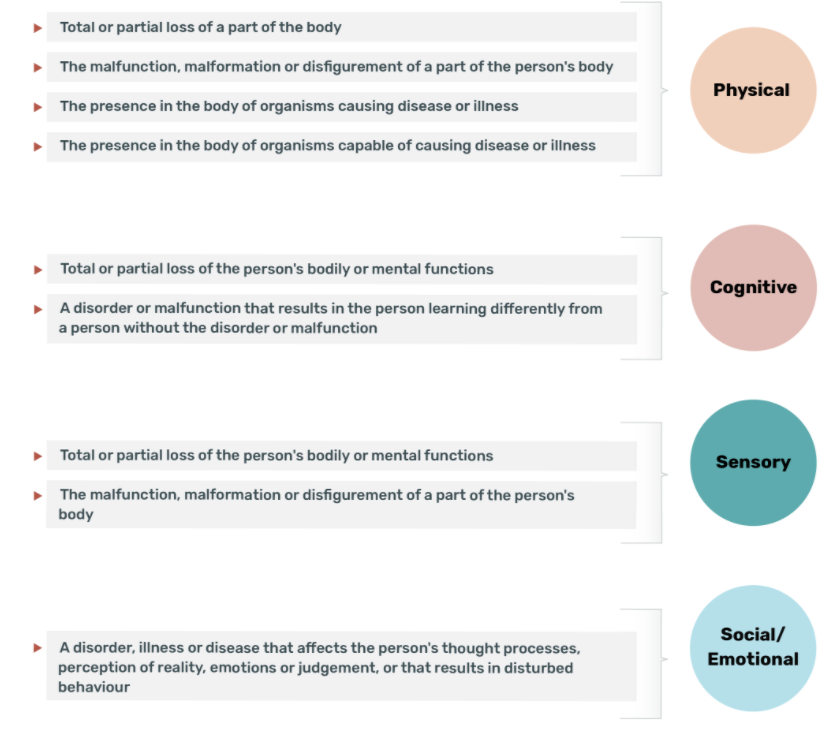
Problems with the Australian Government's categories of disability

The Australian Government has four categories of disability that are based on the Disability Discrimination Act (1992) and the Disabililty Standards for Education (2005) are used in the NCCD census across schools https://www.nccd.edu.au/wider-support-materials/definitions-disability-and-nccd-categories 

  • Physical 
  • Cognitive 
  • Sensory 
  • Social/Emotional 

This is a really problematic grouping since most students with communication disability do not fit easily into these categories.

https://www.nccd.edu.au/wider-support-materials/definitions-disability-and-nccd-categories
 

We wrote about this issue over a decade ago: 

McLeod, S., Press, F., & Phelan, C. (2010). The (in)visibility of children with communication impairment in Australian health, education, and disability legislation and policies. Asia Pacific Journal of Speech, Language, and Hearing, 13(1), 67-75. 

Here is a paper that outlines the impact of having a communication disability on the support required in schools:

McLeod, S., & McKinnon, D. H. (2010). Support required for primary and secondary students with communication disorders and/or other learning needs. Child Language Teaching and Therapy, 26(2), 123-143. https://doi.org/10.1177/0265659010368754