Showing posts with label COVID-19. Show all posts

January 24, 2023

Back to work this week

This week I have returned to work after a month's summer holidays. I am feeling very refreshed and have enjoyed catching up with the CSU kangaroos and my colleagues. This week also is the anniversary of 20 years of working with education colleagues and working from the same office on the CSU Bathurst campus. Finally, this week also marks my return to campus after almost 3 years due to COVID-19 restrictions and avoiding COVID-19 to undertake cancer treatments.


Prof Julian Grant and Sharynne on campus

Kangaroos on campus


November 11, 2022

Back on campus

Today marks the first day I have arrived to begin my workday on campus since the COVID-19 pandemic began in 2020. The university has encouraged staff to spend 60% of time on campus beginning in October. I have delayed my return while I waited for my health outcomes. Once I return from the ASHA convention, I am looking forward to spending more time back on campus.


My computer is enjoying being linked back into the system.

June 22, 2022

2022 is a challenging year for so many people

Today I attended the School of Education School Board meeting. Here is a sentence from the agenda documents:

We have received an enormous number of requests for ... assessment extensions as well as approved withdrawals this session. In addition to COVID health issues, mental health, financial and personal circumstances have been strong reasons for these student applications.

In Australia, 2022 has been a challenging year, including that we have the highest numbers of COVID cases in the world (since we were in lockdown when other countries experienced this in 2020 and 2021). In previous years when someone had difficulties, others were available to step up and support. This year, many people have things going on, so there are fewer people who can step up to enable life to keep going.

March 2, 2022

Clear communication masks

Masks are important during COVID-19. 

https://www.bmj.com/content/bmj/369/bmj.m1435.full.pdf

However, masks impede clear communication. 

The Managing Director of Everyday Office National donated a few masks for me to take to the Aphasia Camp last week and said they are TGA approved – but this is not on the website. I tried one out they feel comfortable. I don’t know anything else about them except for the purchasing information below. I'll be interested to hear from colleagues to see if they are useful for speech pathology practice and other situations where clear communication is difficult when wearing traditional masks.

Here are the details: ADULT CLEAR COMMUNICATION MASK Product Code: 2000143 | Product Reference: ADULT CLEAR | AUD $5.44 PER EACH Ex. GST : $4.95 

https://www.officenational.com.au/shop/en/everyday/adult-clear-communication-mask-2000143


February 15, 2022

"Environmental changes associated COVID-19 pandemic is significantly and negatively affecting infant and child development"

The findings of this study are concerning 

Deoni, S. C., Beauchemin, J., Volpe, A., D’Sa, V., & Consortium, t. R. (2021). Impact of the COVID-19 Pandemic on Early Child Cognitive Development: Initial Findings in a Longitudinal Observational Study of Child Health. medRxiv, 2021.2008.2010.21261846. https://doi.org/10.1101/2021.08.10.21261846

"Leveraging a large on-going longitudinal study of child neurodevelopment, we examined general childhood cognitive scores in 2020 and 2021 vs. the preceding decade, 2011-2019. We find that children born during the pandemic have significantly reduced verbal, motor, and overall cognitive performance compared to children born pre-pandemic. Moreover, we find that males and children in lower socioeconomic families have been most affected. Results highlight that even in the absence of direct SARS-CoV-2 infection and COVID-19 illness, the environmental changes associated COVID-19 pandemic is significantly and negatively affecting infant and child development."

November 19, 2021

American Speech-Language-Hearing Association Convention 2021

The American Speech-Language-Hearing Association Convention is on this week in Washington, DC. I am disappointed that I am unable to be in Washington to catch up with my colleagues from across the world. I really miss the networking and face-to-face interactions. There are over 10,000 attendees (5,200 onsite and 5,200 virtual). There are over 660 sessions and 1000 posters across 31 topic areas.

I stayed up until 12:30am to watch Lynn Williams, President of ASHA open the convention. 

 During the convention, my colleagues and I are presenting the following papers and posters virtually. 

  1. McLeod, S. (2021). Evidence-based resources for working with children with speech sound disorders [Invited 1-hour oral presentation]. 
  2. McLeod, S., Williams, A. L., McCauley, R. J., Baker, E., Ballard, K., Bernhardt, B. M., Camarata, S., Cleland, J., Hayden, D., Morrisette, M., Pennington, L., Leece, M., Pezas, R., Scherer, N., Strand, E., Tyler, A., Williams, P., Wren, Y., Preston, J. (2021). Twenty interventions for speech sound disorders: A guide for selection and implementation [1-hour oral presentation]. 
  3. Wren, Y., Davies, A., Seifert, M., Harding, S. & McLeod, S. (2021). Intelligibility in 3-year-olds with cleft lip and/or palate: findings from the cleft collective study [Oral presentation]. 
  4. McLeod, S., Verdon, S., Margetson, K., Wang, C., Tran, V. H., White, K,, Pham, B. (2021). Children’s speech acquisition in a 3-generation Vietnamese-English bilingual family [Virtual poster presentation]. 
  5. Hopf, S. C., Crowe, K., Verdon, S., Blake, H. L. & McLeod, S. (2021). Culturally Responsive Teamwork: A framework to advance workplace diversity [Virtual poster presentation]. ***Awarded Meritorious Poster Submission (from over 1200+ posters) https://speakingmylanguages.blogspot.com/2021/10/award-2021-asha-convention-meritorious.html

There have been a lot of people who have already viewed our presentations via the Virtual Library platform and many people have sent emails indicating that they have learned from the presentations and have asked for copies of the slides. This is great - but it is not the same as having conversations with these people. I hope I can attend next year.

August 12, 2021

Congratulations Dr Van Tran on your second PhD submission

Today Dr Van Tran submitted her second PhD. Her thesis is titled: “Home language maintenance among Vietnamese-Australian families”. It was submitted as four journal articles and an exegesis. Her PhD scholarship was from Charles Sturt University and she was part of our Australian Research Council Discovery Grant: VietSpeech (DP180102848).

Van was in COVID-19 lockdown in Sydney and was cheered on by her family (in Sydney and Vietnam), her supervisory team (myself in Bathurst, Dr Sarah Verdon in Albury, Dr Audrey Wang in Bathurst), members of the Speech-Language-Multilingualism team (in Shepparton, Sydney, Newcastle, Fiji, Vietnam, Brisbane, Young, Newcastle and Iceland), and friends (in Sydney) and received congratulatory messages from across the world (Sydney, Albury, Germany, The Netherlands, and US).  Congratulations Van and best wishes for your examination!
Congratulations Van from around the world!
Here is Van’s abstract: 

Home language maintenance is of importance in culturally and linguistically diverse societies including Australia, where more than 300 languages are spoken and over one-fifth of the population speak a language other than English at home. While home language maintenance is associated with academic, social, cultural, and economic benefits for both individuals and societies, it can be a challenge for multilingual families due to child, parent, community, and society level factors. 

Underpinned by Spolsky’s language policy theory, which comprises language practices, language ideologies, and language management, the purpose of this mixed methods research is to explore home language maintenance among Vietnamese-Australian families. To achieve this purpose, this study aims to explore how factors related to demographics, language practices, language ideologies, and language management are associated with: (1) Vietnamese-Australian children’s proficiency and use in Vietnamese and English, (2) Vietnamese-Australian parents’ language use with their child and in social situations and their attitudes towards home language maintenance, and (3) Vietnamese-Australian parents having language policies. Additionally, it aims to: (4) describe Vietnamese-Australian families’ language policies in relation to home language maintenance, and (5) explore successful experience of home language maintenance among Vietnamese-Australian families. 

To achieve these aims, data were collected from a questionnaire completed by 151 Vietnamese-Australian families and a focus group discussion with seven parents from five families. All the families had children under 18 years of age. Survey data were analysed using Pearson’s correlation, analysis of variance (ANOVA), and multiple regression models. An inductive thematic analysis using NVivo was applied to the focus group discussion to explore successful home language maintenance. 

The results from these analyses were presented in three published papers and one submitted paper. The first paper highlights that children’s home language maintenance does not negatively impact English proficiency and is significantly dependent on parents’ language use and attitudes towards home language maintenance. The second paper indicates that parents’ language use with their children is positively linked to their language use in social situations. This in turn is higher when parents are younger, have higher Vietnamese and lower English proficiency, and attend community events more frequently. Parents’ attitudes towards home language maintenance correlate with their perceptions of cultural identity, beliefs in the importance of English maintenance and in the benefits of home language maintenance, and their age. The third paper highlights that only a third of the families had a family language policy. Having a family language policy is associated with parents’ Vietnamese proficiency, parents’ language use with children, and their intention of future residence in Vietnam. The fourth paper concludes with an in-depth investigation of families’ successful experiences of home language maintenance. It presents parents’ motivations, challenges, practices and strategies, and recommendations for support in home language maintenance. 

This PhD research found that home language maintenance is dependent on parents’ efforts including persistent language input, positive attitudes towards home language maintenance, and consistent reinforcement of a family language policy. The research also highlights parents’ desire for the inclusion of home language maintenance in formal education. This research is expected to raise public awareness of the importance of home language maintenance, promote multilingualism, and support multilingual families in Australia and around the world. 

The following papers are in Van's PhD

  1. Tran, V. H., Wang, C., McLeod, S., & Verdon, S. (in press). Vietnamese-Australian children’s language proficiency and use. International Journal of Bilingualism
  2. Tran, V. H., McLeod, S., Verdon, S., & Wang, C. (2021). Vietnamese-Australian parents: Factors associated with language use and attitudes towards home language maintenance. Journal of Multilingual and Multicultural Development. Advance online publication. https://doi.org/10.1080/01434632.2021.1904963
  3. Tran, V. H., Verdon, S., McLeod, S., & Wang, C. (in press). Family language policies of Vietnamese-Australian families. Journal of Child Science
  4. Tran, V. H., Verdon, S., & McLeod, S. (2021). Consistent and persistent: Successful home language maintenance among Vietnamese-Australian families. [Manuscript submitted for publication]. School of Education, Charles Sturt University. 

Here are other publications she has co-authored during her PhD (more to come)

  1. Wang, C., Verdon, S., McLeod, S., & Tran, V. H. (2021). Profiles of linguistic multicompetence in Vietnamese-English speakers. American Journal of Speech-Language Pathology, 30(4), 1711-1727. https://doi.org/doi:10.1044/2021_AJSLP-20-00296 
  2. McLeod, S., Margetson, K., Wang, C., Tran, V. H., Verdon, S., White, K., & Phạm, B. (2021). Speech acquisition within a 3-generation Vietnamese-English family: The influence of maturation and ambient phonology. Clinical Linguistics and Phonetics. Advance online publication https://doi.org/10.1080/02699206.2020.1862915 
  3. McLeod, S., Verdon, S., Wang, C., & Tran, V. H. (2019). Language proficiency, use, and maintenance among people with Vietnamese heritage living in Australia. Journal of Monolingual and Bilingual Speech, 1(1), 55–79. https://doi.org/10.1558/jmbs.10973

July 15, 2021

Travelling the world from my home

Zoom meetings (and emails) enable me to travel across the whole world from my home. This week I have spoken with people in the following countries:

  • Fiji - Suzanne Hopf (email)
  • Germany - Sarah Masso (email)
  • Hong Kong SAR China - Carol To
  • Iceland - Kate Crowe
  • The Netherlands - Anniek van Doornik
  • Vietnam - Ben Pham, Hang Nguyen, Van Pham
  • United Kingdom - Yvonne Wren
  • United States - Lynn Williams; Marie Ireland

It is wonderful to collaborate with so many different people and fascinating to learn from each person about the impact and restrictions of COVID-19 on their daily lives.

Carol To (Hong Kong, SAR China) and Sharynne McLeod

COVID-19 test to be taken before going to work in The Netherlands

June 4, 2021

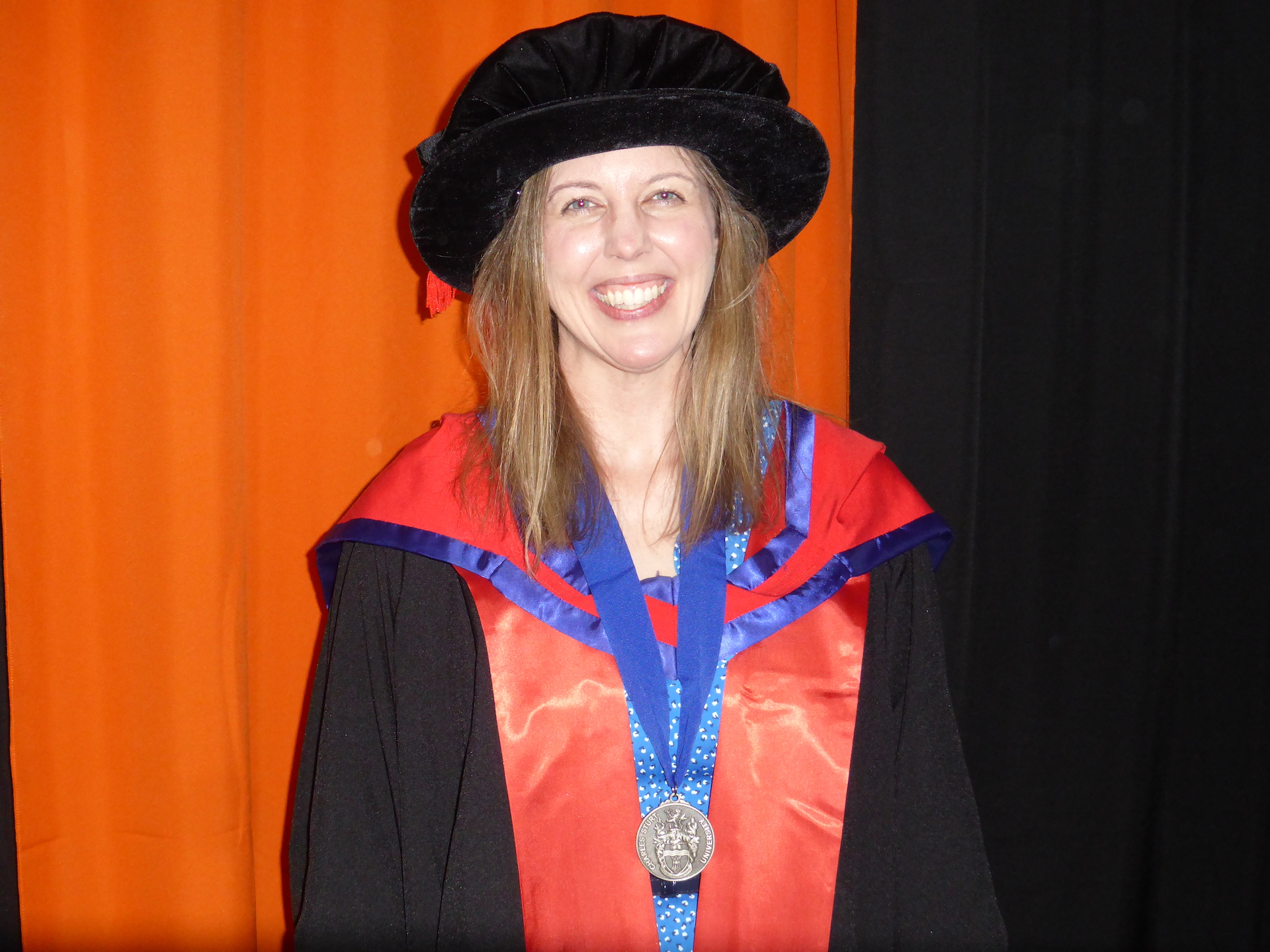
Congratulations Dr Anna Cronin on your graduation and Dr Sarah Verdon on your Young Alumnus award

On Thursday, Anna Cronin graduated with her PhD at the Charles Sturt University graduation ceremony in Bathurst. She received the Higher Degree Research medal for the Faculty of Arts and Education and was invited to speak on behalf of all of the graduates. Dr Sarah Verdon and I were proud supervisors.

Dr Anna Cronin
Dr Nicole McGill was supposed to have received her PhD at the ceremony as well; however, she was unable to attend due to the COVID-19 lockdown restrictions in Victoria. We are hoping to celebrate with Nicole at another ceremony in a few weeks' time.

Prof Sharynne McLeod, Dr Anna Cronin and Dr Sarah Verdon
(Dr Nicole McGill on the phone)

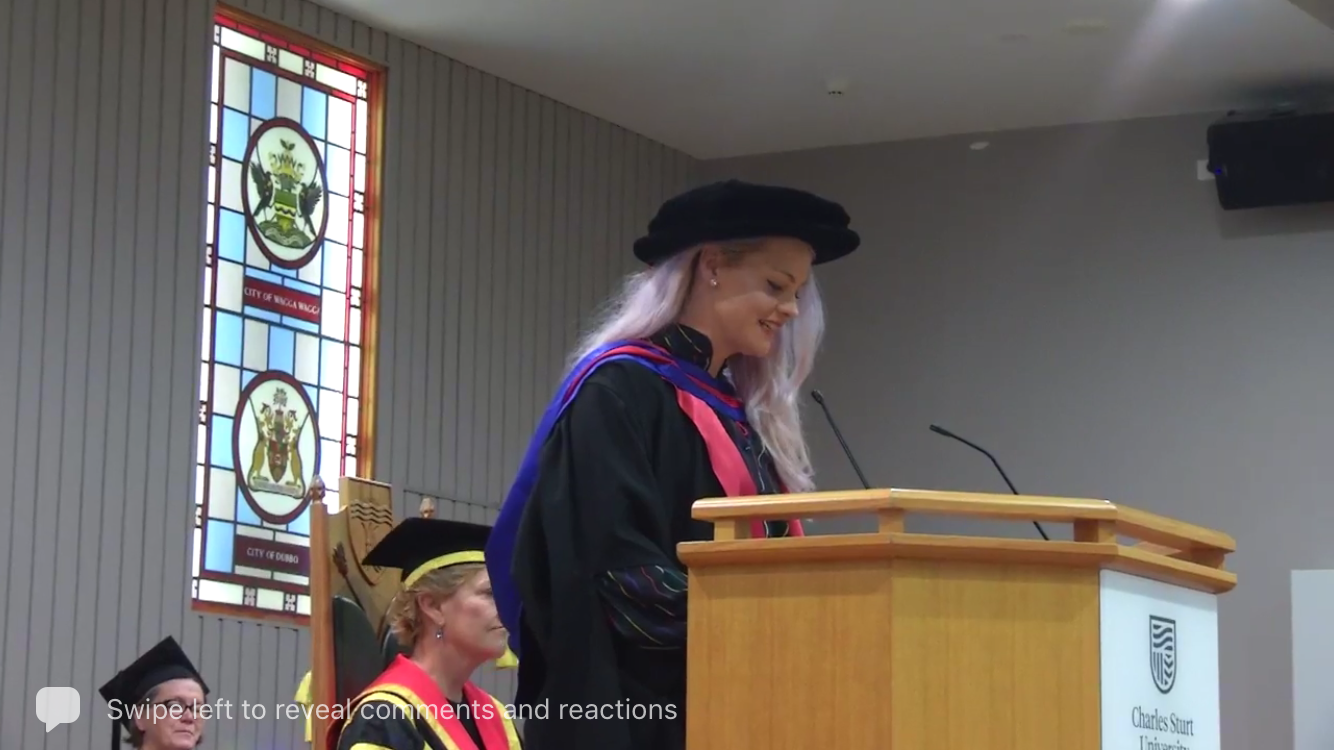
Also at the ceremony Dr Sarah Verdon received the CSU Young Alumnus Award. As a result, she was asked to be the graduation speaker. She presented an inspiring speech to the graduates.

Dr Sarah Verdon - CSU Young Alumnus

We had a virtual graduation ceremony last December: https://speakingmylanguages.blogspot.com/2020/12/today-our-charles-sturt-university.html so it was lovely to celebrate in person.

April 20, 2021

Review of McLeod et al. (2020)

A review of the following manuscript has just been published in the Journal of Clinical Practice in Speech-Language Pathology (JCPSLP, vol 23, no. 1, p. 74)). It was written by Andy Smidt

https://speechpathologyaustralia.cld.bz/JCPSLP-Vol-23-Issue-1-2021/48/

McLeod, S., Ballard, K. J., Ahmed, B., McGill, N., & Brown, M. I. (2020). Supporting children with speech sound disorders during COVID-19 restrictions: Technological solutions. Perspectives of the ASHA Special Interest Groups, 5(6), 1805–1808. 

It concluded: "McLeod et al.’s (2020) review shows there are many technological service options developed prior to COVID-19, particularly for clients living rurally, that are now useful during a pandemic. Their review summarised that while most indirect treatments where non speech pathologists (parents, educators) deliver intervention have not been effective, Apraxia World has been extremely successful. Overall, this review is an interesting paper for clinicians to read in order to support children with speech sound disorders and their families during the pandemic." (Smidt, 2021, p. 47)

December 2, 2020

COVID-19 and Charles Sturt University - back on campus in 2021

Today the Acting Vice Chancellor wrote the following email:

As the New South Wales Government eases restrictions, we have reviewed our Campus Alert levels in line with Government advice and have reduced our rating to Alert Level 1... Actions for students remain largely unchanged with preparations underway for a return to on campus study for session 2020130. Information is published on the Student Portal. COVID-19 key principles remain 

  • Maintain good hand hygiene and cough etiquette 
  • Practice physical distancing of 1.5m 
  • Stay home if you are unwell 
  • Anyone with respiratory symptoms or unexplained fever should be tested for COVID-19 – remember to report a confirmed or suspected case 
  • We encourage you to download the COVIDSafe app.


October 17, 2020

UK's COVID language catch up fund

Congratulations to the UK Department for Education who have announced a “£1 billion Covid catch up fund to directly tackle the impact of lost teaching time” including an “early years support package to help close the Covid language gap” (UK Department for Education, 2020) https://www.gov.uk/government/news/early-years-support-package-to-help-close-covid-language-gap

As indicated by the UNited Nations: “Children are the hidden victims of the COVID-19 pandemic” (United Nations Children's Fund, 2020) 

Children are not the face of this pandemic. But they risk being among its biggest victims...for some children, the impact will be lifelong...the harmful effects...are expected to be most damaging for children...in already disadvantaged or vulnerable situations. (UNICEF, 2020)

October 10, 2020

Supporting children with speech sound disorders during COVID-19 restrictions: Technological solutions

Our manuscript has been published online:

McLeod, S., Ballard, K. J., Ahmed, B., McGill, N., & Brown, M. I. (2020). Supporting children with speech sound disorders during COVID-19 restrictions: Technological solutions. Perspectives of the ASHA Special Interest Groups, Advance online publication. https://doi.org/doi:10.1044/2020_PERSP-20-00128

Here is the abstract:

“Children are the hidden victims of the COVID-19 pandemic” (United Nations Children's Fund, 2020). Timely and effective speech intervention is important to reduce the impact on children's school achievement, ability to make friends, mental health, future life opportunities, and government resources. Prior to the coronavirus disease (COVID-19) pandemic, many Australian children did not receive sufficient speech-language pathology (SLP) services due to long waiting lists in the public health system. COVID-19 restrictions exacerbated this issue, as even children who were at the top of lengthy SLP waiting lists often received limited services, particularly in rural areas. To facilitate children receiving speech intervention remotely during the COVID-19 pandemic, evidence from randomized controlled trials regarding three technological solutions are examined: (a) Phoneme Factory Sound Sorter (Sound Start Study), (b) Waiting for Speech Pathology website, and (c) Apraxia World. 

Conclusions For the first two technological solutions, there were similar gains in speech production between the intervention and control groups, whereas, for the third solution, the average magnitude of treatment effect was comparable to face-to-face SLP therapy. Automated therapy management systems may be able to accelerate speech development and support communication resilience to counteract the effects of the COVID-19 restrictions on children with speech sound disorders. Technology-based strategies may also provide a potential solution to the chronic shortage of SLP services in rural areas into the future.

August 29, 2020

Supporting children with speech sound disorders during COVID-19 restrictions: Technological solutions

The following manuscript has just been accepted for publication 

McLeod, S., Ballard, K., Ahmed, B., McGill, N. & Brown, M. I. (2020, in press August). Supporting children with speech sound disorders during COVID-19 restrictions: Technological solutions. Perspectives of the ASHA Special Interest Groups (SIG17: Global issues in Communication Sciences and Related Disorders).

Here is the abstract: 

“Children are the hidden victims of the COVID-19 pandemic” (UNICEF, 2020). Timely and effective speech intervention is important to reduce the impact on children’s school achievement, ability to make friends, mental health, future life opportunities, and government resources. Prior to the COVID-19 pandemic, many Australian children did not receive sufficient speech-language pathology (SLP) services due to long waiting lists in the public health system. COVID-19 restrictions exacerbated this issue, as even children who were at the top of lengthy SLP waiting lists often received limited services, particularly in rural areas. To facilitate children receiving speech intervention remotely during the COVID-19 pandemic evidence from randomized controlled trials regarding three technological solutions are examined: (1) Sound Start Study (Phoneme Factory Sound Sorter), (2) Waiting for Speech Pathology website, and (3) Apraxia World. For the first two technological solutions, there were similar gains in speech production between the intervention and control groups; whereas, for the third solution the average magnitude of treatment effect was comparable to face-to-face SLP therapy. Automated therapy management systems may be able to accelerate speech development and support communication resilience to counteract the effects of the COVID-19 restrictions on children with speech sound disorders. Technology-based strategies may also provide a potential solution to the chronic shortage of SLP services in rural areas into the future.


August 27, 2020

Celebrating Speech Pathology Week

This week is Speech Pathology Week. Normally the Bathurst speech pathologists all meet for dinner. This year is not normal - so we met via zoom. It was fascinating to hear of how therapy with children has been via telehealth, telephone, posted home programs, and face-to-face while wearing masks!

The general consensus was:

Therapy via videoconference is better than wearing masks (except when there is no internet)!


August 16, 2020

Invited presentations at the SLP2B 2020 conference

This week the SLP2B 2020 Conference  is being run by the Speech Pathology Australia Student Association at LaTrobe University, Australian Catholic University, and Melbourne University. 

I was invited to be a keynote speaker (here.). First I was invited to prepare at 10 minute presentation. My topic was "Speaking up for communication rights at the United Nations" and the presentation is here.

Additionally, I was interviewed by Bridgett James and Danielle Vidoni who asked some fabulous questions on behalf of speech pathology students. Our interview is here

The students also invited other researchers (including A/Prof Jane McCormack, Prof Pamela Snow), speech pathologists and a consumer to provide their insights. It was great to see their initiative in transitioning from a face-to-face conference to an online conference. As a result it was available for many more speech pathology students than they had originally planned to reach. Congratulations to the organisers and best wishes to all of the SLP2Bs as they navigate an extremely unusual year of their studies during the COVID-19 pandemic. I believe that they will be more resiliant, creative and responsive as a result.

Bridgett James, Sharynne McLeod and Danielle Vidoni

Here is the description of the conference by Speech Pathology Australia

SLP2B 2020
SLP2B is back for another year but this year with a twist - we are going online! The Victorian Branch Student Reps have outdone themselves and thought innovatively to organise SLP2B 2020. Speech-Language Pathologist 2 Be is a student seminar organised by students, for students. The Victoria Branch SPA reps have been working hard to bring this event back against the odds (thanks a bunch 2020) and managed to organise a star lineup of speakers to share their wealth of knowledge with you. What’s even better is that you can access their expertise at your leisure! Speech Pathologists from different sectors will talk about their career pathways, and a consumer will share their personal SP therapy experiences. Because it's online this year, participants can access the event at their leisure from 17 August until 17 September. Please find details online.

August 14, 2020

Speech pathologists and COVID-19

Today Speech Pathology Australia posted the following request (which is similar to what is happening for speech pathologists around the world):

Expressions of Interest from Speech Pathologists – NSW COVID Testing Clinics
The NSW Ministry of Health is seeking assistance from qualified speech pathologists with CPSP status to provide support for NSW COVID testing sites. COVID testing sites are located across NSW including metropolitan, regional and rural locations. In the event of outbreaks, testing sites may be opened at short notice and may operate for extended hours. Specific tasks may include the taking of oropharyngeal and/or nasopharyngeal swabs and general duties. These will be paid positions. Register interest by completing a survey…

Speech pathologists routinely conduct oromusculature assessments (OMAs), so have good knowledge of the anatomy that is tested using the nasal and throat swabs.

August 5, 2020

The Impact of the Coronavirus Pandemic: Implications for Community and Social Development

My CSU colleague Professor Manohar Parwar is the editor of The International Journal of Community and Social Development.
The journal has just published a special issue titled "The Impact of the Coronavirus Pandemic: Implications for Community and Social Development" (Volume 2, issue 2) available here: https://journals.sagepub.com/toc/coda/2/2

It has insights from Australia, New Zealand, India, Italy, United States, Sweden, United Kingdom, Southern African Development Community (SADC)

July 24, 2020

COVID-19 masks

Masks are being worn more frequently in Australia to prevent the spread of COVID-19. Here are some resources:
  • Speech Pathology Australia: Access to surgical masks "The Australian Department of Health has provided national guidance on prioritisation. Several allied health professions have been deemed high priority. These are: Speech pathologists, Respiratory physiotherapists, Sonographers, Diagnostic radiographers"
"Our results suggest use of face masks by the general public is potentially of high value in curtailing community transmission and the burden of the pandemic. The community-wide benefits are likely to be greatest when face masks are used in conjunction with other non-pharmaceutical practices (such as social-distancing), and when adoption is nearly universal (nation-wide) and compliance is high." (Eikenberry et al., 2020, p. 293)

June 17, 2020

CSU Sustainable Futures

Charles Sturt University has been running a number of Town Hall meetings - attended by >600 staff to work through the impact on the university sector of bushfires, COVID-19, and other issues. Today's meeting outlined the: (1) change management proposal, (2) course and subject optimisation process as well as the (3) the organisational review to develop a "financially and academically sustainable future" to "deliver excellence".