Showing posts with label Australia. Show all posts

December 18, 2025

Speech Pathology Australia National Conference submission outcomes for 2026

We have just learned the outcome of our Speech Pathology Australia National Conference submissions for 2026. In the letter they wrote

"This year we received 326 submissions, reflecting a 22% increase on last year. With limited presentation space available, only around one-third could be included in the final program"

While some of our papers were not accepted for presentation - the following papers were accepted:

  • Assessing children’s speech in unfamiliar languages: Acceptability of the Speech Assessment of Children’s Home Language(s) (SACHL)
  • Resources in 131 languages and dialects: Multilingual minds have unlocked global knowledge about children’s speech
  •  Implications of caregiver-implemented intervention for three underserved communities
  •  School speech pathologists’ navigation of nine tensions regarding evaluation and eligibility in USA

I am glad that two of my PhD students' papers were accepted.  

December 3, 2025

International Day of People with Disability

The International Day of People with Disability is held on 3rd December each year. 

In 2022, the Australian Bureau of Statistics (https://www.abs.gov.au/) reported that 5.5 million Australians, or 21.4% of our national population, live with a disability. In NSW, this equated to 1.3 million individuals, or almost one-fifth of the state’s population. As of July 2025, almost 750,000 Australians were accessing supports through the NDIS.

Research shows that individuals living with a disability face numerous barriers in accessing and feeling included in the health care system. This contributes to higher rates of unmet healthcare needs and poorer health outcomes when compared to people without disability (Australian Institute of Health and Welfare, 2024 https://www.aihw.gov.au/reports-data/australias-health).  

Santiago Velasquez was selected for the 2025 ambassadorship program run by the Australian Government's Department of Social Services


"Santiago Velasquez Hurtado is the CEO and founder of two companies, and an accomplished innovator and designer. Santiago utilises his lived experience and degree in electrical engineering to invent solutions to make the world more accessible. As a UN panellist, Churchill Fellow and TedX speaker, he is determined to change the way the world perceives people with disability."


September 14, 2025

Language shift patterns amongst first-generation migrant communities in Australia: 2011–2021

The following important paper has just been published - and cited our work about children's language maintenance in Australia. Both papers show the unidirectional shift to English for migrant communities in Australia - but also that this is mediated by which community they belong to.

Hasnain, A., Hajek, J., & Karidakis, M. (2025). Language shift patterns amongst first-generation migrant communities in Australia: 2011–2021. Australian Journal of Linguistics. https://doi.org/10.1080/07268602.2025.2542188 

Here is their abstract:

In this study we provide a comprehensive overview of first-generation migrants? language shift (LS) to English in Australia, as recorded by the 2021 National Census, and supported by a comparison with the 2011 Census data. Our results reveal a previously unreported reduction in the overall rate of LS from 2011 to 2021. However, the apparent finding is also misleading, as most migrant cohorts under investigation still recorded an increased LS rate during the time period in question. Furthermore, close inspection of first-generation migrant cohorts by size, specific sociodemographic, and geographical characteristics (i.e. gender, age, level of education, duration, and place of residence) confirms earlier findings that neither LS, nor much of the factor patterning associated with it, are evenly distributed across or within migrant communities. Of the investigated factors, relative duration of residence in Australia seems to show the most reliable relationship with LS across cohorts. We otherwise argue that the identified LS heterogeneity is a result of complex and varying interactions between different factors, including community-specific language attitudes, practices, exogamy, and (pre-) migration experiences. Importantly, not only is LS not always unidirectional over time in favour of English, the rate of change in LS can also vary greatly between migrant communities.

Importantly, it only looked at data for children over 5 years of age. Our paper, that they cited looked at children under 5 years of age. The information we considered showed that language shift occurs just before entry to formal schooling around 5 years of age. So, this is a very important time to maintain home languages.

Verdon, S., McLeod, S., & Winsler, A. (2014b). Language maintenance and loss in a population study of young Australian children. Early Childhood Research Quarterly, 29, 168–181. https://doi.org/10.1016/j.ecresq.2013.12.003 

Here is our abstract:

Information about children's cultural and linguistic diversity and language acquisition patterns is important for the development of sustainable educational practices. While there is some knowledge about language maintenance and loss in adults and older children, there is limited information about young children. The first three waves of data from the Longitudinal Study of Australian Children (LSAC), involving 4252 young children, were considered longitudinally over the first five years of life to identify patterns of language maintenance and loss among those who speak languages other than English. The most common languages other than English spoken by the children were Arabic, Vietnamese, Italian, Spanish, and Greek and 9.1% of all children were reported to use a language other than English at wave 1, 15.7% at wave 2, and 15.2% at wave 3. Overall, 91.5% of children maintained speaking a language other than English between wave 1 and wave 2, and 86.6% did so between wave 1 and wave 3. Children's patterns of language acquisition and loss over the first five years of life varied within and between language groups. For example, Arabic-speaking children tended to maintain Arabic throughout early childhood, whereas Italian-speaking children's use of Italian decreased over the first five years of life while use of English steadily increased. Environmental and personal factors such as parental language use, presence of a grandparent in the home, type of early childhood care, first- and second-generation immigrant status, and parental perception of support from the educational environment were related to language maintenance among non-English speaking children.


January 25, 2025

July 12, 2024

Enjoying Biripai land during NAIDOC week

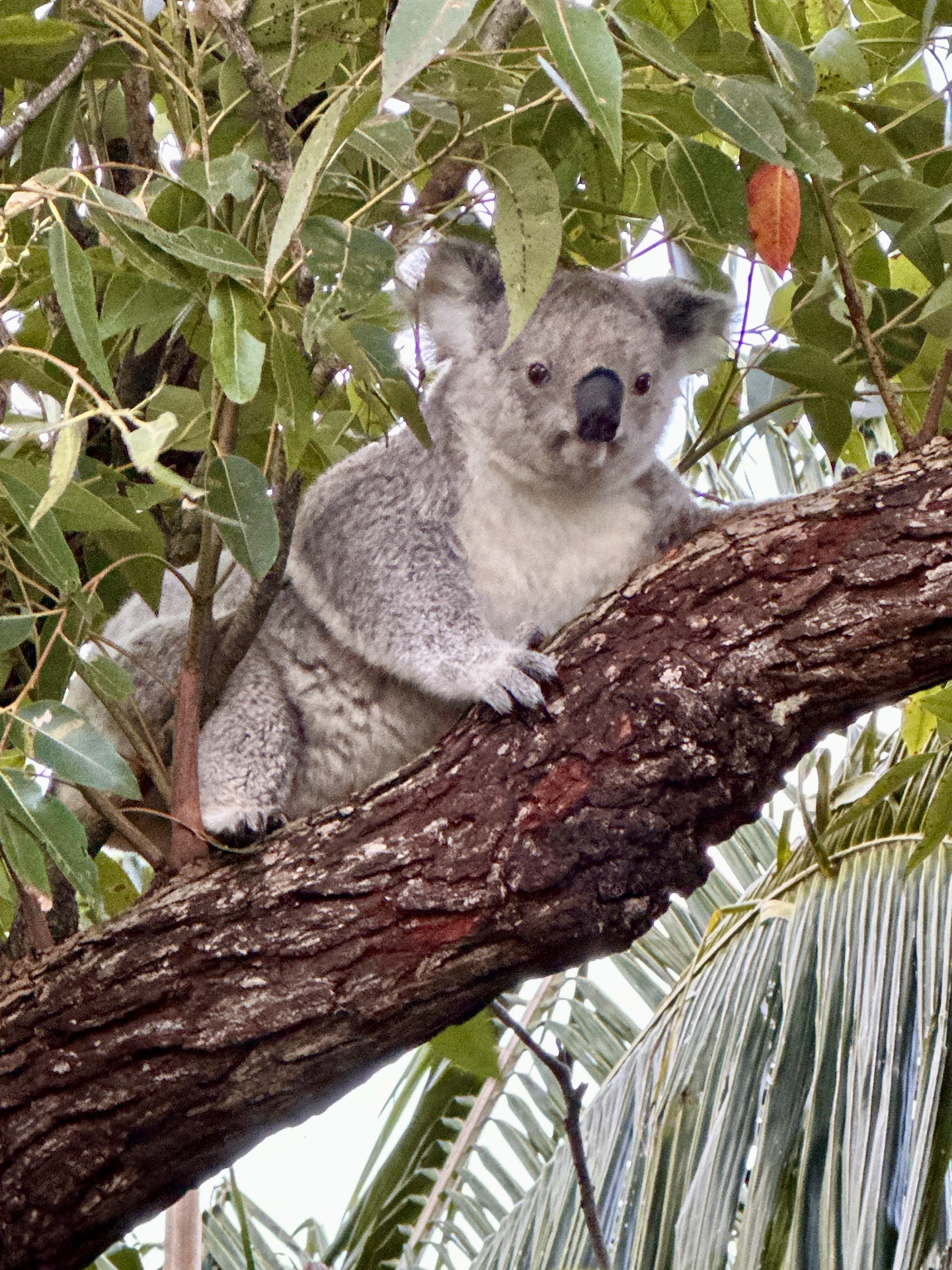
I have been enjoying Biripai land during NAIDOC week while I have been on holidays with my family and friends. Our holiday home was visited by a friendly koala (we called him Steve) and some feisty lorikeets (we called this one Bruce). 

May 25, 2024

Hello Perth

I have traveled from Bristol to Perth to attend the Speech Pathology Australia National Conference with my students and research team. Perth was much warmer than Bristol  - even though it is nearly summer in Bristol and nearly winter in Perth.

A huge sculpture at Elizabeth Quay

Kangaroo paws growing in the centre of the city

Black swans are symbolic of Perth

The sun setting over the ocean

May 7, 2024

ScholarGPS Highly Ranked Scholars

I just received the following email:

ScholarGPS celebrates Highly Ranked Scholars™ for their exceptional performance in various Fields, Disciplines, and Specialties. Your prolific publication record, the high impact of your work, and the outstanding quality of your scholarly contributions have placed you in the top 0.05% of all scholars worldwide. View your scholar profile and rankings 

Listed below is a summary of the areas (and your ranking in those areas) in which you have been awarded Highly Ranked Scholar status based on your accomplishments over the totality of your career (lifetime) and over the prior five years: 

  • Highly Ranked Scholar - Lifetime #2 Speech-language pathology 
  • Highly Ranked Scholar - Prior 5 Years #1 Speech-language pathology

I was thrilled to see that three of the five highly ranked scholars (lifetime) are Australian: Mark Onslow and Linda Worrall.


March 14, 2024

Are public funding models for speech-language pathology reflecting recommended evidence?

I enjoyed speaking with Tristan Nickless at the IALP conference in Auckland about his research into policies and practices impacting speech pathology services in Australia. He has just informed me about the publication of this important article: 

Nickless, T., Davidson, B., Finch, S., Gold, L., & Dowell, R. (2024). Aligned or misaligned: Are public funding models for speech-language pathology reflecting recommended evidence? An exploratory survey of Australian speech-language pathologists. Health Policy OPEN, 100117. https://doi.org/10.1016/j.hpopen.2024.100117

Acknowledgments: The authors wish to thank all participants who shared their experiences and time for this study. In addition, the authors would also like to acknowledge the following colleagues for their assistance with identifying differential treatment intensity studies: Associate Professor Suze Leitao and Dr Samuel Calder (language); Professor Tanya Serry, Professor Pamela Snow and Dr Lisa Furlong (literacy); Dr Katherine Sanchez and Ms Carly Veness (infant feeding); Professor Sharynne McLeod (speech); and Associate Professor Debra Phyland (voice).

September 13, 2023

Congratulations to Emeritus Professor Lindy McAllister AM

Congratulations to Emeritus Professor Lindy McAllister who has been appointed as a Member of the Order of Australia (AM) at Government House in Brisbane today for her outstanding achievements and contributions to speech pathology in Australia and Vietnam.

June 23, 2023

Australia's Speech-Language Pathology Profession and Its Global Impact

JUST PUBLISHED 

McLeod, S., McGill, N., Baldac, S., & Mulcair, G. Australia's Speech-Language Pathology Profession and Its Global Impact. Perspectives of the ASHA Special Interest Groups. https://doi.org/doi:10.1044/2023_PERSP-22-00239

Purpose: The purpose of this article is to describe the speech-language pathology profession in Australia and its global impact. 

Conclusions: Australia is known for its international collaboration in research, advocacy, leadership in practice (clinical) education and training of the workforce, innovations in technology for service delivery, and global partnerships. In Australia, speech-language pathologists are known as speech pathologists who have expertise in providing assessment and intervention to optimize communication and swallowing for people across the life span. Speech Pathology Australia (SPA) is the peak professional body in Australia and was founded in 1949. Speech pathology is a self-regulating profession, and SPA is recognized by the Australian government as the body that sets and maintains the standards for the profession. Members can hold Certified Practising Speech Pathologist (CPSP) status if they meet annual recency of practice and continuing professional development requirements. Not all speech pathologists are members of SPA. SPA has approximately 14,000 members; half are employed in private practices where services may be funded by government-funded schemes, private health insurance, or self-funded by service users. Most SPA members are female and the majority only speak English, with Cantonese being the most common other language spoken. The Professional Standards for Speech Pathologists in Australia outlines the knowledge, skills, and attributes for entry-level and practicing speech pathologists. SPA hosts an annual national conference and produces two journals: International Journal of Speech-Language Pathology and Journal of Clinical Practice in Speech-Language Pathology. SPA have committed to cultural responsiveness and privileging the voices of Aboriginal and Torres Strait Islander Peoples and Communities, the First Peoples of Australia. SPA aspires to the provision of culturally safe speech pathology services for all people and supports the development of speech-language pathology in the Asia-Pacific region including Vietnam and Cambodia.


June 12, 2023

Emeritus Professor Lindy McAllister has been appointed as a Member of the Order of Australia

I am so proud of my colleague Emeritus Professor Lindy McAllister who has been appointed as a Member of the Order of Australia (AM) in the 2023 King’s Birthday Honours List today for her outstanding achievements and contributions to speech pathology in Australia and Vietnam.

Here is my summary of her immense contribution to the world:

Professor McAllister is a visionary and an enabler who has changed the profession of speech pathology in Australia and internationally. Throughout her career, Lindy has changed the profession of speech pathology/speech and language therapy throughout the world in seven ways. 

1. Leading, envisioning and enacting change for the profession of speech pathology in Australia and internationally 

a. Mutual Recognition Agreement. During her term as President of Speech Pathology Australia, Lindy not only undertook the extensive duties required of the role, but also initiated the Mutual Recognition Agreement between the speech pathology professional associations in Australia, US, UK, Canada, New Zealand and Ireland and initiated dialogue with South Africa and countries in South-East Asia. 

b. Competency Based Occupational Standards for Speech Pathologists – Entry Level (CBOS). Lindy initiated CBOS for Speech Pathology Australia, a core document for entry to the profession of speech pathology (for university students), accreditation of university courses, assessment of overseas qualified speech pathologists, and re-entry program for speech pathologists wishing to return to practice after a career break. Subsequently other health professions in Australia and other speech pathology associations across the world have used CBOS documentation to develop their own. 

c. Competency Assessment in Speech Pathology (COMPASS). Following on from Lindy’s PhD in clinical education, then leadership in clinical education at The University of Sydney, Lindy envisioned a competency-based tool designed to validly assess the performance of speech pathology students in their clinical education placements. Over many years, and through Lindy’s mentoring and encouragement of many individuals, COMPASS® was developed using evidence-based educational principles. It has been psychometrically validated as part of a 4-year national collaborative research program. It is now a landmark tool used by Speech Pathology Australia and in other speech pathology programs including in Scotland. 

d. Code of Ethics. Lindy formalised the Code of Ethics for Speech Pathology Australia in the 1990s. She brought a depth and wealth of knowledge and expertise, that was captured in her co-authorship of the book Ethics in Speech and Language Therapy (Wiley-Blackwell). She has continued to work with Speech Pathology Australia to revise the Code of Ethics and formalise the Ethics Board for ~20 years. 

2. Innovations in Clinical Education. Lindy’s extensive research and scholarship, vision, and innovations in clinical education have informed and standardised clinical education for speech pathology across Australia. Her final paid employment was as Professor of Work Integrated Learning in the Work Integrated Learning (WIL) Unit of the Faculty of Health Sciences at The University of Sydney. She led a team of more than 30 academics and administrative staff who manage student placements in all the Faculty courses. She has informed the establishment of clinical education programs in many universities including Charles Sturt University and The University of Melbourne. In 2016 Lindy was an invited keynote speaker at the New Zealand Speech-language Therapists’ Association National Conference when they celebrated their 65th anniversary. The theme was Enhancing Lives Through Partnership and there were over 200 participants. 

3. Enabling and mentoring generations of speech pathology professionals, academics and leaders. An example of the significance of her mentorship is that she is acknowledged in the speeches of almost every elected Fellow and Life Member at Speech Pathology Australia award ceremonies. Lindy’s students, including PhD graduates now are now head of speech pathology programs. Lindy’s ex-PhD student, A/Prof Jane McCormack is the Assistant Deputy Head, School of Allied Health and the National Course Coordinator of the Speech Pathology Program at Australian Catholic University (largest speech pathology program in Australia). A/Prof Sarah Verdon has been taught and mentored by Lindy, and now is the Discipline Lead of Speech Pathology at Charles Sturt University. 

4. Establishing the first non-metropolitan speech pathology program in Australia. In 1999 Prof. McAllister commenced the speech pathology program at Charles Sturt University in Albury, developing a curriculum that created brave and resourceful speech pathologists with a client- and community-centred focus. Graduates from this program now are working in rural and remote locations across Australia and the world (e.g., Vanuatu), as well as changing practice in metropolitan areas. 

5. Establishing the speech and language therapy profession in Vietnam. For the past 20 years Lindy has been involved in speech pathology in Vietnam as a volunteer, supporting Australian speech pathology students’ fieldwork placements, then in 2008 as a Founding Director of Trinh Foundation Australia to create sustainable speech therapy services in Vietnam. She has worked together with Trinh Foundation Australia, key people in Vietnam and over 200 volunteers from Australia and other countries to 

a. establish the first fulltime two-year courses in Speech and Language Therapy in Vietnam at Pham Ngoc Thach Medical University in Ho Chi Minh City (2010-2012 and 2012-2014). 

b. establish the one-year training course in Paediatric Speech and Language Therapy (2014-2015). 

c. establish continuing professional development and training in medical universities 

d. establish the Masters and Bachelor courses in Speech and Language Therapy in two universities in Ho Chi Minh City and Da Nang 

e. co-author journal articles and conference papers with people from Vietnam. For example, “Practice innovations from the emerging speech-language pathology profession in Vietnam: Vignettes illustrating indigenised and sustainable approaches” by Nguyen Thi Ngoc Dung, Le Khanh Dien, Christine Sheard, Le Thi Thanh Xuan, Trà Thanh Tâm, Hoàng Văn Quyên, Le Thi Dao, and Lindy McAllister 

f. Lindy was awarded a medal from the People’s Committee of Ho Chi Minh City for services to Speech Therapy and Education in Vietnam (2014) 

g. Lindy has also consulted, evaluated and advised on curricula for other courses in Malaysia, Kuwait and Ghana. 

6. Establishing the qualitative research paradigm within the field of speech pathology throughout the world. The speech pathology profession traditionally has used quantitative methods in research. Lindy went against tradition and undertook her PhD using qualitative research. Since then, she has worked to establish qualitative research as a mainstream paradigm within the speech pathology profession. As well as publishing many papers and supervising many higher degree students using this paradigm, she has co-authored two landmark texts in the field on the topic: Qualitative Research in Communication Disorders (2019) and Analysing Qualitative Data in Communication Disorders Research (2022). “Plan your qualitative research project” was a free workshop for speech pathologists held at The University of Queensland in 2019. It was the first time that a large group of speech pathologists came together to discuss qualitative research. 

7. Undertaking scholarly work to support social justice and equity for people with communication disabilities. Lindy has written numerous books, chapters, journal articles and reports that are highly cited and implemented in practice. 

Recognition. Lindy’s contributions to the speech pathology profession have seen her receive the following awards: 

  • Fellow of Speech Pathology Australia (1995) 
  • Eleanor Wray Award for Outstanding Contribution to the Profession (Speech Pathology Australia, 2002) 
  • Elizabeth Usher Memorial Award and Address (Speech Pathology Australia, 2006) “Pioneering in professional practice: Creating your own frontiers and crossing those established by others” 
  • Life Member of Speech Pathology Australia (2006). This is the highest level of recognition the Association bestows. Lindy was the 23rd Life Member and SPA has over 12,000 members. 
  • Honorary Fellow of the Royal College of Speech and Language Therapists (RCSLT, UK) (2021). This honour is rarely offered to non-members. 

To conclude, Professor Lindy McAllister is an exceptional person. She is a visionary and an enabler who has changed the profession of speech pathology in Australia and internationally. She values the contribution of all those around her, establishes networks, scaffolds and mentors others, then is happy when they receive accolades for work based on her original ideas and mentorship. She consistently maximises the potential of those around her to promote communication for all.

 Here are the accolades recognising her immense contribution: 

August 1, 2022

Vietnamese refugees remembered

Last week I caught up with Emeritus Professor Lindy McAllister in Brisbane. In addition to discussing many issues, we visited the statue that states

IN MEMORY

Hundreds of thousands of Vietnamese boat people perished at sea on their journeys seeking freedom from 1975-1995.

IN GRATITUDE

In the hour of our greatest need - you were there. We thank you Australia.

December 8, 2021

Scholarly journal publishing in Australia by Dr Hamid R. Jamali

Today I went to a really interesting presentation titled "Scholarly journal publishing in Australia" by Dr Hamid R. Jamali from Charles Sturt University. 

Abstract. Australia currently has 600+ peer-reviewed scholarly journals, some of which started a century ago. Most of these journals belong to or are affiliated with universities or non-profit organisations (e.g. learned societies). As journal publishing has increasingly become challenging due to a competitive market and various business models, some of these journals face uncertain futures. In the last decade alone 150+ Australian journals ceased publication. This presentation reports the findings of two recent studies on journal publishing in Australia and looks at the distribution of journals by owner, publisher, Field of Research, and publishing model. The presentation also reports the findings of a survey of discontinued journals on what circumstances resulted in the discontinuation of journals. The session will be an opportunity to discuss the value of having local/national journals and the role they play in research. 

Biography. Dr Hamid R. Jamali is an Associate Professor in the School of Information and Communication Studies at Charles Sturt University. He received his PhD in Information Science from University College London in 2008, and before joining CSU he worked as an Associate Professor at Kharazmi University in Iran. Hamid’s current research interests broadly cover the area of scholarly communication which includes reading, citing and publishing behaviour, journal publishing, open access, and research evaluation. He has been involved in multiple international projects including two recent projects on the scholarly communication of early career researchers.


It seems that my experience as Editor-in-Chief of International Journal of Speech-Language Pathology, published by Speech Pathology Australia has been uncommon, with many Australian journals closing rather than internationalising while retaining their Australian influence and reach. I was the editor when we changed the name. Here is the publication history: https://www.tandfonline.com/action/journalInformation?journalCode=iasl20 

  • Currently known as: • International Journal of Speech-Language Pathology (2008 - current) 
  • Formerly known as • Advances in Speech Language Pathology (1999 - 2007) • Australian Journal of Human Communication Disorders (1973 - 1996) • Journal of the Australian College of Speech Therapists (1951 - 1972)

July 25, 2019

Medicare Benefits Schedule Review

Today I spent time providing advice for the definition of "speech sound disorders" for the Australian Medicare Benefits Schedule Review. Important work!

June 14, 2019

Australian Government events while in New York

The Australian Government was extremely welcoming and helpful while we were in New York. They hosted two events that we attended, as well as supporting our attendance and presentations at the Conference of States Parties at the United Nations.
  1. Australian Civil Society Reception with H.E. Ms Gillian Bird Ambassador and Permanent Representative to the United Nations (Sunday 9th June)
  2. Australian delegation debriefing after the Conference of States Parties at the Australian Mission to the UN (Friday 14th June)
Additionally, the Australian Government co-sponsored our Speech Pathology Australia/International Communication Project Side Event.

H.E. Ms Gillian Bird Ambassador and Permanent Representative to the United Nations with Speech Pathology Australia delegates at the Civil Society Reception

Australian delegation debriefing at the Australian Mission to the UN
Sharynne with Wagga the Wombassador
Some of the Australian delegation with Mika Kontiainen from DFAT

May 29, 2019

Final Australian Government briefing before heading to the United Nations in NY

Today we had our final briefing with the Australian Human Rights Commission and the Australian Government (Mika Kontiainen, DFAT and George Sotiropoulos, DSS) before departing for the United Nations Conference of States Parties 12.

We met the new Disability Discrimination Commissioner, Dr Ben Gauntlett via teleconference. He will be attending COSP12.

The Australian Government will support 12 Civil Society events during the UN meetings, including the one by Speech Pathology Australia/International Communication Project.

We were encouraged to remember that attendance at COSP is about encouraging and influencing governments about the global implementation of the Convention on the Rights of Persons of Disabilities (download here) and we are there to represent the views and rights of people with disabilities.

Relevant Twitter hashtags and handles: #COSP12 #UNCOSP #CRPD #COSP12Aus
International Communication Project member associations at COSP12: @SpeechPathAus @IcommunicationP @RCSLT @ASHAWeb
#SpeakUp4CommRights
Australian delegation: @SharynneMcLeod @GailMSpa @SPAPresident @TheraBees @JessMcLeod4

April 23, 2019

Inaugural issue of Journal of Monolingual and Bilingual Speech

Our VietSpeech team has a paper published in the inaugural issue of Journal of Monolingual and Bilingual Speech:
Language Proficiency, Use, and Maintenance Among People with Vietnamese Heritage Living in Australia
- Sharynne McLeod, Sarah Verdon, Cen (Audrey) Wang, and Van H. Tran

May 1, 2018

Visiting Uluru

Last week Ben Pham and I had the opportunity to visit Uluru and Kata Tjuta in central Australia. It is such a special place cared for by Indigenous people for millennia.

October 25, 2017

Visiting outback New South Wales

I am on leave this week and am visiting outback New South Wales. While on leave I am learning more about rural and distance education in our very large state and had a chance to visit Broken Hill School of the Air.
Outback Australia is very sparsely populated
Kylie Green (Principal) and David McLeod at Broken Hill School of the Air
speaking with remote parents via satellite

August 4, 2017

Invited speaker at National Health Innovation and Research Symposium

I was an invited speaker at National Health Innovation and Research Symposium this week in Coffs Harbour. The program and presenters are here: https://www.mnclhdevents.com.au/
My presentation was titled: Communicating with children and families in a multilingual world
Here is my synopsis:
More than 20 per cent of Australians speak a language other than English at home. This presentation will highlight the benefits of multilingualism and provide insights from an international research program into how monolingual health professionals can successfully work with multilingual children and families.
Presenting in a session chaired by Professor Gail Whiteford
Presenting recent data from the Australian Census about
changes in the top 5 languages spoken between 2001 and 2016
The dinner speaker was Dr Karl Kruszelnicki and amongst many other topics he described the importance of free education and healthcare to a nation's wellbeing.