 |
| Congratulations Ben |
October 30, 2017
Celebrating an important manuscript submission
Typically on this blog I celebrate manuscripts that are accepted for publication. I rarely talk about the long process of planning, gaining ethics approval, data collection, analysis, writing, submission, revisions, final acceptance, and page proofing that sometimes lasts years. Today Ben Pham submitted the main paper from her research in Vietnam. It has been a 3+ year process to get to this point - and we were very excited to submit it this afternoon. Congratulations Ben.

October 28, 2017
Impact: Speech sound disorders in preschool and school-age children
The American Speech-Language-Hearing Association (ASHA) have just launched a journal self-study course for their members titled "Speech Sound Disorders in Preschool and School-Age Children (WEB3250)". It contains learning based around four journal articles, and two of the four were written by our team, with a third being written by our colleagues Yvonne Wren and Sue Roulstone from the UK. It is very exciting to have had our work selected by ASHA and will increase the impact of our work across the US and the world. The selected papers in the self-study course are:
- Stimulus Characteristics of Single-Word Tests of Children's Speech Sound Production - Toby Macrae
- Cluster-Randomized Controlled Trial Evaluating the Effectiveness of Computer-Assisted Intervention Delivered by Educators for Children With Speech Sound Disorders - Sharynne McLeod, Elise Baker, Jane McCormack, Yvonne Wren, Sue Roulstone, Kathryn Crowe, Sarah Masso, Paul White, and Charlotte Howland
- Polysyllable Speech Accuracy and Predictors of Later Literacy Development in Preschool Children With Speech Sound Disorders - Sarah Masso, Elise Baker, Sharynne McLeod, and Cen Wang
- Prevalence and Predictors of Persistent Speech Sound Disorder at Eight Years Old: Findings From a Population Cohort Study - Yvonne Wren, Laura L. Miller, Tim J. Peters, Alan Emond, and Sue Roulstone
Children with speech sound disorders make up a large part of the caseload for many SLPs who work with preschool and school-age children. Speech sound disorders not only affect a child’s ability to communicate at a young age but also may lead to later speech and literacy difficulties. This journal self-study explores issues related to managing speech sound disorders, including assessment and treatment options. It also includes articles that identify predictors of future speech and literacy problems. Clinicians can use this information to help identify appropriate assessment tools and potential treatment options, as well as counsel parents and teachers of children who may be at risk for continuing speech and academic difficulties.
October 26, 2017
Visiting Broken Hill University Department of Rural Health
Today I spent time at the Broken Hill University Department of Rural Health. I had lunch with the La Trobe University speech pathology students who are on their final year placement working in schools throughout the region (thanks for organising lunch Sarah and Alisha). I enjoyed meeting this enthusiastic group of students and discussing their placements, rural practice, and international research. I also had the opportunity to meet with Claire Brunero (Speech Pathology Academic), Dr Debra Jones (Director or Primary Health Care) and Professor David Lyle (Head of Department of Rural Health). It was great to hear their passion and advocacy for rural health.


 |
| La Trobe University speech pathology students |
 |
| Prof David Lyle, Dr Debra Jones, Prof Sharynne McLeod |
October 25, 2017
Visiting outback New South Wales
I am on leave this week and am visiting outback New South Wales. While on leave I am learning more about rural and distance education in our very large state and had a chance to visit Broken Hill School of the Air.


 |
| Outback Australia is very sparsely populated |

 |
| Kylie Green (Principal) and David McLeod at Broken Hill School of the Air speaking with remote parents via satellite |

October 23, 2017
"Waiting for speech pathology" grant meeting in Dubbo
Today our NSW Translational Research Grant team continued work on our Waiting for speech pathology grant with a face-to-face meeting at Dubbo Community Health. We worked on standardizing the research processes across the three research sites regarding assessment, transcription, and the advice and therapy sessions. Thank you to Sally and Kate for hosting the meeting, providing delicious treats, and an inspiring book collection.

 |
| L-R: Kate Miller, Sharynne, Angela Roberts, Nicole McGill (videoconference), Sally Thornton, Emily Davis, Katrina Rohr |

October 19, 2017
Global efforts towards quality education for all
Today Professor Vinayagum Chinapah visited CSU from the
Institute of International Education (IIE), Department of Education, Stockholm University, Sweden. Australia was the 158th country that he has visited, and it has been a lifelong dream to come. While at CSU he presented a lecture titled: Global efforts towards quality education for all: Evidence and reflections from international and comparative perspectives to address achievements and challenges
Here is the abstract
Here is his biography
Here is the abstract
In the process of constructing post-2015 development global frameworks, education is increasingly seen globally to be a powerful tool for preparing students to enter the labor market as well as to create a peaceful and sustainable society. International and comparative educational research conducted on the achievement of the EFA goals has clearly revealed that despite important efforts accomplished in many countries, there are still serious challenges in terms of the quality of education that is offered. The paper examines the extent to which a minimum Quality of Education For All (QEFA) can be reached through effective use and application of evidence-based international and comparative educational research. Global efforts to attain QEFA are examined by investigating major international surveys of learning outcomes. The case of Arab states demonstrates diverse socio economic and political contexts of each country and should be reflected in regional strategies to achieve QEFA. Evidence from data on national, regional and international assessments indicates that low achievement is globally widespread and stronger government intervention will be needed. This research demonstrates that the diversity of learning conditions and environment across and within countries should be carefully reflected into quality assurance by enhancing each individual´s learning potentials.
 |
| Ben Pham, Sally Lamping, Vinay Chinapah, Shukla Sikder, Sharynne McLeod |
Vinayagum Chinapah (Sweden and Mauritius) is Professor, Chair Holder and Head of the Institute of International Education (IIE), Department of Education, Stockholm University, Sweden since 2009. Professor Chinapah has been the Director of the Joint UNESCO-UNICEF International Program on Monitoring the Quality of Education and Learning Achievement which covered some 80 countries world-wide during the period (1992-2006). He also served for one year as UNESCO Regional Educational Adviser for the Arab States, UNESCO Regional Office, Beirut, Lebanon (2007-2008) before returning back to lead IIE in January 2009. Professor Chinapah is member of various research associations and research councils and author and co-author of some 70 books, chapters in books, scientific journal articles as well as some 160 reports, conference papers, training manuals and prototypes for capacity building workshops world-wide. He has done research, training, and consultancies for several UN agencies (UNESCO, UNICEF. UNDP, FAO); International agencies (The World Bank, OECD); bilateral agencies (SIDA, Finnish CIMO, CIDA, Commonwealth Secretariat) and several national governments and institutions in some 140 countries world-wide over the past 35 years.
 |
| Prof. Vinay Chinapah receiving a CSU boomerang |
 |
| Kangaroos in Bathurst |
 |
| Prof Chinapah saw 20+ kangaroos near the university |
 |
| Joeys in their mothers' pouches |
October 13, 2017
Magdalena Janus' visit to CSU
We have been honoured to have A/Prof Magdalena Janus visiting Charles Sturt University this week from Canada. She has been instrumental in the development of the Early Development Instrument (EDI) used widely in Canada, Australia, USA, Sweden, Brazil, Peru, and Jordan. She is currently developing the Infant and Young Child Development (IYCD) assessment in conjunction with the World Health Organization.
 |
| Ben Phạm and Magdalena Janus discussing the Vietnamese EDI |
 |
| Magdalena Janus, Sharynne and Linda Harrison |
September 28, 2017
Royal College of Speech and Language Therapists' (RCSLT) Conference in Glasgow
The 2017 RCSLT conference is in Glasgow over the next two days. There are over 500 attendees from 6 countries, 4 keynotes, 71 presentations, 14 workshops, and 110 posters.
I really enjoyed the presentation from Rt Hon John Bercow MP where he said that the Bercow Review (2008) was "the most stimulating and rewarding project" he has undertaken prior to becoming Speaker of the House of Commons.

I am co-presenting the following papers:
I really enjoyed the presentation from Rt Hon John Bercow MP where he said that the Bercow Review (2008) was "the most stimulating and rewarding project" he has undertaken prior to becoming Speaker of the House of Commons.
 |
| Rt Hon John Bercow MP |

I am co-presenting the following papers:
- Sound Start Study: A Community-based Randomized Controlled Trial of Phoneme Factory Sound Sorter • Yvonne Wren (Speech and Language Research Unit, Bristol) • Sharynne McLeod (Charles Sturt University) • Elise Baker (The University of Sydney) • Jane McCormack (Charles Sturt University) • Kate Crowe (Charles Sturt University) • Sarah Masso (Charles Sturt University) • Sue Roulstone (University of the West of England)
- The Current Practices of UK Speech and Language Therapists: Phonological Intervention Approaches and Dosages• Natalie Hegarty (Ulster University) • Jill Titterington (Ulster University) • Sharynne McLeod (Charles Sturt University) • Laurence Taggart (Ulster University)
 |
| Yvonne Wren presenting our paper on the Sound Start Study |
 |
| Prof Julie Marshall (Manchester Metropolitan University), Helen Barrett (Rwanda), Sharynne, Prof Sue Roulstone (Bristol Speech and Language Therapy Research Unit) |
 |
| Natalie Hegarty, Dr Jill Titterington (University of Ulster), and Sharynne |
Visiting Scotland
I have Scottish ancestry, so I really enjoy visiting Scotland.
I have enjoyed the soaking up the architecture and design of Glasgow, particularly the work of Charles Rennie Mackintosh.
The RCSLT conference was held at the SEC - and the view each morning was quite spectacular.

 While in Scotland I have benefited from the hospitality of colleagues
including Professor Jim Scobbie and Professor Alan Wrench from Queen
Margaret University in Edinburgh and Dr Joanne Cleland from University
of Strathclyde in Glasgow.
I have enjoyed the soaking up the architecture and design of Glasgow, particularly the work of Charles Rennie Mackintosh.
 |
| Charles Rennie Mackintosh's Willow Tea Rooms |


 |
| Kirsty, Joanne, Sharynne, Jim and Alan |
RCSLT Child Speech Disorder Research Network
I was invited to join the Royal College of Speech and Language Therapists (RCSLT) Child Speech Disorder Research Network meeting at the University of Strathclyde in Glasgow. It was a dynamic meeting of researchers from across the UK who are passionate about working in the field of children's speech.

- Here is their website: https://www.nbt.nhs.uk/bristol-speech-language-therapy-research-unit/bsltru-research/child-speech-disorder-research-network
- Their transcription guidelines (that we included in our Children's Speech book) are here.
- Their analysis guidelines will be completed soon.
 |
| Twitter post from CSDR Network |
 |
| Child Speech Disorder Research Network |

September 27, 2017
Anna's presentation at the Early Start Conference
Anna Cronin attended the Early Start Conference in Wollongong in September. She presented a poster titled: Optimising the Communication and Wellbeing of Toddlers with Cleft Palate: Practices Across Four Continents.
 Here is the abstract:

Children born with a cleft palate (+/- cleft lip) can have difficulties communicating, eating, and participating in environments such as early childhood education. Cleft palate is a congenital condition that results from the segments of the face failing to fuse during early embryological development. Surgery to repair the cleft generally occurs in the first year of life; however, it can impact on children’s psychological and social functioning, and that of their family, for many years after. Having a cleft palate may impact a child’s speech sound acquisition (i.e., reduced speech intelligibility), velopharyngeal function (i.e., reduced speech acceptability), or both. Over the past decade, research has been undertaken to examine the early speech development of children with cleft palate. Given that children with cleft palate are at increased risk of speech sound disorders, and that these patterns/sound preferences emerge before their first words, there is continued interest in early intervention for toddlers and pre-schoolers with cleft palate. This project was undertaken to gather resources and strategies to support toddlers with cleft palate and their families. This was done with a view to maximising their speech outcomes, and in turn their well-being and social inclusion.
METHOD The first author received a Churchill Fellowship, and arranged visits to twelve experts working with children with cleft palate and their families. Sites were chosen based on the experts’ experience, published research, and/or interest in early speech intervention. The experts worked in six sites in Brazil, Denmark, New Zealand, and US. Semi-structured interviews were conducted using a topic guide developed after consultation of the literature, and discussion with colleagues and team members. Artefacts were collected to gain a greater understanding of the centres’ practices. Data were also collected through the observation of intervention sessions and multidisciplinary clinics. The interviews were then transcribed verbatim. The interviews, artefacts and observations were analysed qualitatively using inductive and deductive analysis based on a priori categories/themes identified during the planning of the research.
RESULTS There were consistent findings/recommendations across settings, despite the varied languages spoken, access to services, type of surgical repair, and approaches to intervention. Assessment: Monitor early language development, track speech over time (audio recordings), use consistent stimuli for speech samples, and use a developmental screener (track across developmental domains). Intervention: Provide parents with early speech and language development information, use principles and knowledge of typical speech acquisition norms when interpreting speech assessment data for young children with cleft palate, apply innovative models of care (e.g., speech therapy camps, collaborative care with primary SLPs and video feedback of parents in sessions)
DISCUSSION/CONCLUSION Cross-cultural similarities and differences regarding support for toddlers with cleft palate were found. These practices advocated by 12 international experts can be used to generate future research questions and provide expert evidence regarding service delivery for toddlers with cleft palate from around the world, to ensure the best speech outcomes for them, and as a result improved participation and social inclusion.
September 22, 2017
Languages spoken in the UK
The participants in yesterday's seminar at the University of Sheffield shared two websites from the 2011 census outlining languages spoken in the UK:
- https://www.ons.gov.uk/peoplepopulationandcommunity/culturalidentity/language/articles/detailedanalysisenglishlanguageproficiencyinenglandandwales/2013-08-30
- https://www.ons.gov.uk/peoplepopulationandcommunity/culturalidentity/language/articles/languageinenglandandwales/2013-03-04
"English (or Welsh in Wales) was the main language for 92% of UK residents. Of the remaining 8% who had a different main language, the majority could speak English "well" or "very well". People who couldn’t speak English "well" or "at all" had a lower proportion of "good" general health than those with English as their main language."
- The top 10 languages spoken are: Polish, Panjabi, Urdu, Bengali (with Sylheti and Chatgaya), Gujarati, Arabic, French, All other Chinese, Portuguese, Spanish
- The top 10 languages spoken by people who are proficient in English are: Afrikaans, Welsh (in England only), Swedish, Danish, Northern European language (non EU), Shona, Finnish, German, Dutch, Tagalog/Filipino
- The top 10 languages spoken by people who are less proficient in English are: Gypsy/Traveller languages, Pakistani Pahari (with Mirpuri and Potwari), Vietnamese, Cantonese Chinese, Yiddish, Panjabi, Romani language (any), Bengali (with Sylheti and Chatgaya), Turkish, Latvian
Visiting the University of Sheffield
I am visiting the University of Sheffield in the UK at the moment. Today I presented a seminar titled: "Multilingual children's speech: A world tour" and met with colleagues (including Blanca Schaefer, Silke Fricke and Jenny Thomson). Tomorrow I will examine a PhD.
 |
| Dr Blanca Schaefer and Sharynne at The University of Sheffield |
 |
| Some of the audience after my presentation |
September 21, 2017
International Clinical Phonetics and Linguistics website
The International Clinical Phonetics and Linguistics website recently has been updated and includes a link to the Powerpoint presentation I made about the history of ICPLA: http://www.icpla.info
The next ICPLA conference will be held in Malta in October 2018.
The next ICPLA conference will be held in Malta in October 2018.
September 20, 2017
Tutorial: Assessment and analysis of polysyllables in young children
The following manuscript has just been accepted for publication. This is the last paper to be published from Sarah Masso's PhD. Congratulations Sarah!
Masso, S., McLeod, S. & Baker, E. (2017, in press). Tutorial: Assessment and analysis of polysyllables in young children. Language, Speech, and Hearing Services in Schools.
Here is the abstract:
Masso, S., McLeod, S. & Baker, E. (2017, in press). Tutorial: Assessment and analysis of polysyllables in young children. Language, Speech, and Hearing Services in Schools.
Here is the abstract:
Purpose: Polysyllables, words of three or more syllables, represent almost 30% of words used in American English. The purpose of this tutorial is to support speech-language pathologists’ assessment and analysis of polysyllables extending the focus of published assessment tools that focus on sampling and analysing children’s segmental accuracy and/or the presence of phonological patterns.
Method: This tutorial will guide SLPs through a review of 53 research papers that have explored the use of polysyllables in assessment, including the sampling and analysis procedures used in different research studies. The tutorial will also introduce two new tools to analyse and interpret polysyllable speech samples: the Word-level Analysis of Polysyllables (WAP, Masso, 2016a) and the Framework of Polysyllable Maturity (Framework, Masso, 2016b).
Results: Connected speech and single-word sampling tasks were used across the 53 studies to elicit polysyllables and a number of analysis methods were reported including measures of segmental accuracy and measures of structural and suprasegmental accuracy. The WAP and the Framework extend SLPs’ depth of analysis of polysyllables.
Conclusion: SLPs need a range of clinical tools to support the assessment and analysis of polysyllables. A case study comparing different speech analysis methods demonstrates the clinical value in utilizing the WAP and the Framework to interpret children’s polysyllable productions in addition to traditional methods of speech sampling and analysis.
September 19, 2017
Children's speech acquisition in Vietnamese and Cantonese
Today Ben Pham presented a paper titled "Acquisition of consonants, vowels and tones by children in Northern Viet Nam" at the 10th Asia Pacific Conference of Speech, Language, and Hearing (APCSLH) in Narita, Japan.
Ben's work has been informed by a paper by A/Prof Carol To from the University of Hong Kong published in Journal of Speech, Language, and Hearing Research in 2013. Ben and Carol have had a number of opportunities to discuss their work while in Japan. Such collaboration and sharing strengthens research quality.
 |
| Sharynne, Ben Pham and A/Prof Kathy Lee from Chinese University of Hong Kong |
 |
| A/Prof Carol To (University of Hong Kong) and Ben Pham discussing Cantonese and Vietnamese children's speech acquisition |
September 17, 2017
Asia Pacific Conference of Speech, Language, and Hearing
The 10th Asia Pacific Conference of Speech, Language, and Hearing (APCSLH) is being held in Narita, Japan on 17-19 September.
There are 450+ attendees from 18 countries and 82 papers and 174 posters are being presented. I am presenting an invited paper and Ben Phạm is presenting two papers:
We are having a wonderful time networking with people from across the Asia Pacific region.
- McLeod, S. - Identifying children with speech sound disorders across languages (invited)
- Phạm, B., McLeod, S. & Harrison, L. J. - Validation of the Intelligibility in Context Scale with preschool children in Ha Noi, Viet Nam
- Phạm, B. & McLeod, S. - Acquisition of consonants, vowels and tones by children in Northern Viet Nam
 |
| Keynote speakers include Dr Lilly Cheng, Dr Loraine Ramig (LSVT), and Dr Patty Prelock from USA |
 |
| Vietnamese colleagues: Dr Sally Hewat, Sharynne, Mrs Loan, Ms Thanh, Ben Pham, Sarah Day, Dr Cuong |
 |
| Hong Kong colleagues: A/Prof Carol To, A/Prof Kathy Lee (with her new Cantonese Spoken Word Recognition Test), Sharynne and Ben Pham |
 |
| Taiwan/USA colleague: Sharynne, Prof. Lilly Cheng, Ben Pham |
 |
| Thai colleagues: A/Prof Sumalai Maroonroge and Prof. Benjamas Prathanee |
 |
| Ben Pham and I had fun at the Japanese cultural centre organised by the conference |
September 16, 2017
Enjoying traditional Japanese culture
Ben Pham and I are in Japan to attend the conference for the Asia Pacific Society for the Study of Speech, Language and Hearing. Today we enjoyed the culture of Japan before the conference began and we were fortunate that the Narita Traditional Performing Arts Festival was on. What a spectacle of colour and sound, with people of all ages celebrating Japanese culture.



September 10, 2017
Sarah M's Endeavour Postdoctoral Scholarship in Newfoundland, Canada
Sarah Masso is currently in Newfoundland, Canada on her Endeavour Postdoctoral Scholarship. She is working with A/Prof Yvan Rose at Memorial University of Newfoundland for 4 months. Her project is titled: Developing innovative technology for speech pathologists.
Here are her aims:
This Endeavour postdoctoral program will make the comprehensive analysis software (Phon) available for speech pathologists to save them time, money, and resources. A user-friendly interface for Phon will reduce technology barriers hindering speech pathologists’ engagement with this technology. The two key aims for this research are to work with Associate Professor Yvan Rose (linguist and Phon author) to: (1) design an interface for Phon appropriate for speech pathologists internationally, (2) incorporate clinically-useful features, including the Word-level Analysis of Polysyllables (Masso, 2016), within Phon.
 |
| Sarah's first day |
 |
| Sarah picked local blueberries |
 |
| Jellybean houses |
September 8, 2017
NZSTA homepage
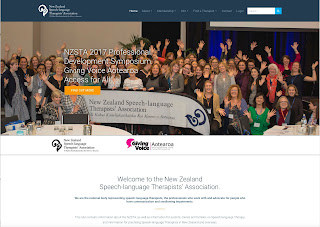
The current NZSTA homepage photo (https://speechtherapy.org.nz) was taken immediately after my masterclass workshop last year at the NZSTA conference (I am at the back on the right). It's lovely to be reminded of this dynamic group of participants.
Subscribe to:
Posts (Atom)