October 25, 2024

Last day at the WHO Regional Committee Meeting 75 (RCM75) for the Western Pacific in the Philippines

Today was the last day of the 5-day WHO Regional Committee Meeting 75 (RCM75) for the Western Pacific in the Philippines. I have enjoyed networking with and learning from colleagues across the region.

The next WHO Regional Committee Meeting 76 (RCM76) for the Western Pacific was announced to be held in Fiji (20-24 October 2025). They have recommended that the plenary session address loneliness and mental health and that parallel sessions may include rehabilitation. I hope to attend again in 2025.


I had rich discussions withAlice Chen (WHO, Philippines), Colette Boughton (WHO, USA) and Dr Ferdiliza Garcia (Philippines)

The rains have begun to clear as the typhoon has moved away from Manila this morning - so we were able to see the flags. We are fortunate to have not had too much flooding - so each day we were able to attend the meetings.


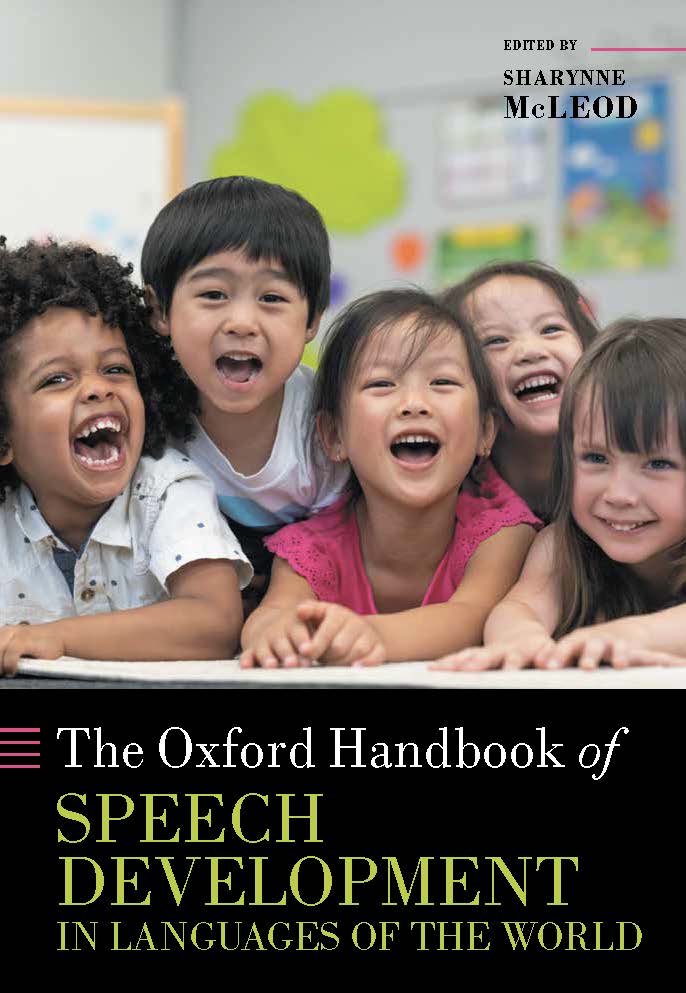
The Oxford Handbook of Speech Development in Languages of the World

Oxford University Press have just sent the description that they will use to promote my new book "The Oxford Handbook of Speech Development in Languages of the World" to be published in 2025

This volume presents a paradigm shift in the world’s knowledge about children’s speech development, with 80 chapters covering 75 languages and language varieties or dialects from across the globe. Each of the chapters follows the same structure, facilitating comparison across languages and dialects. Researchers and students can identify relationships between common and unique elements of children’s speech to develop new theories and enhance understanding. Crucially, the curated data in the chapters can be used by communication specialists to collaborate with families and communities, in order to support children’s home language maintenance and speech development, including in languages not spoken by the specialists.

The Oxford Handbook of Speech Development in Languages of the World presents a transformative approach by which the discipline can overcome traditional English- and Western-centric biases by respecting and acknowledging longstanding traditions of research, theories, and knowledge from a wide range of countries and cultures – including knowledge not previously translated into English. Languages spoken by First Nations people and traditionally marginalized groups are given equivalent status to majority languages, and the language maps, resources, and pronunciation guides have been created using a rights-based, social justice approach, acknowledging the impact of colonization.

  • Features data from 75 languages and dialects, including Indigenous languages and those spoken by traditionally marginalized groups
  • Enables effective comparison between languages, with each chapter following the same structure
  • Includes audio files of child and adult speakers, as well as bespoke maps, pronunciation guides, and links to further information and resources

Wellcome Trust visitor to CSU

Lucy Rodgers is a PhD student at City St George's, University of London studying with Professors Ros Herman and Nikki Botting. She has received funding from the Wellcome Trust to visit us at Charles Sturt University next year. We had a wonderful conversation this evening to plan her trip to Bathurst in April 2025.


October 22, 2024

Interventions presented at the World Health Organization Regional Commmittee Meeting for the Western Pacific

During the World Health Organization Regional Commmittee Meeting for the Western Pacific I presented two interventions on behalf of the International Association of Communication Sciences and Disorders (IALP) relating to:

  • Agenda item 11 - Oral Health
  • Agenda item 13 - Digital Health 

I thank Fiona Given, Meredith Allan, Shaun McCarthy and Bronwyn Hemsley for their insightful paper that I quoted in the intervention discussing digital health.

Given, F., Allan, M., McCarthy, S., & Hemsley, B. (2023). Digital health autonomy for people with communication or swallowing disability and the Sustainable Development Goal 10 of reducing inequalities and Goal 3 of good health and well-being. International Journal of Speech-Language Pathology, 25(1), 72-76. https://doi.org/10.1080/17549507.2022.2092212

Prof Sharynne McLeod reading the intervention regarding people with communication disability at the WHO meeting in Manila, Philippines (from the perspective of the Chairperson)
 

I was honoured to read the intervention on Digital Health on the morning of Thursday 24th October. Here is the #RCM75 YouTube channel for Day 4 with my  IALP intervention (53:00 – 57:00): https://www.youtube.com/watch?v=RvgPIaZKlo0


October 21, 2024

Seventy-fifth session of the World Health Organization Regional Committee for the Western Pacific

This week (21 to 25 October 2024) I am honoured to represent the International Association of Communication Sciences and Disorders (IALP) at the Seventy-fifth session of the World Health Organization Regional Committee for the Western Pacific (RCM75) in Manila, the Philippines. 

Dr Ferdiliza Garcia (IALP, Philippines), Honourable Vainetutai Rose Toki-Brown (Chairperson, Cook Islands) Dr Saia Ma’u Piukala (WHO Regional Director for the Western Pacific, Tonga), Distinguished Professor Sharynne McLeod (IALP, CSU, Australia)

I was invited to present an intervention addressing communication disability. Here is the #RCM75 YouTube channel for Day 4 with my  IALP intervention (53:00 – 57:00): https://www.youtube.com/watch?v=RvgPIaZKlo0

Distinguished Professor Sharynne McLeod presenting an intervention at WHO RCM75 in Manila

My colleague, Dr Ferdiliza Garcia from the University of the Philippines is also representing IALP and we have been promoting the right to communicate and the work of IALP in WHO's goal of "reaching the unreached" sharing IALP's book "The Unserved – Addressing the needs of those with communication disorders".

Prof Sharynne McLeod and Dr Ferdzila Garcia representing the International Association of Communication Sciences and Disorders (IALP) at the Seventy-fifth session of the World Health Organization Regional Committee for the Western Pacific (RCM75) in Manila, the Philippines

"Weaving Health for Families, Communities and Societies in the Western Pacific Region (2025−2029): Working together to improve health and well-being and save lives" is the vision presented by the first-ever WHO Regional Director from the Pacific - Dr Saia Ma’u Piukala.

"Our societies need to be better organized to support health systems that are inclusive and respectful of diversity – regardless of disability, race, ethnicity or gender – in order to combat inequity."

During Monday's discussion Dr Saia exhorted everyone: “We must do this work with our hearts – not just our minds”

The 2024 theme is "Weaving Health for All"

The Regional Director's dinner was a celebration of cultures and accomplishments over the past year.

Catching up with Pauline McNeil, Permanent Secretary of the Ministry of Health and Medical Services, Solomon Islands at the Regional Director's Dinner (my PhD student Holly McAlister will visit Pauline and the Solomon Islands later this years as part of her PhD)

The Regional Committee sang "Stand by me"

WHO Western Pacific has implemented a zero alcohol policy
- so the conference dinner has coconuts

October 19, 2024

Hong Kong workshop - Children's speech assessment and intervention: What works? What's new? What's the evidence?

Dr Kate Margetson and I presented a workshop (19-20 October 2024) in Hong Kong titled: Children's speech assessment and intervention: What works? What's new? What's the evidence? https://speechearing.org/en/products/speech-sound-disorder

We were invited by Prof Thomas Law, Prof Valerie Pereira, and Prof Kathy Lee from Chinese University of Hong Kong Speech and Hearing Social Enterprise.

This 2-day workshop will combine the latest evidence with clinical examples and opportunities to apply knowledge to your clinical practice based on the following topics
  • Understanding children with speech sound disorders
  • Children’s speech development: Latest evidence from 50 languages
  • Children’s speech assessment, analysis, and differential diagnosis
  • Speech assessment of children’s home language(s) (SACHL)*
  • Twenty interventions: Selecting the right intervention approach for each child
  • Listening to children to make a difference in their day-to-day lives.

Dr Kate Margetson presenting the SACHL
Chinese University of Hong Kong graduates attending our seminar

HongKong Speech Therapy Association executive committee at the end of our seminar

*The SACHL research is supported by the CSU Rural Health Research Institute.

Hong Kong hospitality

Thank you to Prof Thomas Law and the faculty at the Chinese University of Hong Kong for your fantastic hospitality showcasing Cantonese cuisine at its best. We were even treated to the harbour light show during dinner!

Dr Kate Margetson, Prof Sharynne McLeod, Prof Thomas Law in Kowloon


Peking duck with the faculty at CUHK


Chinese University of Hong Kong Staff Club

Yum cha lunch at the staff club!


October 18, 2024

Chinese University of Hong Kong lecture

This morning Dr Kate Margetson and I were honoured to be invited by Prof Valerie Pereira to give a 3-hour lecture to Masters students at Chinese University of Hong Kong. Their are studying the subject SLPA5207 Speech Sound Disorders and their textbooks are Children's Speech (McLeod & Baker, 2017) and Interventions for Speech Sound Disorders in Children (Williams, McLeod & McCauley, 2020).

What a pleasure to meet the future speech and language therapists of Hong Kong. Best wishes students! Thanks for letting us put your photo on my blog - and for having a multilingal superpower - speaking English, Cantonese, Mandarin/Putonghua (and some of you spoke even more languages!).


Academic staff at Chinese University of Hong Kong

Sharynne with Prof Thomas Law

Sharynne with Prof Valerie Pereira


Speech assessment tools: Updating the Multilingual Children's Speech website

We are systematically updating the Multilingual Children's Speech website. Today we have uploaded the updated Speech Assessment Tools page:

https://www.csu.edu.au/research/multilingual-speech/speech-assessments/speech-assessment-tools

The page now has 379 speech assessment tools.

Previously (yesterday) there were 117 speech assessments on the Speech Assessment Tools page*. 

There are 262 NEW assessments on the page (compared with yesterday). 

These have been added by collaborating with colleagues, mostly authors of The Oxford Handbook of Speech Development in Languages of the World. Thank you everyone for your generosity to make this website such a useful resource. 

Thank you especially to Dr Helen L. Blake who is working with me on this project and the fantastic CSU webteam: Boram Kwon, Alex Moore, Lindsey Ting,  Kelly Bull, Amber Murray.

*63 were on the Multilingual Children's Speech website Sept 2024 (not in OUP chapter) + 54 were both on the website and in the OUP chapter (some have been updated)

October 17, 2024

Visiting colleagues at The University of Hong Kong

I had a wonderful day today re-connecting with my long-term colleague Prof Carol Kit Sum To in the Division of Speech and Hearing Sciences, Faculty of Education at The University of Hong Kong. Carol and I first began collaborating around 2010 - and since then have had grants and published a number of papers together and have further collaborations planned:

  1. To, C. K. S., Cheung, P. S. P., & McLeod, S. (2013a). A population study of children's acquisition of Hong Kong Cantonese consonants, vowels, and tones. Journal of Speech, Language, and Hearing Research, 56(1), 103–122. https://doi.org/10.1044/1092-4388(2012/11-0080)
  2. To, C. K. S., Cheung, P. S. P., & McLeod, S. (2013b). The impact of extrinsic demographic factors on Cantonese speech acquisition. Clinical Linguistics and Phonetics, 27(5), 323–338. https://doi.org/10.3109/02699206.2013.763385
  3. To, C. K. S., McLeod, S., & Cheung, P. S. P. (2015). Phonetic variations and sound changes in Hong Kong Cantonese: Diachronic review, synchronic study and implications for speech sound assessment. Clinical Linguistics and Phonetics, 29(5), 333–353. https://doi.org/10.3109/02699206.2014.1003329
  4. To, C. K. S., McLeod, S., Sam, K. L., & Law, T. (2022). Predicting which children will normalize without intervention for speech sound disorders. Journal of Speech, Language, and Hearing Research, 65(5), 1724-1741. https://doi.org/10.1044/2022_JSLHR-21-00444 
  5. To, C. K. S., Cheung, P. S. P., & McLeod, S. (2025). English + Cantonese speech development. In S. McLeod (Ed.), The Oxford handbook of speech development in languages of the world. Oxford University Press. 
Prof Carol To at her speech lab

Sharynne and Carol at HKU

Carol is an Adjunct Research Professor at Charles Sturt University. 

I also met Dr Saira Ambreen, who completed her PhD with Carol in 2023 - and now is a postdoc at HKU. Saira's research has described children's acquisition of Urdu - and I have cited her work a number of times already. Saira and Carol have written a chapter on Urdu speech development in The Oxford Handbook of Speech Development in Languages of the World. It was inspiring to spend the day with Carol and Saira. Thank you for your hospitality.

Sharynne, Carol and Dr Saira Ambreen


October 16, 2024

Enhancing children’s speech using international evidence-based resources

The following invited article has just been published: 

McLeod, S., Blake, H. L., & Margetson, K. (2024). Enhancing children’s speech using international evidence-based resources. Revista Portuguesa de Terapia da Fala [Portuguese Journal of Speech and Language Therapy], 17, 9-13. https://doi.org/17.21281/rptf.2024.08.03

Available here: https://www.aptf-rptf.com/c%C3%B3pia-carta-ao-editor-16-1


Stanford University-Elsevier’s ‘World’s Top 2% Scientists'

I have just been informed that I am in the Stanford University-Elsevier’s ‘World’s Top 2% Scientists' list. https://topresearcherslist.com/Home/Profile/794806

Here is the description on their website

"Stanford University's list of "World's Top 2%" scientists is based on a 2% or above percentile rank, or the top 100,000 by c-score (with and without self-citations). This prestigious list identifies the world's leading researchers, representing approximately 2% of all scientists worldwide. It encompasses standardized data on citations, h-index, and a wide range of bibliometric indicators. Researchers are classified into 22 scientific fields and 174 sub-fields, drawing from Scopus data provided by Elsevier through ICSR Lab.
Note: We have used the Excel data from Stanford/Elsevier to make it easy for users to search, but we are not affiliated with Stanford or Elsevier in any way."

I am pleased to see that their website also states: "Note: Inclusion in this list indicates high impact and recognition in the scientific community. Absence from the list does not reflect the quality of one's work." because a number of of my excellent colleagues are not yet on this list. 

Also awarded in 2026 - https://topscinet.com/scientist_profile/McLeod,%20Sharynne%20Lindy/1994/?stype=career_data

October 15, 2024

Farewell to Dr Graham Daniel

This morning we had a farewell to Dr Graham Daniel. He was my office next-door-neighbour for 20 years. Over this time I was his PhD supervisor, colleague, and research collaborator. We co-supervised honours and PhD students and wrote research together. He was the Associate Head of School. His contributions will be missed but his legacy will continue. Thanks Graham.


Here are some of our joint publications:
  • Barr, J., McLeod, S., & Daniel, G. (2008). Siblings of children with speech impairment: Cavalry on the hill. Language, Speech, and Hearing Service in Schools, 39(1), 21–32. https://doi.org/10.1044/0161-1461(2008/003)
  • Daniel, G., & McLeod, S. (2011). ‘I can’t say words much’: Listening to school-aged children’s experiences of speech impairment. In S. Roulstone & S. McLeod (Eds.), Listening to children and young people with speech, language and communication needs. (pp. 195–202). J&R Press. http://www.jr-press.co.uk/communication-needs.html
  • McLeod, S., Daniel, G., & Barr, J. (2013). “When he's around his brothers … he's not so quiet”: The private and public worlds of school-aged children with speech sound disorder. Journal of Communication Disorders, 46(1), 70–83. https://doi.org/10.1016/j.jcomdis.2012.08.006
  •  Daniel, G. R., & McLeod, S. (2017). Children with speech sound disorders at school: Challenges for children, parents and teachers. Australian Journal of Teacher Education, 42(2), 81–101. https://doi.org/10.14221/ajte.2017v42n2.6

ECV2024 - presentations and planning

This week is the due date for ECV2024 conference presentations. We have had a number of meetings today to coordinate the launch and the quality checking of the submitted presentations by the Scientific Review Committee. We also now have the Multilingual Children's Speech stream of the ECV2024 conference available for early viewing. There is a lot to do - and a lot of great research to share.

ECV2024 conference secretary and chairs: Carolyn Gregoric, Sharynne, Belinda Downey

ECV2024 Launch (aka "fun") committee: Carolyn Gregoric, Sharynne, Van Tran, Sarah Bartlett, Belinda Downey

ECV2024 Scientific Review Committee chairs: Kate Crowe, Sharynne, Suzanne Hopf, Leanne Gibbs


Presentation to the FoAE Internal Grant Writing Program 2024

Today I was invited to speak to participants in the FoAE Internal Grant Writing Program 2024 in the session titled Submitting your grant focusing on Tips & Tricks for Creating an Academic CV. The FoAE Internal Grant Writing Program includes practical guidance, expert mentoring and strategic advice to write a full draft internal grant proposal for the Faculty Early Career Research (ECR) Scheme (or a similar small grant). Here are the topics that have been covered: 

  1. Introduction & Research Significance 
  2. Aligning your research impact 
  3. Refining your research design 
  4. Costing a Budget 
  5. Submitting your grant 

Thanks Dr Emmaline Lear and A/Prof Matt Winslade for organising the session.


First Nations Resources on the Multilingual Children's Speech webpage

We have a new page on the Multilingual Children's Speech website - First Nations Resources.

https://www.csu.edu.au/research/multilingual-speech/first-nations-resources

This has been created through our collaboration with Ebony Hay from the Orange Aboriginal Medical Service and our CSU team - Emily-Jane Woodhead, Carolyn Gregoric, Sarah Bartlett.


October 14, 2024

ECV2024 - Multilingual Children's Speech stream

The Early Childhood Voices Conference (ECV2024) offers a world first opportunity with its Multilingual Children’s Speech Development presentations. You can discover how children learn to speak more than 45 home languages by watching over 70 presentations provided by international experts in each language. The experts explain where the language is spoken, the components of the language (vowels, consonants, tones), and the assessments and interventions available to support children learning to speak that language. 

Once you have listened to the presentations in English, you can listen to the same information presented in the language being spoken about. For example, you can hear how children learn to speak Kurdish in an English presentation and then listen again in Kurdish, or you can listen to a presentation about Greek in English and in Greek. These presentations will appeal to speech-language pathologists, teachers, psychologists, and linguists, as well as others wanting to learn linguistic terminology for information about each language. They may also be of interest to parents, second language learners, and people who want to listen to professional language users speaking in the language. 

Panel D Committee of the Academy of the Social Sciences in Australia (ASSA)

I have been invited to be on the Panel D Committee of the Academy of the Social Sciences in Australia (ASSA) https://socialsciences.org.au/ for a three-year term commencing from the AGM next month. What an honour. 

The Chair of the committee,  Emeritus Professor Donald Byrne wrote 

"The Committee's work is crucial to the overall functioning of the Academy in ensuring a broad voice for the disciplines of Education, Psychology and Health Sciences in all of the Academy's activities."

From the website

“The Academy of the Social Sciences in Australia is an elected body of over 700 leading researchers and professionals across the social science disciplines…a peak body for the social sciences and a distinguished, independent membership organisation, gathering the best and brightest social science minds from universities, research institutes and policy agencies across the country. These are the people whose research shapes government decision-making, whose advice is called on by Australia’s leaders, and whose expertise has long played a key role in shaping our nation.” (https://socialsciences.org.au/academy/)